Nifty Bank Hits All-Time High: Three Key Factors Driving The Surge

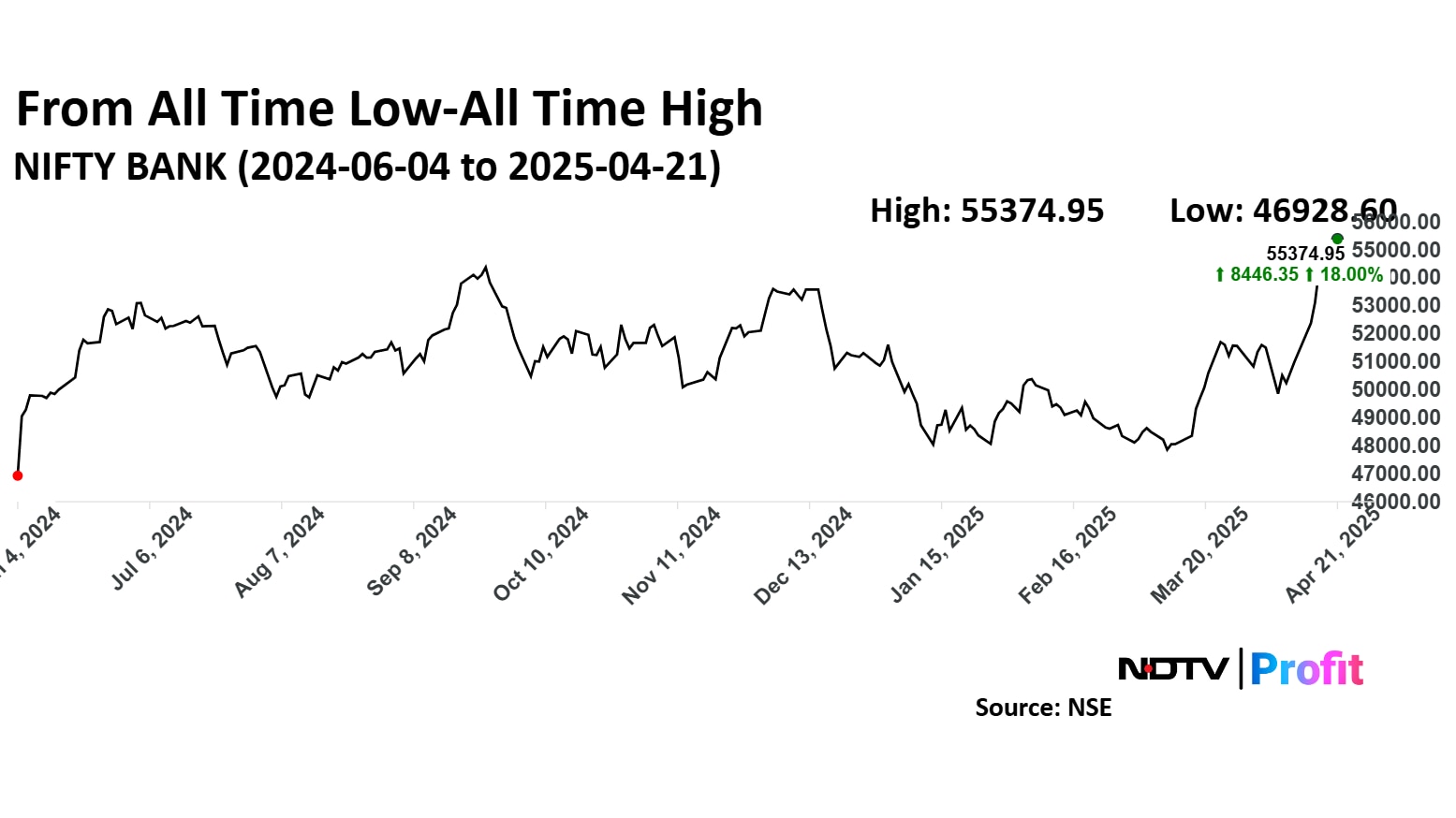
The Nifty Bank index surged to an all-time high on Monday, adding 1000 points as it rose nearly 2% to trade at 55,291.05. This strong performance is the result of a combination of factors, including strong quarterly earnings from major banks, consecutive rate cuts by the Reserve Bank of India, and ample liquidity in the banking sector.
The Nifty Bank index has been on an upward trajectory for the last five consecutive trading sessions. Over the past 12 months, the index has surged by 15.12%, with an 8.09% increase in just the last five sessions.
Q4 Earnings
One of the reason for this sharp rally is major banks reporting robust fourth quarter earnings for FY25, contributing to positive sentiment in the banking sector.
The biggest private lender of the country, HDFC Bank's net profit increased by 6.7% year-on-year to Rs 17,616 crore, with a 10.3% rise in net interest income to Rs 32,066 crore. Meanwhile, ICICI Bank's net profit surged by 18% year-on-year to Rs 12,630 crore, driven by higher net interest income and operating profit, with improvements in both net and gross NPA ratios.
Yes Bank's profit after tax rose by 11% year-on-year to Rs 1,739 crore, with a notable decrease in provisions and contingencies, and stable asset quality.
Ample Liquidity
The banking sector is currently experiencing ample liquidity. On March 31, the RBI absorbed Rs 3.46 lakh crore from the banking system, indicating a significant increase in liquidity compared to the previous quarter when it absorbed only Rs 87,702 crore on Dec 31. This ample liquidity allows banks to lower lending rates, further supporting the surge in the Nifty Bank index.
With increased liquidity, banks have more funds available to lend. This allows them to lower lending rates, making borrowing more attractive for businesses and consumers. Lower lending rates tend to stimulate economic activity, leading to higher loan demand and increased interest income for banks contributing to better earnings.
RBI Rate Cuts
The Reserve Bank of India's decision to reduce the key interest rate by 25 basis points to 6% and shift its monetary stance from 'neutral' to 'accommodative' has provided a significant boost to the banking sector.
This marks the second consecutive rate cut this year, following a similar reduction in February. The policy change is aimed at revitalising economic growth amid cooling inflation and global trade uncertainties.
Lower interest rates make borrowing more affordable for consumers and businesses, likely leading to increased spending and investment. Major banks like State Bank of India have already reduced their lending rates, translating to lower Equated Monthly Installments for borrowers.
The accommodative stance also ensures ample liquidity in the banking system, improving loan disbursements and bolstering market sentiment

-
India's Troika Of Good Luck | Joining The Dots

A weaker Trump, a cooling AI trade and resilient earnings have put Indian markets back in favour. Rising inflation could spoil the party.
-
Talking Points This Week: Leadership Shock At Nvidia, Earnings Strength, And The Fog Over Hormuz
The Anthropic IPO pricing and first trading day, Nvidia's upcoming earnings, and any fresh signals from Iran will set the tone for the following week.
-
Signature Play: The Classic Cocktail Is Dead. Or Is It?
Classic cocktails are disappearing from India's cocktail menus. But they're still being ordered, taught to bartenders and borrowed from. So, who's really having the last drink?
-
A New Samvat Wishlist: Inclusive Prosperity And Human Development
India has strengthened its economic foundations through infrastructure, digital access and enterprise. Its next growth chapter must deepen productivity, create better livelihoods and widen participation in prosperity.
-
Love, Sex Aur Dhokha: The Audacious Plot To Spy On Jensen Huang
A Taipei dinner, a Singapore chip buyer and a suspected Chinese asset: inside the alleged spy operation that got close to NVIDIA's Jensen Huang.
-
Ten Things I Learnt This Samvat
Patience can be a trap. Cheap stocks can stay cheap. Leverage can wipe you out. What did Samvat 2082 teach us? Niraj Shah writes on 10 lessons from the year gone by.
-
Talking Points This Week: Tech Nerves, FII Buying, And A Faraway Banking Shock
The global markets are not shining this Diwali. The exception in the large markets is, India.
-
Midterm Rally Lasted A Day. The Hard Reality Of A Divided US May Last Two Years | Opinion
Between a contested AI boom, a debt ceiling that arrives in 2027 and a president with every incentive to act alone, the next two years may prove more volatile than the first day's rally suggests.
-
Blue Wave Will Derail the AI Trade but Won't Dismantle the AI Era | Unhedged Position
The Democrats' sweep of the US Congress will see politics collide with economic forces both over the long and short term.
-
It's Time To Take The GST Council's Bet On Trust Global
Payment records can prove India's services exports, and clear, proportionate rules can bring foreign digital sellers into the tax net.









