Natural Gas Price Cut To Hurt Upstream Oil And Gas Firms, Analysts Say
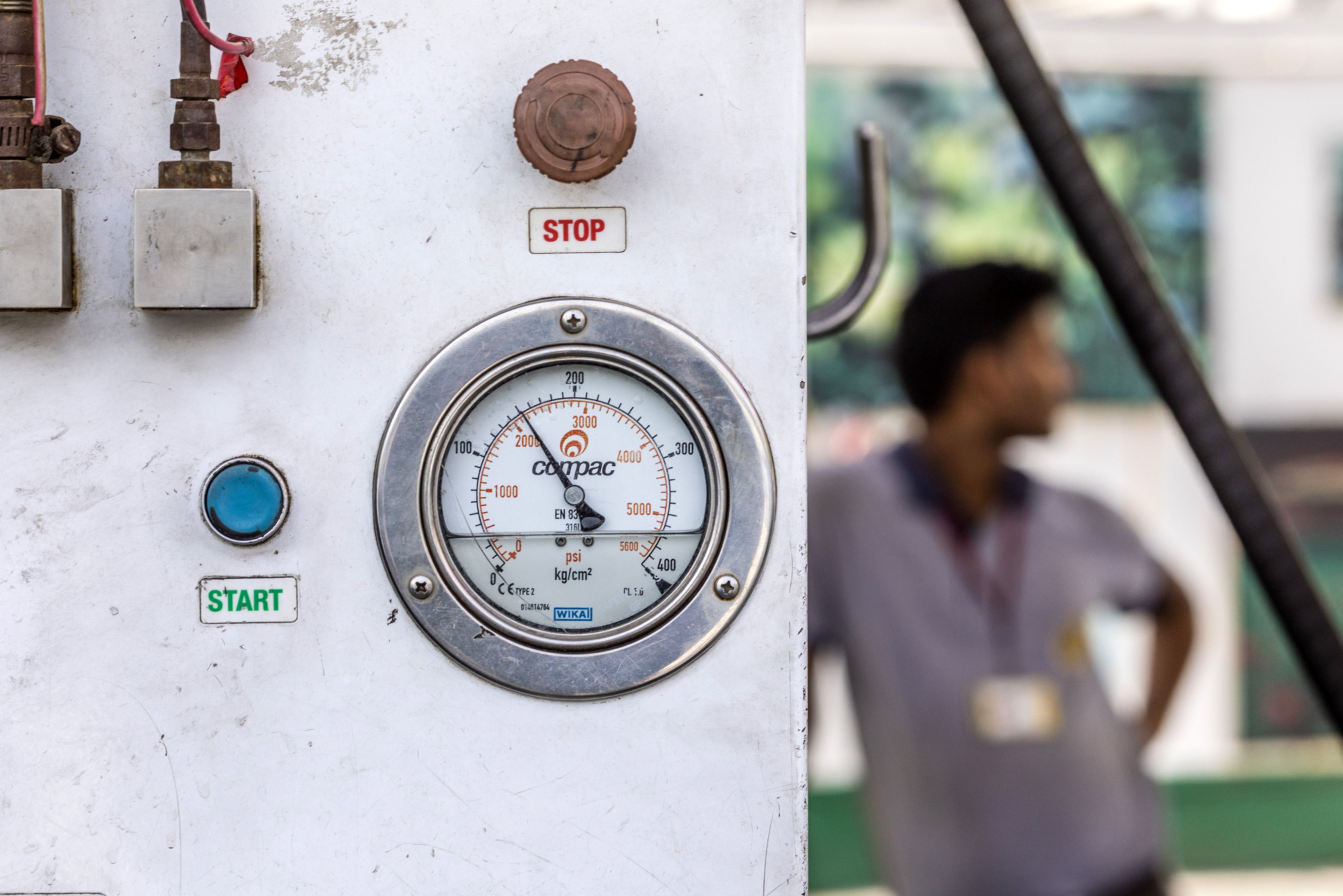
Most analysts expect India's move to cut natural gas price to a decade-low to hurt earnings of upstream oil and gas companies, mainly explorers and producers, such as Oil & Natural Gas Corp. Ltd. and Oil India Ltd.
The government has lowered the price of domestic natural gas—used to generate electricity, make fertilisers and as CNG in automobiles—by 25% to $1.79 per million British thermal units, according to the oil ministry's Petroleum Planning & Analysis Cell. The revised price will be effective from Oct. 1, 2020 till March 31, 2021.
With this, CARE Ratings said, domestic natural gas prices have fallen for the third time in a row, and the rates that will be prevalent in the second half of the ongoing fiscal will be the lowest ever under the new domestic gas policy.
Brokerages also said that any further reduction in natural gas prices may exacerbate the decline in earnings of the upstream companies and to some extent for Reliance Industries Ltd.
Shares of ONGC and Oil India fell as much as 3.83% and 2.6%, respectively, but pared most of their losses to trade nearly 1% lower. RIL gave up its gains to trade flat. That compares with a 1.4% rise in the Nifty 50 Index.
Here's what analysts have to say:
Moody's Investor Service
- Reduction in natural gas prices is credit negative for upstream companies, such as ONGC and Oil India.
- Reduction to lower revenue from gas sales.
- Further reduction in natural gas prices will exacerbate the decline in their earnings.
- Impact on both companies' credit profiles limited as gas sales account for only 18-19% of upstream revenues.
Care Ratings
- Upstream oil and gas exploration companies will not benefit with decrease in gas prices.
- To lead to low earnings due to decline in per unit realisations in natural gas segment.
- This could potentially discourage upstream companies to take up domestic gas exploration.
- A fall in gas prices to decrease the cost of manufacturing of urea and petrochemicals.
- The impact of the decrease in natural gas prices augurs well for the users of CNG and PNG.
Motilal Oswal
- Fourth downward revision in domestic gas prices.
- Expects next revision to be higher than current price.
- On net calorific value basis, this translates to $1.97 per mmbtu versus $2.6 per mmbtu in first half of FY21.
- Based on sensitivity, city gas distributors will have to take cut of about Rs 3 per kg in retail CNG prices.
- Since last two instances, Indraprastha Gas has been retaining benefits of 20-30% with itself.
- Mahanagar Gas has retained as high as 50% as well.
- No change in ONGC and Oil India models as have already factored in the gas price cut.
IIFL Securities
- Administered price mechanism and high pressure gas prices cut by 25% and 28%, respectively applicable for second half of FY21.
- FY21 earnings for ONGC and Oil India would reduce by 5.2% and 4.6%, and increase by 1% for GAIL.
- City gas distributors may lower prices by about 5% to pass on the benefit of the gas price cut to consumers.
- Positive for GAIL; negative for upstream, Reliance Industries.
- Gas-based independent power producers (such as NTPC) should witness about 15% decrease in their overall cost of generation.

-
'Never Seen This Level Of Negativity': Sandeep Tandon Says The Next Rally May Be Closer Than You Think

Veteran investor Sandeep Tandon says foreign selling is easing, large-caps are due a comeback and mid-caps are crowded, while he turns positive on gold, power and pharma this Diwali.
-
Indians Stay With Family, Not In Hotels | The Reason Why
India still lacks enough clean, reliable and affordable hotels for budget-conscious travellers.
-
The Economic Imperative: Analysing The Material Driving Force Behind India-Canada Strategic Reset
This economic complementarity is further reinforced by deep institutional investment ties and talent mobility, which form the bedrock of the bilateral framework.
-
Medicine Pricing: Where Must Profit Stop?
India must confront excessive margins, hidden incentives and regulatory gaps that threaten the integrity of medicine.
-
Why Amazon And Flipkart Are Struggling To Beat Meesho In India's Smaller Cities
With 274 million users and lowest-cost logistics, Meesho is defending its value commerce crown against giants like Amazon and Flipkart.
-
High US Salaries, No Green Card Certainty: The Financial Calculation Facing Indian H-1B Families
The suspension of PERM processing at eight technology employers does not cancel existing H-1B visas. What it does is force a question many Indian families have been avoiding: is the US salary worth tying your career and family plans to one employer?
-
Swiggy vs Eternal: Food Delivery's Two Rivals Are No Longer In The Same Race
Eternal is building a private AI assistant, dark.ai. Swiggy is still working out how to make Instamart pay, with an operating loss of Rs 895 crore in the July-September quarter while Blinkit stayed profitable.
-
Where You Live Shapes How You Get To Work | The Reason Why
Two-wheelers are the most popular way to get to work in India, accounting for nearly 43% of workplace commutes.
-
Unhedged Position: Can India See An Indonesia-Style Time Correction?
The Nifty is trading below levels it first clocked in 2024. Is there, then, as I have suggested in the headline, potential that the current time correction drags on painfully for the next three-five, even ten years?
-
Navigating Friction And Energy Realities: An Analysis Of Marco Rubio's October Visit To India
Occurring at a critical juncture marked by stalled trade negotiations and escalating geopolitical pressures over global energy supplies, the visit offers a profound window into modern US-India relations.










