Morgan Stanley Plans To Offer Crypto Trading To E*Trade Clients
Morgan Stanley is working on a plan to add cryptocurrency trading to its E*Trade platform, in what would be the most significant move by a major US bank to help everyday customers buy into the asset class since the Trump administration began removing regulatory barriers.
The project is nascent and executives envision launching the service sometime next year, according to people familiar with the matter. The firm is considering partnering with one or multiple established crypto firms as it sets up the mechanics for the brokerage's clients to buy and sell popular tokens including Bitcoin and Ether.
A spokesperson for Morgan Stanley declined to comment.
The move comes amid a dramatic shift in US policy toward virtual assets. During his presidential campaign, President Donald Trump hawked his own digital collectibles and soaked up campaign donations from crypto enthusiasts while vowing to make the US the “crypto capital of the planet.” His victory in November prompted the biggest banks to start rethinking their years-long posture of largely avoiding the notoriously volatile sector.
Inside Morgan Stanley, the discussions about how to expand in cryptocurrencies began gaining momentum late last year, the people said. The firm's wealthy clients already have access to crypto exchange-traded funds, ETF options and futures. Ultimately, executives concluded that spot trading on E*Trade was the ideal next step, the people said.
The move could boost competition for incumbents including Robinhood Markets Inc. and Coinbase Inc., depending on how Morgan Stanley's partnerships take shape.
Not ‘A Fad'
Big US banks have mainly stayed on the sidelines as crypto has ebbed and flowed in popularity over the past decade. Proposals to help customers buy tokens quickly raised thorny questions about how to guard assets that are known for being prone to hacks and scams. Watchdogs were even uneasy about letting banks accept cash deposits from high-flying crypto ventures.
The financial industry had its own prominent skeptics, most notably JPMorgan Chase & Co. Chief Executive Officer Jamie Dimon. Over the years, he has called Bitcoin “worthless,” “a fraud” and a “pet rock.” Still, Dimon said last year that “I defend your right to do Bitcoin,” and his firm has embraced blockchain technology — with projects including JPM Coin — and engaged exchanges including Coinbase as clients.
Almost as soon as Trump took office, regulators started rolling back measures that discouraged banks from pushing into crypto. Days after his inauguration, the president issued an executive order aimed at promoting US “leadership in digital assets and financial technology while protecting economic liberty.” That same day, the Securities and Exchange Commission repealed accounting guidance that crypto firms had blamed for thwarting their ambitions to work with banks.
Last week, the Federal Reserve and the Federal Deposit Insurance Corp. withdrew 2023 guidance to banks on risks tied to the sector. The Bank Policy Institute, an influential trade group representing the biggest US banks, applauded the move.
“It empowers regulated financial institutions to better serve their customers safely and invest in innovative new products and services,” Paige Pidano Paridon, its co-head of regulatory affairs, said in a statement after the announcement.
Morgan Stanley's former chief executive officer, James Gorman, was ahead of many peers in expressing interest in crypto, saying in 2017 that Bitcoin was “more than just a fad.”
Bank of New York Mellon Corp. also stood out as something of an exception, pursuing plans to custody digital assets. Gary Gensler, who ran the SEC during the Joe Biden's presidency, credited the firm with doing the “legwork,” and the agency granted BNY a “non-objection” to the plan last year, a regulatory term that gives comfort to the bank that its structure doesn't fall afoul of the agency's requirements.
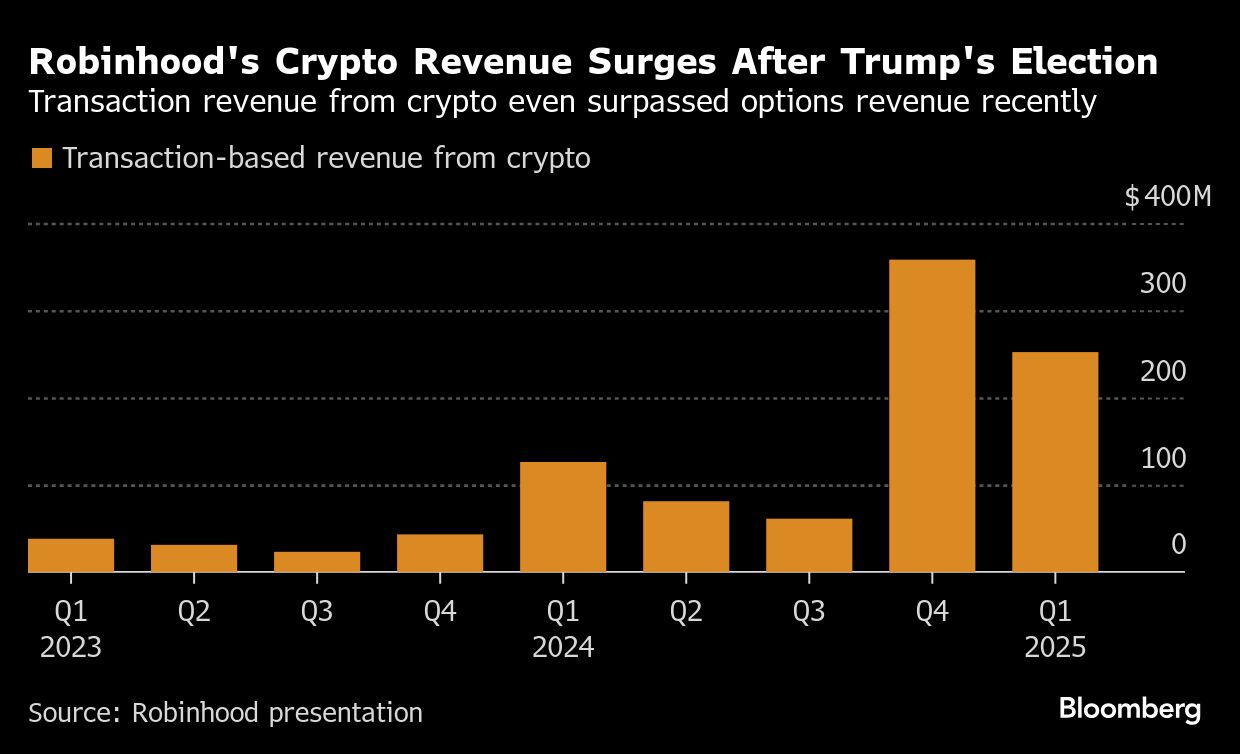
For Morgan Stanley, offering crypto trading at E*Trade would ratchet up competition with the likes of Robinhood. That firm has let clients trade crypto for more than a half decade — a business that pulled in $626 million last year, or 21% of Robinhood's total net revenue. And as Trump's policy changes boosted trading, the company's first-quarter profit more than doubled.
The landscape is poised to get a lot more crowded.
Shortly after Trump's election victory, Charles Schwab Corp.'s Rick Wurster, who became CEO in January, said his firm was looking to add spot crypto trading once regulations changed. SoFi Technologies Inc. CEO Anthony Noto said this week that, given the changing regulatory environment, his firm will consider adding crypto investing back to its platform after exiting that business in 2023.

-
Indians Are Travelling, But Not Every Journey Is A Holiday | The Week In Whys

Pilgrims, patients and working women are the real travellers, and the system hasn't quite caught up with them.
-
Getting To Work Costs Women More | The Reason Why
It is not just about women paying more than men. It is about women paying much more in cities than in villages.
-
AI Bias In Investing Cannot Be Eliminated, But It Can Be Governed
Framing is a particularly important example as identical financial information presented in terms of gains rather than losses can lead an LLM to reach a different assessment.
-
Joining The Dots | Dark Skies, Steady Diya: Why Hope Holds This Diwali
With war, a weak rupee and foreign outflows weighing on sentiment, policymakers at the NDTV World Summit and market veterans at NDTV Profit Ignite: Diwali Edition offered the same advice: stay invested and filter out the noise.
-
The Curious Case of Equitas Small Finance Bank And A CEO Who Quit For Stock
PN Vasudevan believes persistent investor concerns over a perceived conflict of interest had become a governance overhang on Equitas Small Finance Bank's stock, even as the lender improved profitability and asset quality.
-
Talking Points This Week: AI Cash Burn, A Tiger Comeback And An India That Still Finds Its Own Path
India is not immune to higher oil or tighter global liquidity, yet its earnings base is broader, its domestic policy levers are still available.
-
Foreign Investors Own Half Of HDFC Bank and ICICI Bank. An LTCG Cut Could Matter Most Here
Foreign portfolio investors have US$115 billion parked in HDFC Bank, ICICI Bank. If the government cuts long-term capital gains tax, Jefferies says returning foreign money could land here first.
-
'Never Seen This Level Of Negativity': Sandeep Tandon Says The Next Rally May Be Closer Than You Think
Veteran investor Sandeep Tandon says foreign selling is easing, large-caps are due a comeback and mid-caps are crowded, while he turns positive on gold, power and pharma this Diwali.
-
Indians Stay With Family, Not In Hotels | The Reason Why
India still lacks enough clean, reliable and affordable hotels for budget-conscious travellers.
-
The Economic Imperative: Analysing The Material Driving Force Behind India-Canada Strategic Reset
This economic complementarity is further reinforced by deep institutional investment ties and talent mobility, which form the bedrock of the bilateral framework.










