Intel’s $24 Billion Rally Has A Worrying Side Effect
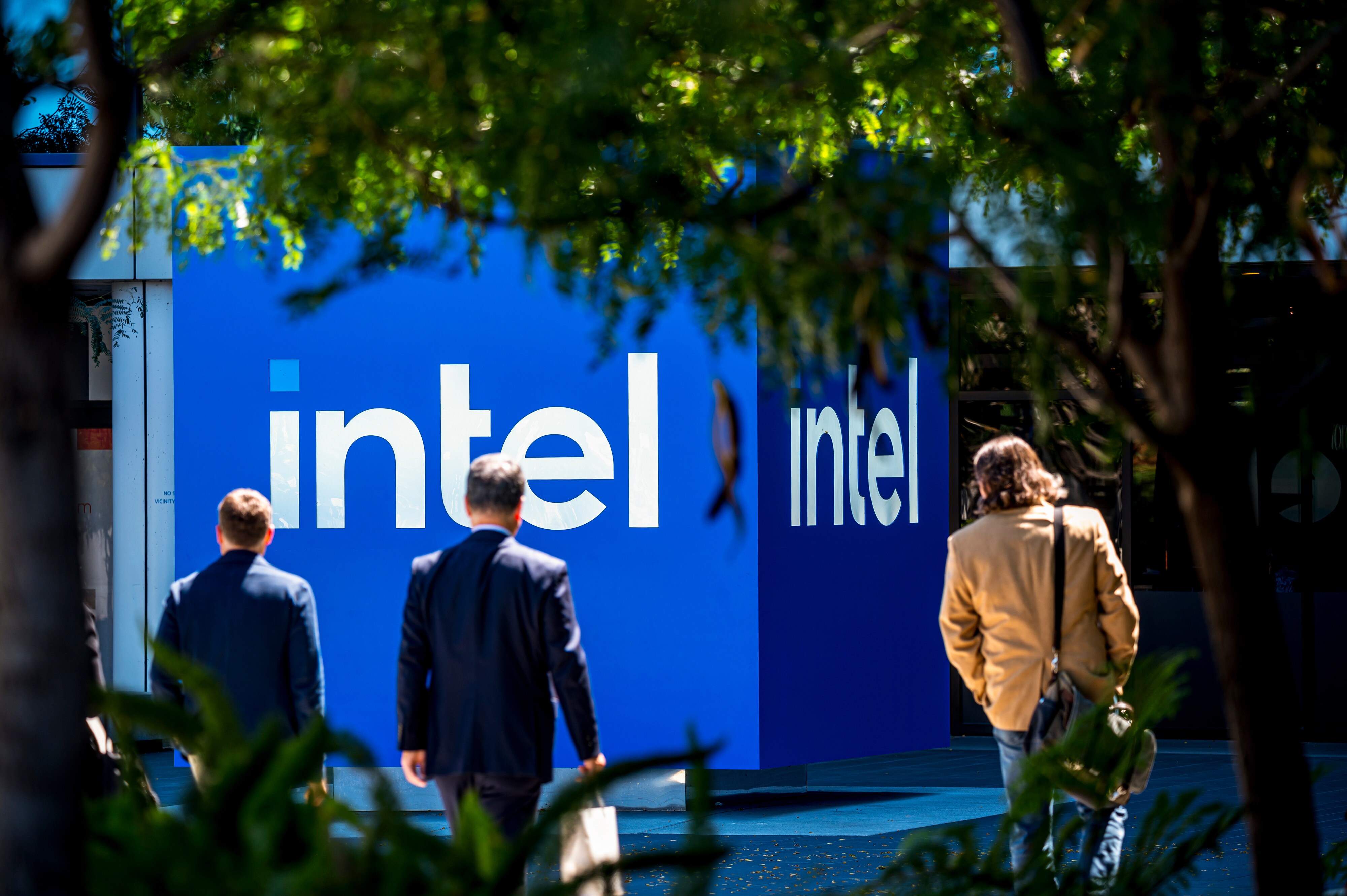
After months of turbulence, Intel Corp. bulls are finally being rewarded for their patience. But the stock's sudden rebound comes with a worrying side effect: a valuation so high its most recent precedent is from the dot-com era more than two decades ago.
Shares of the struggling chipmaker have rallied 28% this month, adding about $24 billion in market value, on reports that the US government is in talks for a potential equity stake, as well as plans for a $2 billion investment from Japan's SoftBank Group Corp. The jump has Intel trading at 53 times profits projected over the next 12 months, the highest since early 2002, according to data compiled by Bloomberg.
“The stock looks incredibly expensive here,” said Wayne Kaufman, chief market analyst at Phoenix Financial Services. “That kind of multiple is a bet that the government will push Intel so hard on customers that it becomes a winner.”
The surge in Intel this month followed a slump in the wake of a disappointing earnings report on July 24 and criticism of Tan earlier by President Donald Trump, who called for the CEO to step down, citing conflicts of interest. After meeting with Tan on Aug. 11, Trump changed his tune, saying Tan's “success and rise is an amazing story.”
Since then, reports have circulated that the Trump administration is in discussions to take a stake of about 10% in the company. Commerce Secretary Howard Lutnick said in a CNBC interview on Tuesday that the talks are aimed at converting US grants already made to Intel under the Chips and Science Act into non-voting equity.
Of course, the US's plans regarding Intel haven't been finalized and could still change. Intel declined to comment on Lutnick's remarks.
For Paul Nolte, market strategist and senior wealth manager at Murphy & Sylvest Wealth Management, the potential government involvement could benefit Intel in the short-term but may pose a risk in the long term.
“This strikes me as an easy road to get onto, but a hard one to get out of,” Nolte said. “At the end of the day, this raises so many more questions than it answers.”
Meanwhile, Intel's premium valuation is largely a reflection of just how much its profitability has collapsed in recent years.
Intel is projected to generate more than $1 billion in adjusted profit over the next four quarters, after losing about $1.3 billion in the previous four, according to data compiled by Bloomberg. From 2018 to 2021 the company generated more than $20 billion in annual profits on average.
“We have no idea what Intel can deliver in earnings growth since it is so behind on tech and because you can't cost-cut your way to growth,” said Nancy Tengler, chief executive officer of Laffer Tengler Investments. “It's hard to have confidence in the estimates, which makes it difficult to assess the valuation. I think it's overvalued, but I also think the picture is so uncertain that it wouldn't be attractive at any price.”
Wall Street largely echoes her caution. Fewer than 8% of the analysts tracked by Bloomberg recommend buying the stock, while nearly 80% have the equivalent of a neutral rating. In addition, at its Tuesday close of $25.31, Intel trades notably above the average price target of about $22, representing the weakest return potential among components of the Nasdaq 100 Index.
Still, there is optimism that Chief Executive Officer Lip-Bu Tan will be able to turn things around. Much of his focus has been on cost cutting, which has improved Intel's outlook to return to profitability but raised concerns the chipmaker may be bowing out of the race for technological leadership. Part of his effort has also been centered on a costly build out of its foundry operations undertaken by his predecessor, Pat Gelsinger.
“Clearly it's going to take a number of years for it to really start operating on a smooth basis,” said Gerrit Smit, lead portfolio manager of the Stonehage Fleming Global Best Ideas Equity fund. “We've got trust in him, but we think he's got a long slog ahead.”

-
One Battle After Another: India's Corporate Dynasties Battle For Control

2026 could go down as Corporate India's year of succession wars, governance battles and family fault lines.
-
Rs 50-Lakh Gold In Bank Locker, Rs 3 Lakh Of Protection: The Gap Most Families Don't Know About
The RBI ties a bank's liability to the annual locker rent and families who want to insure their jewellery face a separate question about how to prove what was inside.
-
The More Food Turns Into Fuel, The Harder It Is To Read Agricultural Markets | The Reason Why
A policy designed to reduce dependence on imported fuel can create new pressures elsewhere in the food economy.
-
Your iPhone Costs 12 Grams Of Gold, A Car About 100. What Does Your Life Weigh?
Measured in rupees, almost everything looks more expensive than it did a generation ago. Measured in grams of gold, a lot of it has become cheaper.
-
Gold Is Rs 22,000 Cheaper Than A Month Ago. Should You Buy Amid The Wedding Season?
Gold's potential slide to $3,500 could save around Rs 4,700 per 10 grams, but a soft inflation print could just as easily push prices back up. One way to split the risk is to buy in parts, some now and the rest after the Fed's Dec. 9 decision.
-
AI Agents Are Gaining Power. Who Governs Them?
Artificial intelligence agents promise to transform productivity by moving machines from assisting decisions to executing them. But as organisations delegate greater authority to these AI-agents, they must first establish who controls that authority and who remains accountable when things go wrong.
-
Why Swapping Your Old Gold Can Trigger A Rs 5 Lakh Tax Bill, And How You Can Avoid It Legally
Swapping old gold for new is taxed as a sale and a fresh purchase. Getting your own gold remade can cut most of that bill, though it has its own costs.
-
The AI Trade is Done. The Real Opportunity for Investors Starts in 2027 | Unhedged Position
As pureplay AI stocks plunge and circular, capex-led financing unwinds, 2027 is set to be a year of reckoning for AI companies. Yet the bust clears the way for a better opportunity for investors in 2027 -- shifting the spotlight from AI builders to the companies using AI.
-
Leadership As Mission: Why The Age Of AI Demands More Human Leadership
Debjani Ghosh examines how AI is changing leadership, arguing that its success must be measured by its impact on people and the accountability of those guiding its use.
-
We May Need Another Tukaram Mundhe To Fight Air Pollution | The Reason Why
Developers may install basic measures such as sprinklers and green nets, resume work, and continue violating rules when this equipment stops working.









