India's Growing Listed Universe: A Quick Quality Check

As the roster of Indian firms on the stock exchanges continues to expand year by year, the focus now turns to the quality of these companies and their performance on the trading floor. A closer examination of the top listed companies within the NSE Nifty 500—a selection of leading firms—reveals intriguing insights into their return ratios.
About 30% of these companies have a return on capital employed below 10%, and a significant number—317 to be exact—report a return on equity below 20%, with 118 falling below the 10% mark. These figures initially raise eyebrows, but there's a silver lining: these ratios have shown a steady improvement in the years preceding the pandemic.
Neeraj Gaurh, a fund manager at Axis Securities Ltd., highlights the positive trend, noting that even smaller stocks are demonstrating significant improvements in their ROE. "We've seen moderation in the ROE of cyclical sectors, but overall, the current ratios surpass pre-pandemic levels," he remarks optimistically.
The ROE benchmark has been consistent at 15%, with the current NSE 500 average at around 13–14%.
Deepak Jasani, head of retail research at HDFC Securities Ltd., points out that while higher leverage can inflate ROCE, Indian corporates have been diligently reducing their debt levels over recent years, reflecting a commitment to efficient capital utilisation.
Despite the mixed bag of return ratios, the profitability of the broader NSE Nifty 500 index has soared from a baseline of Rs 5 lakh crore to an impressive Rs 13 lakh crore over five years, based on a 12-month assessment. Operational cash flows have also been robust, amounting to about Rs 10 lakh crore.
The most recent data underscores a remarkable milestone: cumulative net profits for the last four quarters surpassed Rs 13 lakh crore, reaching an all-time high in the third quarter of fiscal 2024. This surge in profitability can be attributed to improved performance across key sectors such as oil marketing, building materials, auto, and finance.
Gaurh said on the positive trends, noting that profitability in sectors like auto, commodities, pharma, and infrastructure has seen a notable uptick in recent years, reflecting a favourable market outlook. Even small-cap companies are showing stronger profitability compared to pre-Covid levels, contributing positively to the NSE 500's overall return on equity.
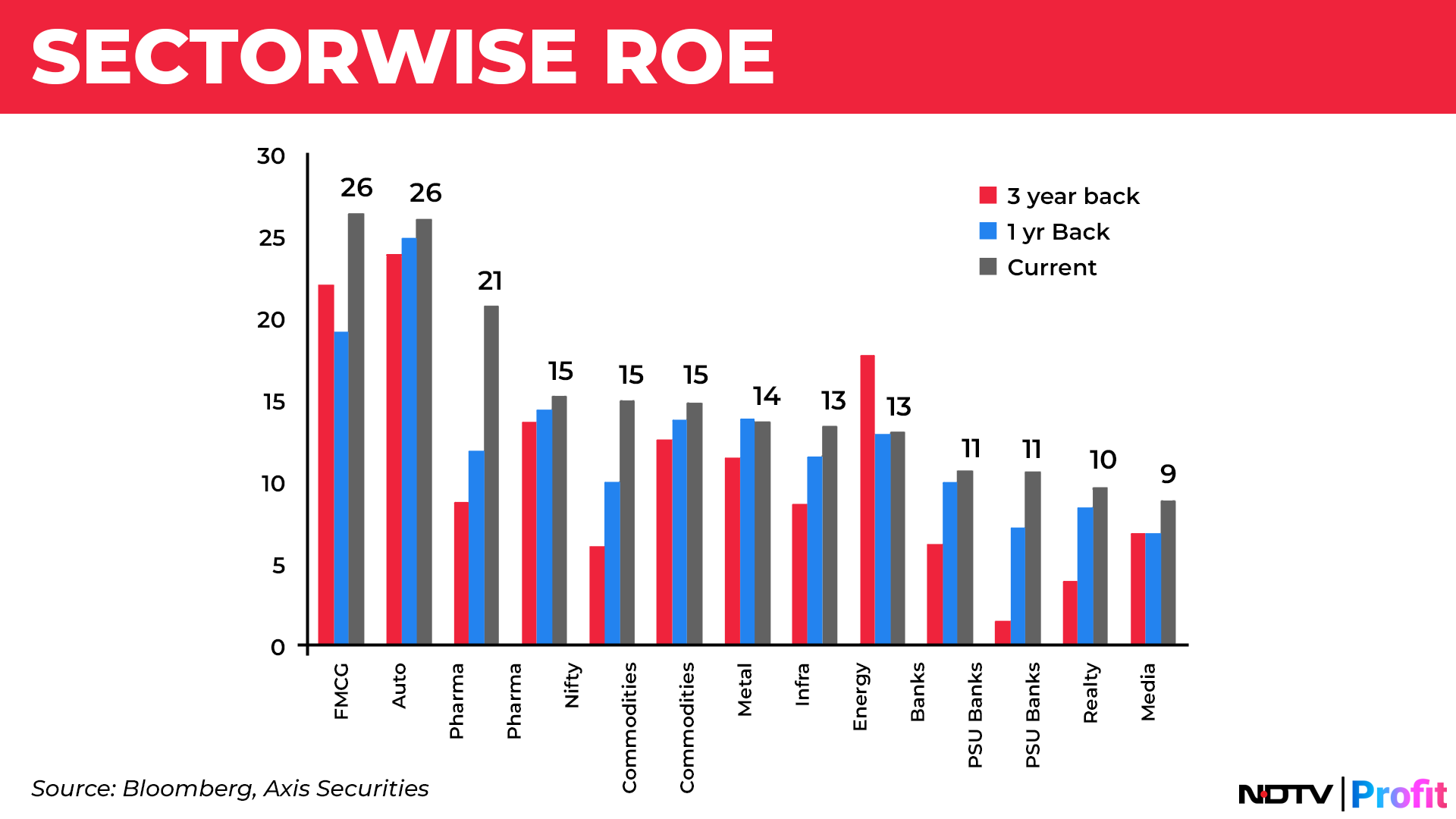
Financials, oil & gas, metals, and information technology sectors currently dominate the NSE 500's profitability landscape, accounting for a substantial 68% share. Notably, previously struggling sectors have bounced back post-pandemic, demonstrating improved financial metrics and cash flow stability.
Looking ahead, India's public capital expenditure has surged to a 19-year high, representing 3.3% of the GDP in fiscal 2024, with private capital expenditures entering an upcycle phase expected to fuel the next wave of growth, according to Morgan Stanley.
"It is important to meet the cost of capital for the growth to be double digit," Gaurh said.
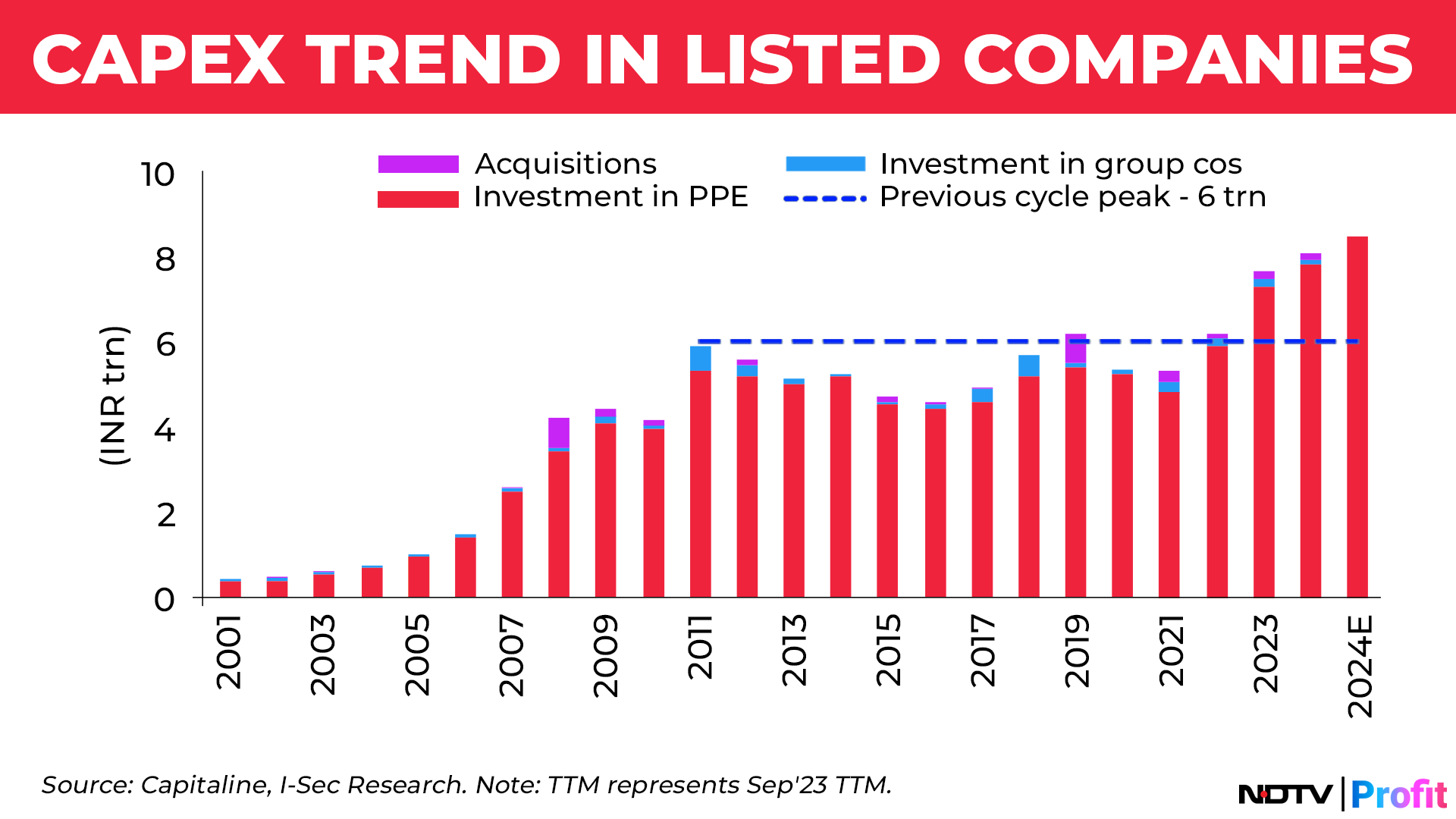
"The ratios also differ on certain companies undergoing a capex project, which takes two–three years to get on stream as returns do not get immediately generated in those investments," said Jasani.
Corporates have done debt, cost rationalisation and organised players are benefitting in terms of the top-line growth that has led to improved financial metrics. "There may be some sectors and companies that may be lagging, but focusing on the governance structure is important," he said.

-
One El Nino, India Can Handle. Two Could Break The Granary

India's grain stocks can absorb one bad year, but a second El Nino could drain the buffer in two to three years, economists say.
-
India's Troika Of Good Luck | Joining The Dots
As Jensen Huang's exit drags Nvidia down, a cooling AI trade and resilient earnings have revived investor interest in India. A likely RBI rate hike looms.
-
Talking Points This Week: Leadership Shock At Nvidia, Earnings Strength, And The Fog Over Hormuz
The Anthropic IPO pricing and first trading day, Nvidia's upcoming earnings, and any fresh signals from Iran will set the tone for the following week.
-
Signature Play: The Classic Cocktail Is Dead. Or Is It?
Classic cocktails are disappearing from India's cocktail menus. But they're still being ordered, taught to bartenders and borrowed from. So, who's really having the last drink?
-
A New Samvat Wishlist: Inclusive Prosperity And Human Development
India has strengthened its economic foundations through infrastructure, digital access and enterprise. Its next growth chapter must deepen productivity, create better livelihoods and widen participation in prosperity.
-
Love, Sex Aur Dhokha: The Audacious Plot To Spy On Jensen Huang
A Taipei dinner, a Singapore chip buyer and a suspected Chinese asset: inside the alleged spy operation that got close to NVIDIA's Jensen Huang.
-
Ten Things I Learnt This Samvat
Patience can be a trap. Cheap stocks can stay cheap. Leverage can wipe you out. What did Samvat 2082 teach us? Niraj Shah writes on 10 lessons from the year gone by.
-
Talking Points This Week: Tech Nerves, FII Buying, And A Faraway Banking Shock
The global markets are not shining this Diwali. The exception in the large markets is, India.
-
Midterm Rally Lasted A Day. The Hard Reality Of A Divided US May Last Two Years | Opinion
Between a contested AI boom, a debt ceiling that arrives in 2027 and a president with every incentive to act alone, the next two years may prove more volatile than the first day's rally suggests.
-
Blue Wave Will Derail the AI Trade but Won't Dismantle the AI Era | Unhedged Position
The Democrats' sweep of the US Congress will see politics collide with economic forces both over the long and short term.