Hedge Funds Suffer Losses as Market Volatility Proves `Episodic'
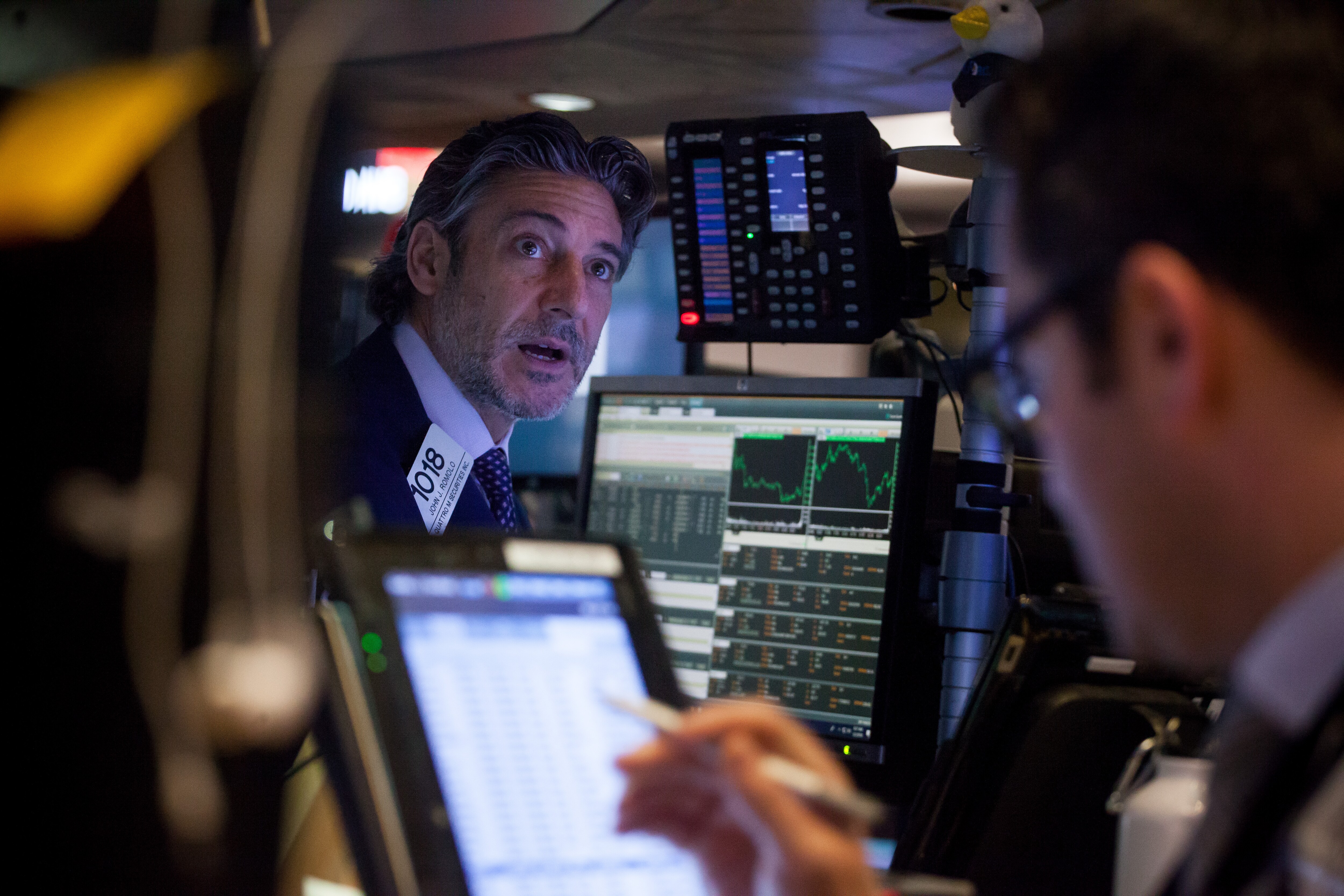
(Bloomberg) -- Some big-name hedge funds are suffering losses even after getting what many in the industry have been asking for: more volatility. It just wasn't the right kind.
February was marked by a massive market selloff early in the month, a change from the years of calm that some managers blamed for lackluster performance. But the turmoil hasn't been sustained enough for some traders to capitalize.
Graham Capital Management, which manages $17 billion, lost 7.8 percent last month at its largest fund, the $8.9 billion Tactical Trend pool, leaving it down 3.3 percent in 2018, according to people with knowledge of the matter. The Rowayton, Connecticut-based firm's $2.8 billion K4D-15V Fund, which leverages its computer-driven macroeconomic wagers, lost 9 percent in February and is down 4.3 percent for the year, said the people, who asked not to be identified because the information isn't public.
Investors were caught by surprise when markets suddenly began to roil. On Feb. 5, the Dow Jones Industrial Average plunged 4.6 percent, its biggest one-day drop since 2011, and the VIX volatility index more than doubled to 37 amid concerns that inflation could force the Federal Reserve to raise interest rates faster than expected.
“Episodic volatility is always a challenge and no matter how great of a manager you are, if it's episodic you're going to get hurt,” said Adam Taback, head of global alternative investments for Wells Fargo Investment Institute. “Sustained volatility is what you're really looking for.”
RenTec Drops
Renaissance Technologies, which in January had warned clients of a “significant risk” of a correction, lost 3 percent in its stock fund in February as the S&P 500 Index slumped 3.7 percent, according to an investor update. The New York-based firm's Renaissance Institutional Equities Fund, designed to outperform the S&P 500 Index by 4 to 6 percentage points annually, is down about 1 percent this year. The fund had $22 billion in assets at the end of last year.
Dan Loeb's equity-focused Third Point Offshore fund sunk 3 percent last month, hurt mostly by its long holdings across a number of sectors, while its wagers against certain stocks helped, the firm said in a shareholder report. David Einhorn's Greenlight Capital fell 6.2 percent.
Trend Followers
Trend-following hedge funds got hit last month as the strategy, known for producing strong returns during the market crashes at the turn of the century and in 2008, didn't live up to its image as a shock absorber.
David Harding's Winton Capital Management, which runs about $29 billion, saw its main fund sink 4.3 percent last month through Feb. 23. The London-based firm's $9.8 billion Winton Fund uses mathematical models to wager across asset classes. In November, Harding warned that the VIX is misunderstood and could be the source of a market accident.
Some firms managed to buck the selloff.
Philippe Laffont's equity-focused Coatue Management rose 1.5 percent in February, pushing gains to almost 12 percent for the first two months, according to a document seen by Bloomberg News.
Luxor Capital Group, the $3 billion event-driven firm, saw its main hedge fund gain 3.6 percent last month, another person said. That brought the year-to-date return for Luxor Capital Partners Offshore fund to 7.8 percent.
A spokesman for Coatue didn't respond to requests for comment. Spokesmen for the other firms declined to comment.
--With assistance from Saijel Kishan Sonali Basak and Simone Foxman
To contact the reporter on this story: Hema Parmar in New York at hparmar6@bloomberg.net.
To contact the editors responsible for this story: Margaret Collins at mcollins45@bloomberg.net, Josh Friedman, Mary Romano
©2018 Bloomberg L.P.

-
The Economic Imperative: Analysing The Material Driving Force Behind India-Canada Strategic Reset

This economic complementarity is further reinforced by deep institutional investment ties and talent mobility, which form the bedrock of the bilateral framework.
-
Medicine Pricing: Where Must Profit Stop?
India must confront excessive margins, hidden incentives and regulatory gaps that threaten the integrity of medicine.
-
Why Amazon And Flipkart Are Struggling To Beat Meesho In India's Smaller Cities
With 274 million users and lowest-cost logistics, Meesho is defending its value commerce crown against giants like Amazon and Flipkart.
-
High US Salaries, No Green Card Certainty: The Financial Calculation Facing Indian H-1B Families
The suspension of PERM processing at eight technology employers does not cancel existing H-1B visas. What it does is force a question many Indian families have been avoiding: is the US salary worth tying your career and family plans to one employer?
-
Swiggy vs Eternal: Food Delivery's Two Rivals Are No Longer In The Same Race
Eternal is building a private AI assistant, dark.ai. Swiggy is still working out how to make Instamart pay, with an operating loss of Rs 895 crore in the July-September quarter while Blinkit stayed profitable.
-
Where You Live Shapes How You Get To Work | The Reason Why
Two-wheelers are the most popular way to get to work in India, accounting for nearly 43% of workplace commutes.
-
Unhedged Position: Can India See An Indonesia-Style Time Correction?
The Nifty is trading below levels it first clocked in 2024. Is there, then, as I have suggested in the headline, potential that the current time correction drags on painfully for the next three-five, even ten years?
-
Navigating Friction And Energy Realities: An Analysis Of Marco Rubio's October Visit To India
Occurring at a critical juncture marked by stalled trade negotiations and escalating geopolitical pressures over global energy supplies, the visit offers a profound window into modern US-India relations.
-
India Exports Capital. Why Not Export Trusteeship?
The big question, then, is whether India can build an institution that global borrowers, investors, banks, and lawyers can trust, even without an Indian connection.
-
France's Economy & Politics Are In Crisis | The Reason Why
Let's look at how the French economy and politics evolved under Nicolas Sarkozy, Franois Hollande and Emmanuel Macron.










