European Stocks Rise On Trump’s Tariff Delay; Dollar Wavers: Markets Wrap
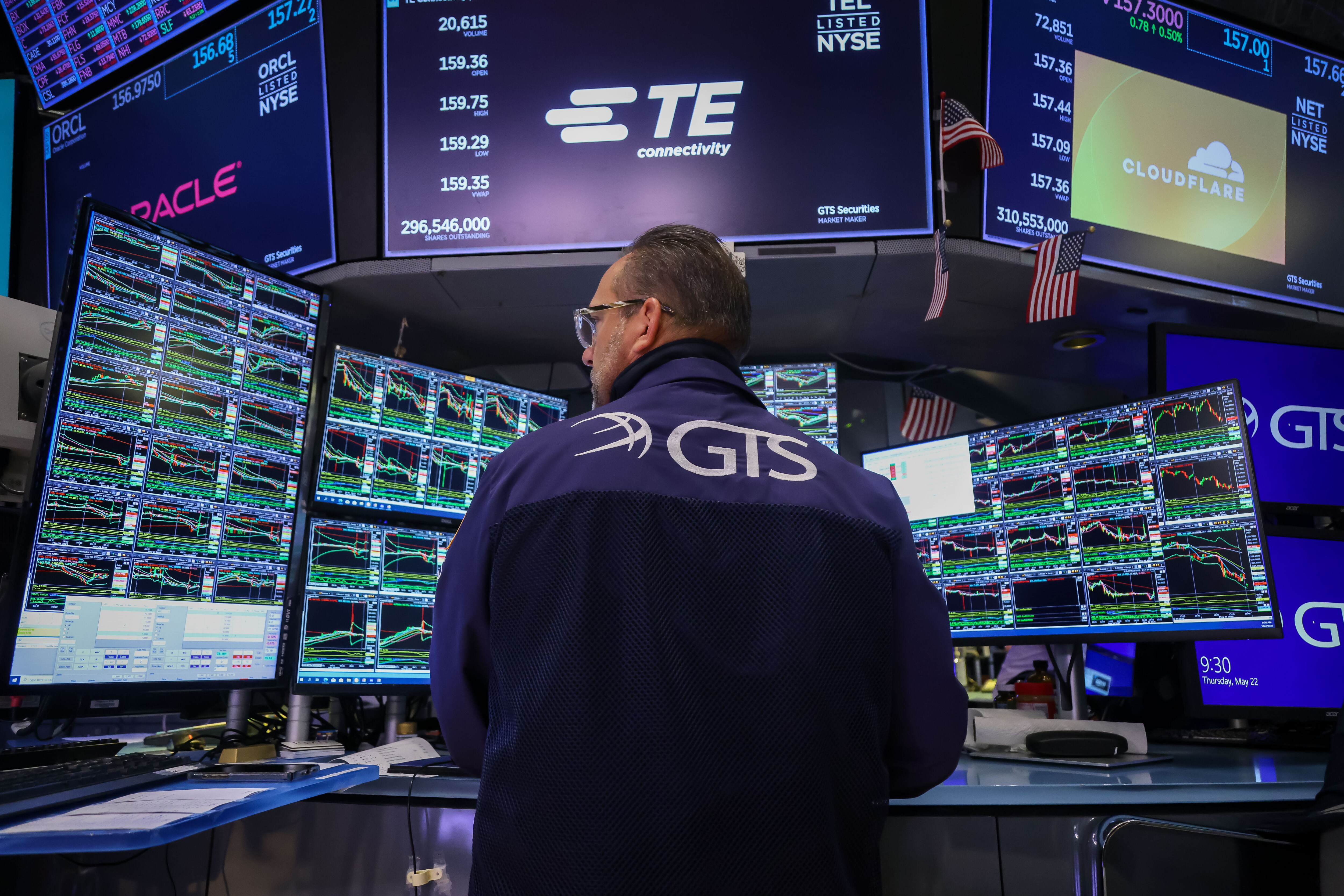
European stocks climbed along with US equity futures after President Donald Trump extended a deadline on aggressive euro area tariffs, reinforcing a pattern of leaving markets guessing by making trade threats before backtracking.
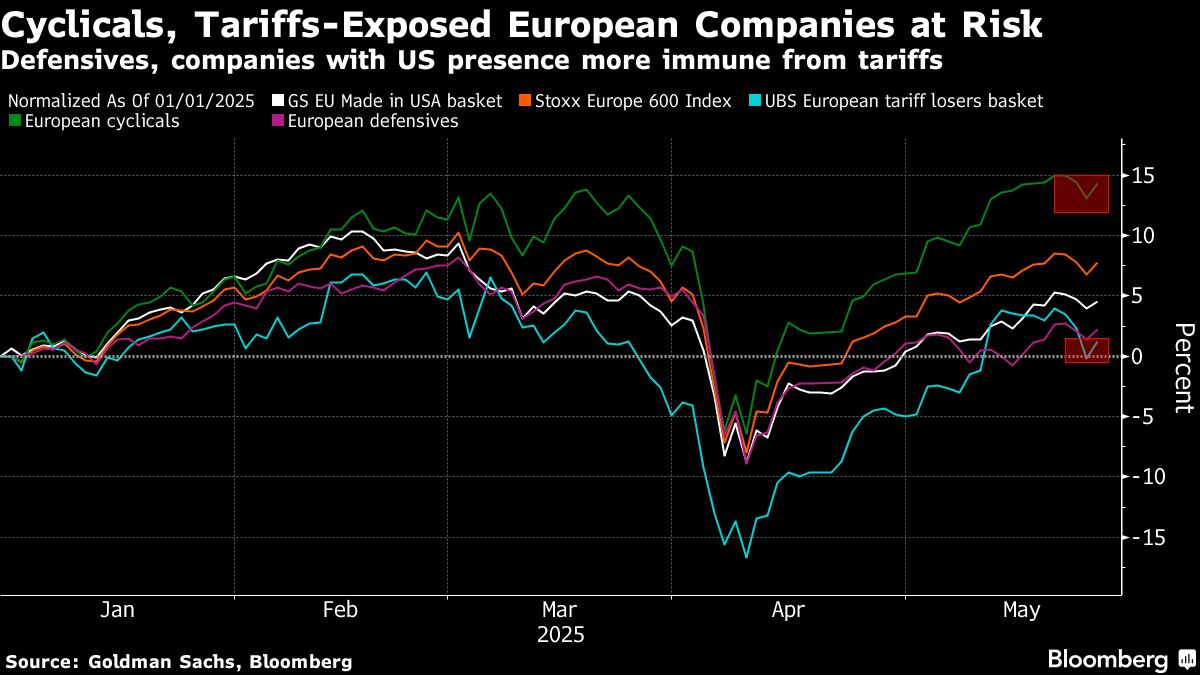
The Stoxx Europe 600 index erased Friday's losses sparked by Trump's threat of 50% tariffs on the European Union. The US President later said he had agreed to delay the date for the levies to July 9 from June 1. Contracts for the S&P 500 and the Nasdaq 100 advanced more than 1%. A gauge of the dollar hovered near its lowest level in almost two years. Cash Treasuries didn't trade due to holidays in the UK and US.
The tariff war has returned as the major driver once again after concerns about Trump's proposed tax cuts, and their impact on the US deficit, churned markets much of last week. Trump's whiplash moves have increased uncertainty in markets and his broadside against Europe on Friday, followed by a backtrack, was a stark reminder of the president's volatile policy making.
“The stock market seems to dance to Trump's tune: first a threat, then a pullback, quickly followed by a rebound as speculative investors anticipate a concession from the U.S. President,” said Jochen Stanzl, chief market analyst at CMC Markets. “This morning's confirmation of such expectations reinforces the so-called ‘Trump Pattern,' which is increasingly seen as a successful strategy for risk-tolerant investors.”
Trump's decision to extend the deadline came after a phone call with European Commission President Ursula von der Leyen.
Von der Leyen, who heads the EU's executive arm, said earlier Sunday in a post on X that “Europe is ready to advance talks swiftly and decisively,” but “a good deal” will need “time until July 9.” That's the date on which Trump's 90-day pause of his so-called reciprocal tariffs had originally been set to end.
“One thing that is starting to concern us a bit is the fact that the rebounds that follow these selloffs are losing strength as we go on,” said Frederic Rozier, a portfolio manager at Mirabaud France. “We can sense investor fatigue about this back-and-forth and there's a risk sentiment will erode as markets run in circles on tariffs. The only thing we know is that even if there's an agreement, there will be a cost for European stocks.”
Trump's tariff threats on Friday also included a 25% levy on smartphones if companies including Apple Inc. and Samsung Electronics Co. failed to move production to the US.
Among individual movers in Europe, Thyssenkrupp AG jumped more than 7% after a report that the firms chief executive plans to turn it into a holding company, allowing it to cut overhead costs as it divests further units. Volvo Car AB climbed as much as 4.9% after announcing plans to eliminate around 7% of its global workforce to cut costs and protect profits.
The trade tensions and weak demand for US assets are showing up in the dollar. Bloomberg's dollar spot index was track for its lowest close since July 2023, while the greenback is at or approaching key levels against a host of currencies including the euro, British pound, yen and Swiss franc.
Enthusiasm has faded for the world's reserve currency this year. Speculative traders remained bearish on the dollar but trimmed their positioning to $12.4 billion in the week ending May 20 from $16.5 billion in the week prior, according to CFTC data reported Friday.
A key event this week will be Nvidia Corp.'s results on Wednesday. The chip-making giant is seen as a bellwether for so called growth stocks and the sustainability of the artificial intelligence boom. Its outlook will be crucial given macro risks and tariff uncertainty.
Investors are also gearing up for the Federal Reserve's preferred inflation measure, the US personal consumption expenditures price index excluding food and energy, which will be released Friday. The April reading is forecast to rise 0.1% based on consensus expectations.
Elsewhere, signs of port congestion in northern Europe and other hubs suggests trade wars could lead to maritime disruptions around the world, increasing shipping rates.
Some of the main moves in markets:
Stocks
S&P 500 futures rose 1.3% as of 9:33 a.m. New York time
Futures on the Dow Jones Industrial Average rose 1.1%
The Stoxx Europe 600 rose 0.9%
The MSCI World Index rose 0.3%
Currencies
The Bloomberg Dollar Spot Index was little changed
The euro rose 0.1% to $1.1377
The British pound rose 0.1% to $1.3557
The Japanese yen fell 0.2% to 142.91 per dollar
Cryptocurrencies
Bitcoin rose 2.1% to $109,986.15
Ether rose 1.8% to $2,569.03
Bonds
Germany's 10-year yield was little changed at 2.57%
Britain's 10-year yield declined seven basis points to 4.68%
Commodities
West Texas Intermediate crude was little changed
Spot gold fell 0.6% to $3,336.67 an ounce

-
Indians Are Travelling, But Not Every Journey Is A Holiday | The Week In Whys

Pilgrims, patients and working women are the real travellers, and the system hasn't quite caught up with them.
-
Getting To Work Costs Women More | The Reason Why
It is not just about women paying more than men. It is about women paying much more in cities than in villages.
-
AI Bias In Investing Cannot Be Eliminated, But It Can Be Governed
Framing is a particularly important example as identical financial information presented in terms of gains rather than losses can lead an LLM to reach a different assessment.
-
Joining The Dots | Dark Skies, Steady Diya: Why Hope Holds This Diwali
With war, a weak rupee and foreign outflows weighing on sentiment, policymakers at the NDTV World Summit and market veterans at NDTV Profit Ignite: Diwali Edition offered the same advice: stay invested and filter out the noise.
-
The Curious Case of Equitas Small Finance Bank And A CEO Who Quit For Stock
PN Vasudevan believes persistent investor concerns over a perceived conflict of interest had become a governance overhang on Equitas Small Finance Bank's stock, even as the lender improved profitability and asset quality.
-
Talking Points This Week: AI Cash Burn, A Tiger Comeback And An India That Still Finds Its Own Path
India is not immune to higher oil or tighter global liquidity, yet its earnings base is broader, its domestic policy levers are still available.
-
Foreign Investors Own Half Of HDFC Bank and ICICI Bank. An LTCG Cut Could Matter Most Here
Foreign portfolio investors have US$115 billion parked in HDFC Bank, ICICI Bank. If the government cuts long-term capital gains tax, Jefferies says returning foreign money could land here first.
-
'Never Seen This Level Of Negativity': Sandeep Tandon Says The Next Rally May Be Closer Than You Think
Veteran investor Sandeep Tandon says foreign selling is easing, large-caps are due a comeback and mid-caps are crowded, while he turns positive on gold, power and pharma this Diwali.
-
Indians Stay With Family, Not In Hotels | The Reason Why
India still lacks enough clean, reliable and affordable hotels for budget-conscious travellers.
-
The Economic Imperative: Analysing The Material Driving Force Behind India-Canada Strategic Reset
This economic complementarity is further reinforced by deep institutional investment ties and talent mobility, which form the bedrock of the bilateral framework.










