US Stocks Fall As Tariff Angst Spurs Gains In Bonds: Markets Wrap
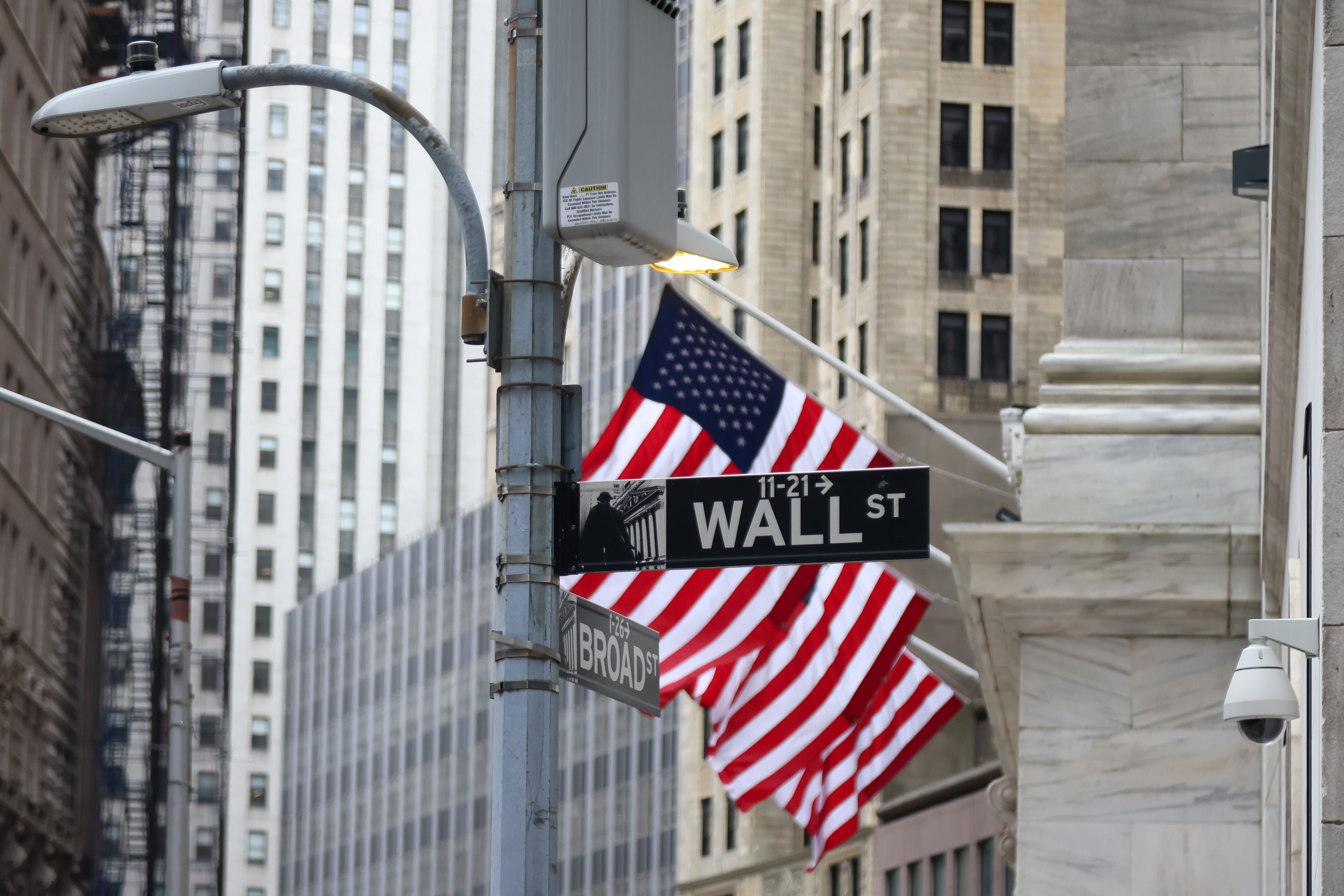
Wall Street's risk-off mode prevailed in the run-up to the Federal Reserve decision, with stocks falling and bonds rising as President Donald Trump's tariff remarks failed to ease worries that his trade war will cause economic damage.
After almost wiping out losses, the S&P 500 closed with a drop of nearly 1%. Trump said he would prescribe tariff levels and concessions for partners looking to avoid higher duties, appearing to move away from the idea that he would engage in back-and-forth negotiations. Trade jitters spurred gains in Treasuries, which also climbed after a solid $42 billion sale of 10-year bonds.

Trump's latest comments indicate he could continue to change his approach, roiling financial markets that have struggled amid concerns about the economic implications of his tariff policy. In the absence of any significant breakthroughs, investors were quick to dismiss Treasury Secretary Scott Bessent's signals that negotiations with several commercial partners are going well.
Just a day ahead of the Fed decision, traders widely expect policymakers to stay on hold. While Trump has been ratcheting up pressure on the central bank to resume cutting rates, officials have mostly emphasized a need to wait and see how trade policies implemented last month affect the economy.
“And if traders wish to believe that the Fed will come to the rescue of the world tomorrow and assuage the recent rise in policy uncertainty and political uncertainty with a signal of overt ‘dovishness', they should think again,” said Thierry Wizman at Macquarie.
The S&P 500 fell 0.8%. The Nasdaq 100 slid 0.9%. The Dow Jones Industrial Average dropped 0.9%.
In late hours, Marvell Technology Inc. sank as the chipmaker cut the high end of its revenue forecast and postponed an investor day event, citing the “uncertain” economy. Rivian Automotive Inc. said full-year deliveries will decline more sharply than it anticipated. Super Micro Computer Inc.'s outlook fell short of estimates. Advanced Micro Devices Inc. gave a bullish projection.
The yield on 10-year Treasuries declined five basis points to 4.29%. The Bloomberg Dollar Spot Index slipped 0.3%.

Following a historic winning run for stocks, Goldman Sachs Group Inc. strategists say current valuations leave little room for the recent rally to continue. For JPMorgan Chase & Co. strategists, US assets are “not a good place to hide.” At HSBC, Max Kettner remains tactically cautious as “fundamentals remain dire.”
“Fading upside in a complacent equity market amid continued trade uncertainty, and huge downside economic risks which have yet to be adequately discounted,” said Michael Brown at Pepperstone. “I also remain a dip buyer in gold, and a rally seller in the dollar.”
Meantime, billionaire investor Paul Tudor Jones said he expects Trump to dial back China tariffs by 50%, but said stock markets could hit new lows even if he does.
“You have Trump, who's locked in on tariffs; you have the Fed, who's locked in on not cutting rates,” said Jones, founder of macro hedge fund Tudor Investment Corp., speaking on CNBC Tuesday. “That's not good for the stock market.”

Bank of America Corp.'s individual-investor clients snapped up stocks for 21 consecutive weeks through last Friday, the longest buying streak in the firm's data history going back to 2008, strategists led by Jill Carey Hall said Tuesday in a research note.
The cohort has been piling into US equities through a volatile start to 2025 marked by worries around Trump's tariff regime, building positions in both exchange-traded funds and single stocks. Eight of 11 S&P 500 sectors have net inflows by the group year-to-date, according to BofA data.
“This market reality suggests heightened short-term volatility is likely to persist but also presents opportunities for investors with longer-term perspectives to capitalize on short-term market dislocations,” said George Maris at Principal Asset Management.
Corporate Highlights:
Palantir Technologies Inc. tumbled after its financial results and projections failed to live up to investors' lofty expectations.
Constellation Energy Corp. surged after it said it is on the verge of signing long-term deals to provide nuclear energy that could meet unrelenting demand to run data centers and factories.
Hims & Hers Health Inc. reiterated its 2025 revenue forecast after posting better-than-expected sales for the first quarter, raising questions about the future as it shifts from making copycat weight-loss drugs to selling discounted versions of Novo Nordisk A/S's blockbuster Wegovy.
Archer-Daniels-Midland Co. said earnings this year will be at the lower end of its guidance as a difficult crop trading market is complicated by mounting trade and biofuel policy uncertainty.
Marriott International Inc. lowered its estimates for a key measure of revenue growth, joining the ranks of hotel companies adjusting expectations for an uncertain economic moment.
DoorDash Inc. is buying hospitality tech company SevenRooms Inc. for $1.2 billion, hours after confirming its plans to acquire London-based delivery Deliveroo Plc, underscoring its appetite for aggressive global expansion.
Some of the main moves in markets:
Stocks
The S&P 500 fell 0.8% as of 4 p.m. New York time
The Nasdaq 100 fell 0.9%
The Dow Jones Industrial Average fell 0.9%
The MSCI World Index fell 0.5%
Currencies
The Bloomberg Dollar Spot Index fell 0.3%
The euro rose 0.5% to $1.1375
The British pound rose 0.6% to $1.3379
The Japanese yen rose 0.9% to 142.41 per dollar
Cryptocurrencies
Bitcoin rose 0.8% to $94,951.82
Ether fell 1.4% to $1,784.48
Bonds
The yield on 10-year Treasuries declined five basis points to 4.29%
Germany's 10-year yield advanced two basis points to 2.54%
Britain's 10-year yield was little changed at 4.51%
Commodities
West Texas Intermediate crude rose 3.5% to $59.11 a barrel
Spot gold rose 2.6% to $3,422.43 an ounce

-
Indians Are Travelling, But Not Every Journey Is A Holiday | The Week In Whys

Pilgrims, patients and working women are the real travellers, and the system hasn't quite caught up with them.
-
Getting To Work Costs Women More | The Reason Why
It is not just about women paying more than men. It is about women paying much more in cities than in villages.
-
AI Bias In Investing Cannot Be Eliminated, But It Can Be Governed
Framing is a particularly important example as identical financial information presented in terms of gains rather than losses can lead an LLM to reach a different assessment.
-
Joining The Dots | Dark Skies, Steady Diya: Why Hope Holds This Diwali
With war, a weak rupee and foreign outflows weighing on sentiment, policymakers at the NDTV World Summit and market veterans at NDTV Profit Ignite: Diwali Edition offered the same advice: stay invested and filter out the noise.
-
The Curious Case of Equitas Small Finance Bank And A CEO Who Quit For Stock
PN Vasudevan believes persistent investor concerns over a perceived conflict of interest had become a governance overhang on Equitas Small Finance Bank's stock, even as the lender improved profitability and asset quality.
-
Talking Points This Week: AI Cash Burn, A Tiger Comeback And An India That Still Finds Its Own Path
India is not immune to higher oil or tighter global liquidity, yet its earnings base is broader, its domestic policy levers are still available.
-
Foreign Investors Own Half Of HDFC Bank and ICICI Bank. An LTCG Cut Could Matter Most Here
Foreign portfolio investors have US$115 billion parked in HDFC Bank, ICICI Bank. If the government cuts long-term capital gains tax, Jefferies says returning foreign money could land here first.
-
'Never Seen This Level Of Negativity': Sandeep Tandon Says The Next Rally May Be Closer Than You Think
Veteran investor Sandeep Tandon says foreign selling is easing, large-caps are due a comeback and mid-caps are crowded, while he turns positive on gold, power and pharma this Diwali.
-
Indians Stay With Family, Not In Hotels | The Reason Why
India still lacks enough clean, reliable and affordable hotels for budget-conscious travellers.
-
The Economic Imperative: Analysing The Material Driving Force Behind India-Canada Strategic Reset
This economic complementarity is further reinforced by deep institutional investment ties and talent mobility, which form the bedrock of the bilateral framework.










