Economy Down, Stock Market Up; Why This Dissonance?

Transcribed from video
India imposed a total and extreme lockdown to fight the Covid-19 epidemic. It was among the harshest and the longest in the world. Businesses, factories, shops, markets were all shut. Economic activity was at its lowest levels in many decades. Starting June, India slowly started to unlock but it was certainly not back to normal. The expectation among economists is that India's economy will shrink and GDP growth will be negative for this year.
This has not happened in 50 years. There is doom and gloom all around.
But not in the stock markets.
In June, India's stock markets were among the best-performing markets in the world. The BSE Sensex was up nearly 8%.
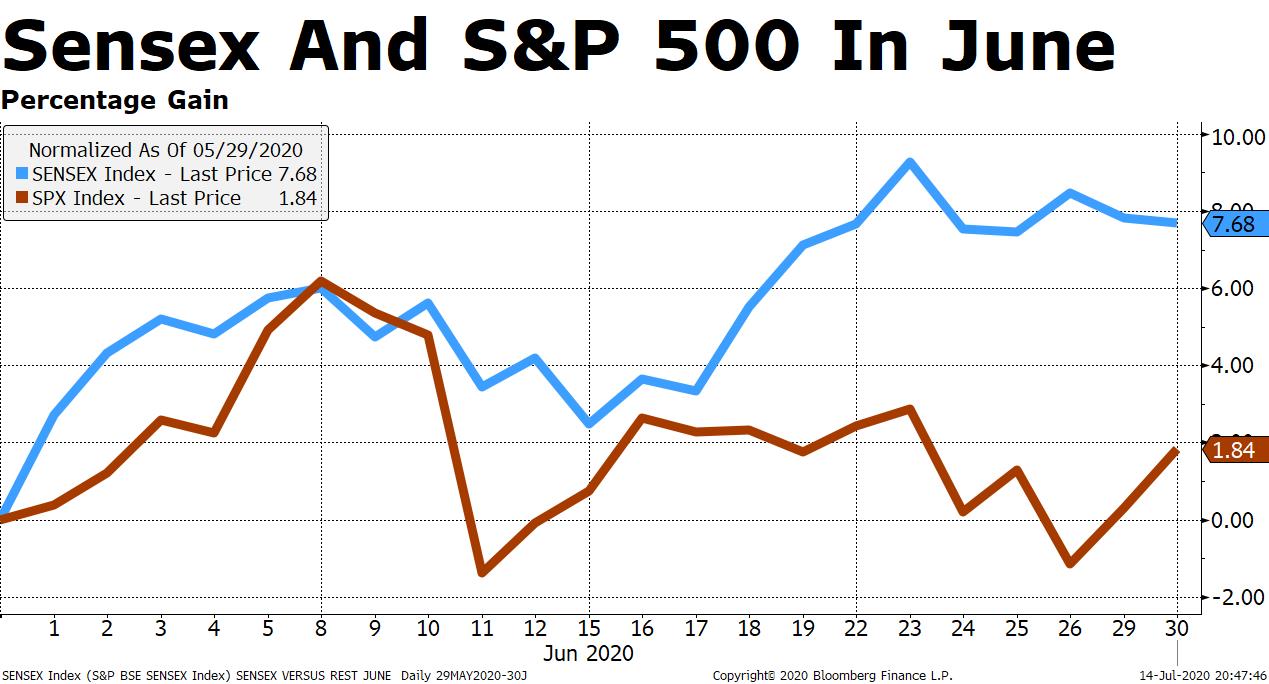
The average Indian seems bewildered and puzzled at the stock market behaviour.
Many common citizens, that are not financially savvy investors, have asked me for an explanation of the stock markets.
Stock markets don't take up too much of my mindspace usually but with so many people asking, I felt the urge to glean some explanation, if I could. So I spoke to a lot of financial analysts, investors, market economists, most of whom believed that excess liquidity caused by monetary and fiscal responses to Covid-19 was finding its way to asset markets, a'la Ben Bernanke's ‘savings glut' explanation for asset price inflation during the dotcom boom.
I also looked at some of the standard stock market data from stock exchanges and depositories. While it revealed no clear answers it did throw up some very interesting and curious findings. So, I decided to highlight some of these findings in a simple manner for the average non-financial citizen.
Market Surge: Investment Or Speculation?
Usually, if people feel it is a good time to invest in companies, then the demand for shares is high and the stock market goes up. But it can also be the case that instead of investing, people are merely buying and selling shares during the day. For example, an investor may believe that it is a good time to invest in a company like say, Tata Motors because the demand for cars may go up and can buy shares of Tata Motors. Or one can buy shares of Tata Motors early in the morning, sell them before lunch at a slightly higher price, then buy them again post-lunch and sell them again before the close of market.
In the first case, the investor will take ‘delivery' of Tata Motors shares. In the second case, the trader is merely speculating on the price of Tata Motors and has not taken “delivery”. In both cases, the share price of Tata Motors can go up. So, was the big stock market jump in June driven by investment or speculation?
Stock markets publish data on the overall delivery percentage on a daily basis. If the delivery percentage is high, that indicates many people bought shares as investment and if it is low, then there were more speculators than investors.
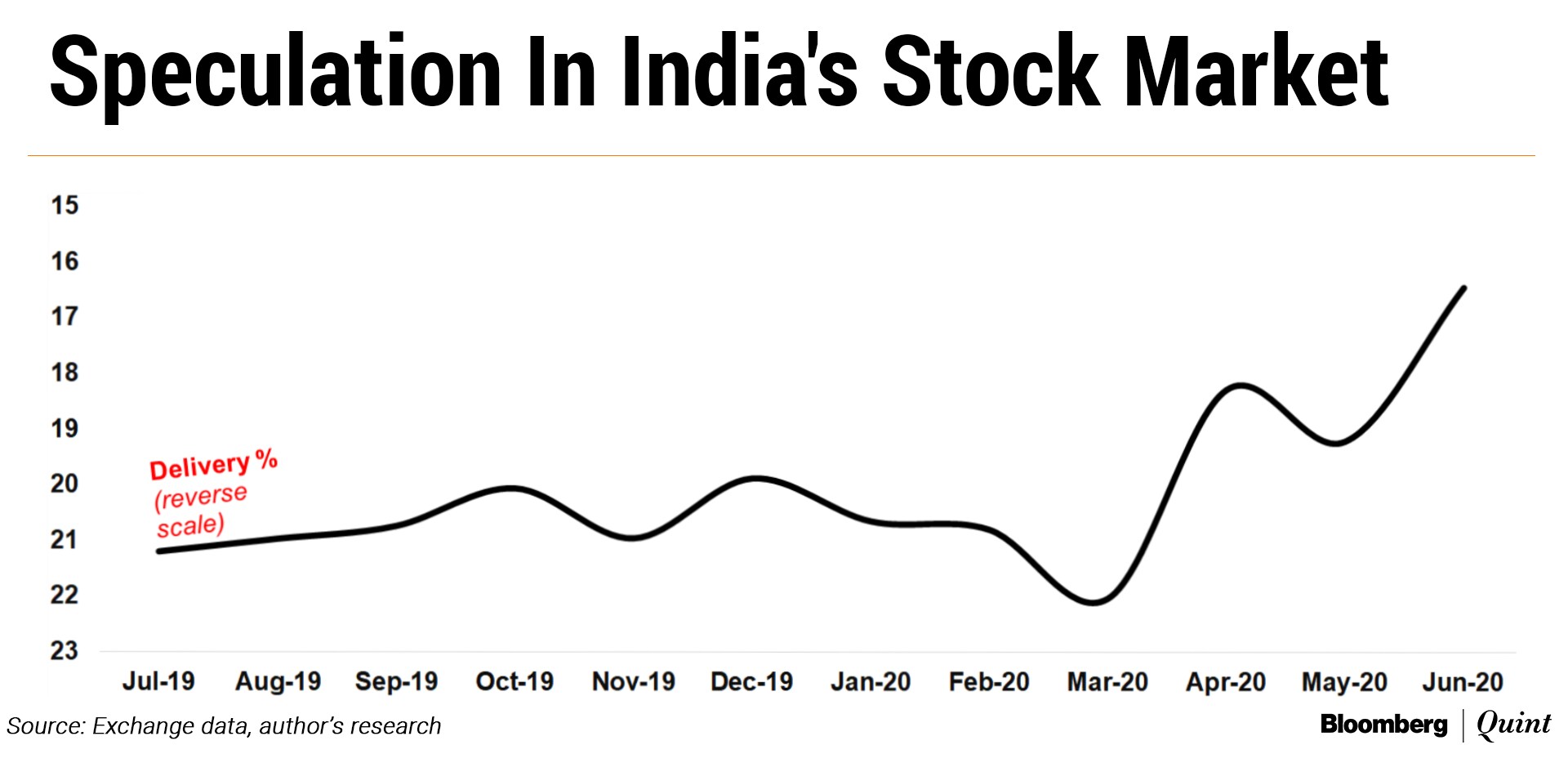
It turns out that the delivery percentage for June in India's stock markets was very low. That is, speculation in June was very high.
In fact, measured as delivery percentage, speculation level in June in India's stock markets was the highest in 15 years.
It was higher than even during the time of the great financial crisis of 2008.
Market Surge: Domestic Or Foreign Money?
Now that we know that speculation levels were very high in June, the next question is who was speculating so much? Was it promoters driving their own stock prices up or banks putting their excess money in stock markets or was it mutual funds or was it foreign money?
Again, market data offers some answers.
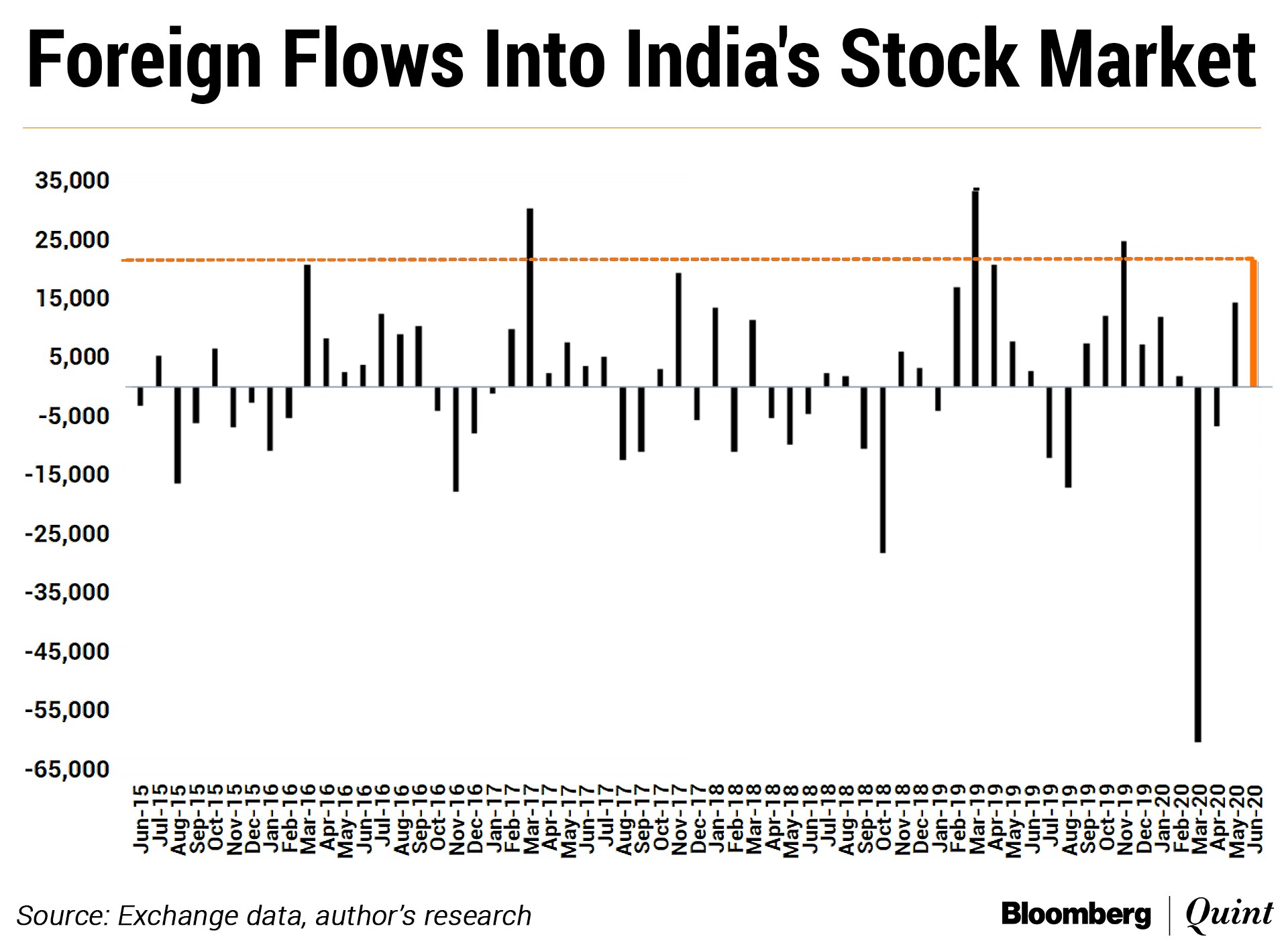
Indian mutual funds have actually been taking their money out of the stock markets in June and previous months. Domestic investors have also been taking their money out. It turns out that there was a large sum of foreign money that came into India's stock markets in June. Nearly, Rs 22,000 crore of foreign money came into India's stock markets in June. This was the fourth-highest in the last 5 years.
At a time when the global economy is reeling under the pandemic and economic activity in India is among the worst affected due to the extreme nature of the lockdown, when domestic investors are withdrawing their money, why did foreign investors pour so much money into India's stock markets?
Is this surge in foreign money due to one-time or special investments in the month of June (the Jio investment by foreign investors is not accounted in this) or is it speculative money? We do not know but it merits closer analysis.
Market Surge: Three Independent Facts, Coincidence Or Connected?
So, here is what the data tells us clearly.
- India's stock market rose 8% in June, among the highest gains in the world.
- Speculation levels in the stock market, measured as delivery percentage, were the highest in June in more than a decade.
- Huge amounts of foreign money came into the stock market in June.
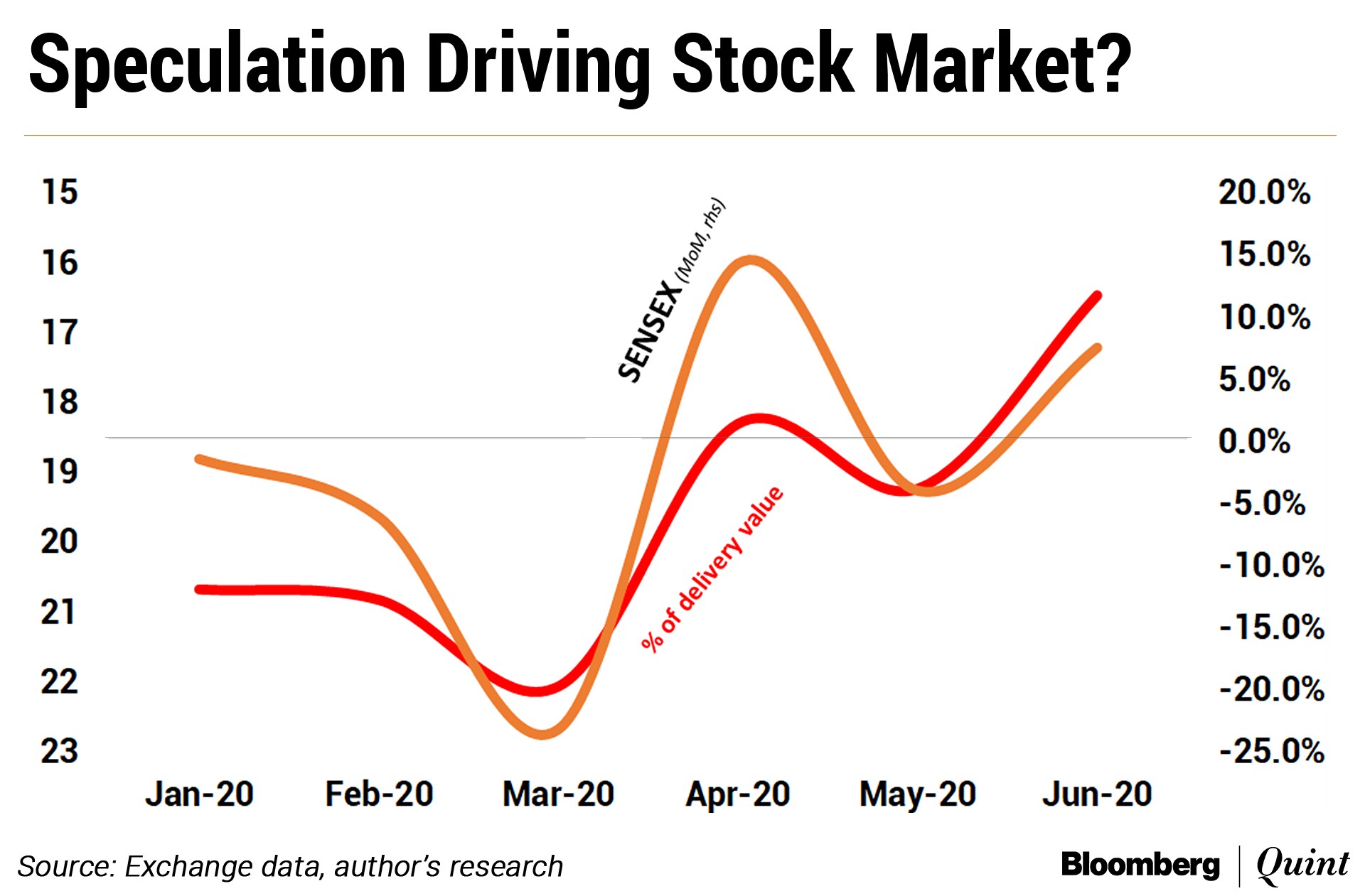
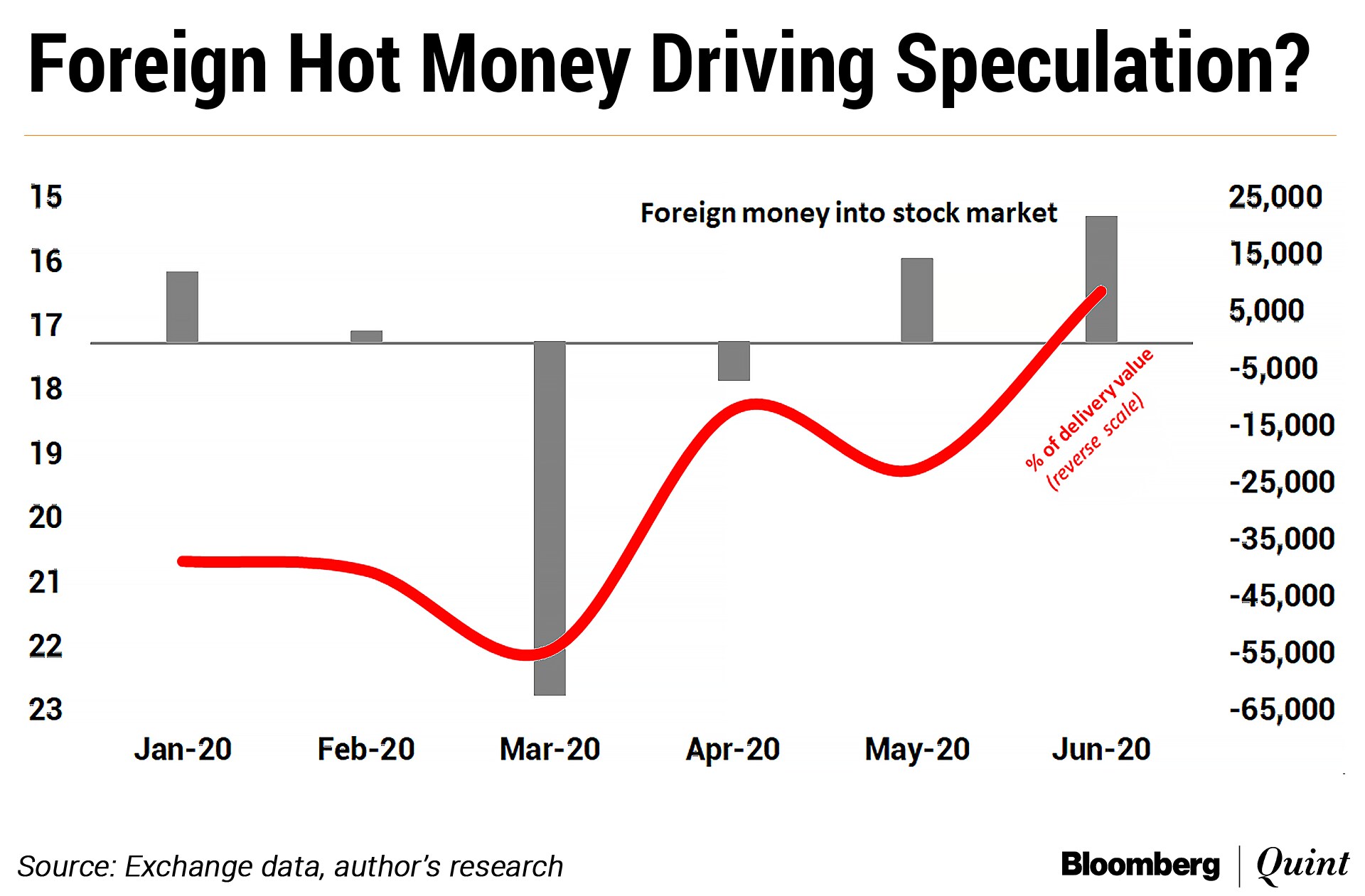
It is then natural to ask the question – Is the story of India's stock market rise on account of a gush of foreign hot money speculating in the stock markets, or are these three data points mere coincidences, which could also well be the case.
The answer is not clear, but the circumstances certainly call for a closer investigation by stock exchanges and the regulator.
Praveen Chakravarty is a Political Economist, and Chairperson - Data Analytics in the Indian National Congress.
The views expressed here are those of the author and do not necessarily represent the views of BloombergQuint or its editorial team.

-
One El Nino, India Can Handle. Two Could Break The Granary

India's grain stocks can absorb one bad year, but a second El Nino could drain the buffer in two to three years, economists say.
-
India's Troika Of Good Luck | Joining The Dots
As Jensen Huang's exit drags Nvidia down, a cooling AI trade and resilient earnings have revived investor interest in India. A likely RBI rate hike looms.
-
Talking Points This Week: Leadership Shock At Nvidia, Earnings Strength, And The Fog Over Hormuz
The Anthropic IPO pricing and first trading day, Nvidia's upcoming earnings, and any fresh signals from Iran will set the tone for the following week.
-
Signature Play: The Classic Cocktail Is Dead. Or Is It?
Classic cocktails are disappearing from India's cocktail menus. But they're still being ordered, taught to bartenders and borrowed from. So, who's really having the last drink?
-
A New Samvat Wishlist: Inclusive Prosperity And Human Development
India has strengthened its economic foundations through infrastructure, digital access and enterprise. Its next growth chapter must deepen productivity, create better livelihoods and widen participation in prosperity.
-
Love, Sex Aur Dhokha: The Audacious Plot To Spy On Jensen Huang
A Taipei dinner, a Singapore chip buyer and a suspected Chinese asset: inside the alleged spy operation that got close to NVIDIA's Jensen Huang.
-
Ten Things I Learnt This Samvat
Patience can be a trap. Cheap stocks can stay cheap. Leverage can wipe you out. What did Samvat 2082 teach us? Niraj Shah writes on 10 lessons from the year gone by.
-
Talking Points This Week: Tech Nerves, FII Buying, And A Faraway Banking Shock
The global markets are not shining this Diwali. The exception in the large markets is, India.
-
Midterm Rally Lasted A Day. The Hard Reality Of A Divided US May Last Two Years | Opinion
Between a contested AI boom, a debt ceiling that arrives in 2027 and a president with every incentive to act alone, the next two years may prove more volatile than the first day's rally suggests.
-
Blue Wave Will Derail the AI Trade but Won't Dismantle the AI Era | Unhedged Position
The Democrats' sweep of the US Congress will see politics collide with economic forces both over the long and short term.