Crypto Lenders’ Woes Worsen as Bitcoin Miners Struggle to Repay Debt
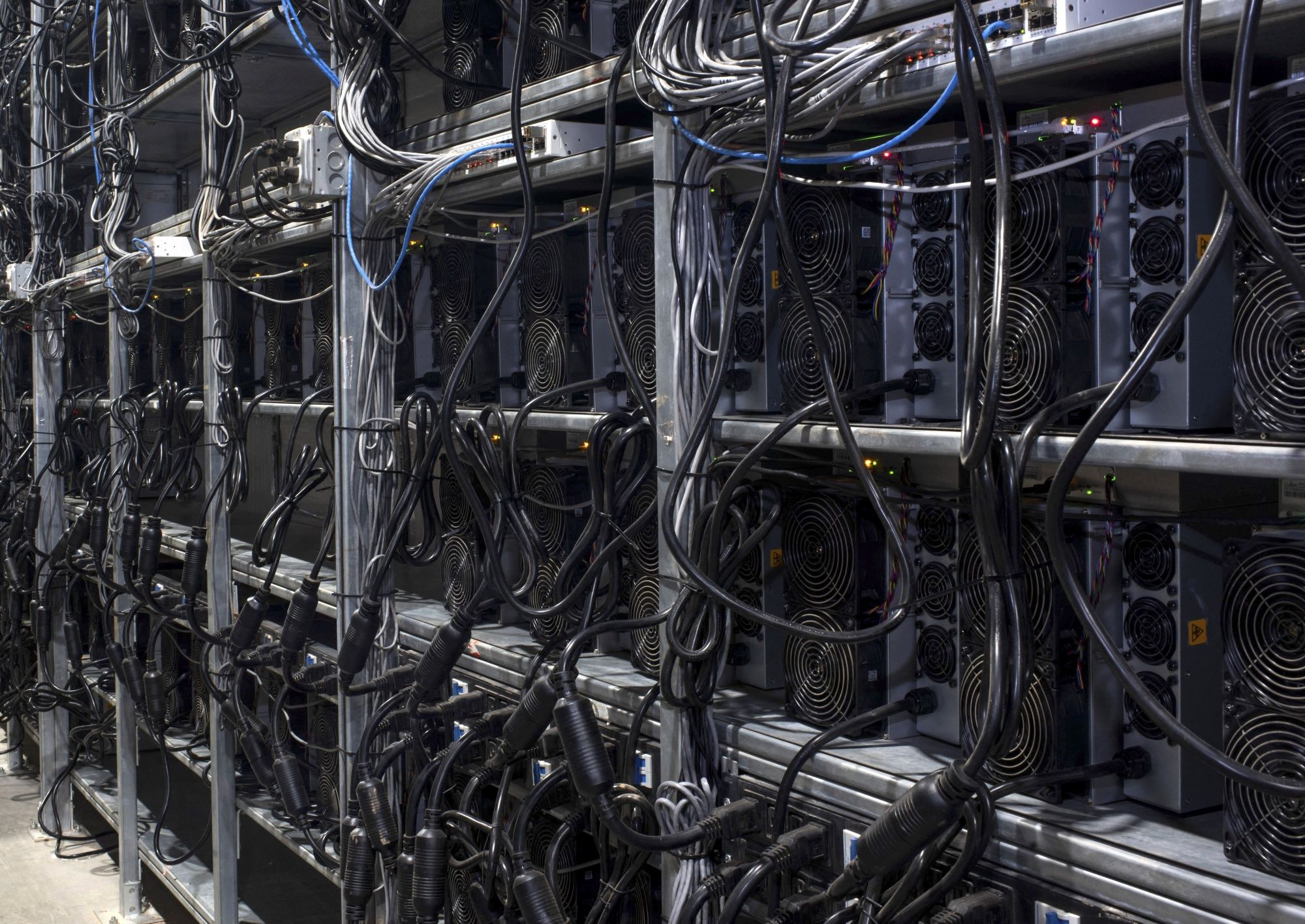
(Bloomberg) -- Beleaguered crypto lenders are being dealt another blow from Bitcoin miners as they weather the aftermath of the FTX collapse.
Miners, who raised as much as $4 billion from mining-equipment financing when profit margins were as high as 90%, are defaulting on loans and sending hundreds of thousands of machines that served as collateral back to lenders. New York Digital Investment Group, Celsius Network, BlockFi Inc., Galaxy Digital, and the Foundry unit of Digital Currency Group were among the biggest providers of funding to finance computer equipment and build data centers.
The liquidity crunch hitting digital-asset markets after FTX failed comes as low Bitcoin prices, soaring energy costs and more competition weigh on miners. Loans backed by the computer equipment, known as rigs, had become one of the industry's most popular financing tools. Many lenders are now likely facing substantial losses since they can't seize any other assets besides the machines, whose value has dropped by as much as 85% since last November.
“People were pouring dollars into the mining space,” said Ethan Vera, chief operations officer at crypto-mining services firm Luxor Technologies. “Miners ended up dictating a lot of the loan terms, so the financiers moved ahead with a lot of the deals where only the machines were collateral.”

Iris Energy Ltd. said this month it expected to default on $108 million of limited recourse loans, which is mostly backed by mining rigs. The publicly-traded miner is a long-time borrower of NYDIG, winning a $71 million loan secured by 19,800 rigs as recently as March. That was the miner's third facility secured by NYDIG, a unit of Stone Ridge Holdings Group. Core Scientific Inc., which has warned of bankruptcy, had $39 million of rig-backed loans with NYDIG, and $54 million with now bankrupt BlockFi, as of September. Stronghold Digital Mining already returned around 26,200 mining rigs in August to eliminate $67 million debt owed to NYDIG.
NYDIG, BlockFi and Celsius did not respond to requests for comment. Foundry and Galaxy declined to comment.
There is likely to be more defaults. Compared to the publicly-listed miners, private companies currently contribute about 75% of the computing power for the entire Bitcoin network and most of their rig-backed loans with the lenders remain undisclosed, according to data from Luxor. Additional loans will likely come under stress if more private large-scale miners such as Compute North file for bankruptcy.
“There hasn't necessarily been the best due diligence on whether a miner was credit worthy or not,” said Matthew Kimmell, digital asset analyst at crypto investment firm CoinShares.
While miners tend to default when they are cash-depleted, some companies may have decided to stop paying the loans even if they still have cash on balance sheets, according to Luxor's Vera. The collateral can be worth less now than the remaining payments for some miners.
“It could be an economic decision to walk away from the financing deals,” Vera said. “Miners are focused on how to survive the next six months rather than if they need the lender for the next five years.”
The miners use powerful energy-guzzling computers to secure the Bitcoin blockchain by validating transaction data and earn rewards in the form of the token. Bitcoin has tumbled about 75% since reaching an all-time high in November 2021.
Lenders are already looking at a glut of machines after liquidating rig-backed loans from miners. They face the option of selling equipment at a steep discount or finding data centers to mine Bitcoin themselves.
That glut means lenders may see further losses given how saturated the rig market is already, said Mason Jappa, chief executive at Blockware Solutions, which provides mining rig brokerage services. “There are just tons of machines sitting unused everywhere.”
More stories like this are available on bloomberg.com
©2022 Bloomberg L.P.

-
Getting To Work Costs Women More | The Reason Why

It is not just about women paying more than men. It is about women paying much more in cities than in villages.
-
AI Bias In Investing Cannot Be Eliminated, But It Can Be Governed
Framing is a particularly important example as identical financial information presented in terms of gains rather than losses can lead an LLM to reach a different assessment.
-
Joining The Dots | Dark Skies, Steady Diya: Why Hope Holds This Diwali
With war, a weak rupee and foreign outflows weighing on sentiment, policymakers at the NDTV World Summit and market veterans at NDTV Profit Ignite: Diwali Edition offered the same advice: stay invested and filter out the noise.
-
The Curious Case of Equitas Small Finance Bank And A CEO Who Quit For Stock
PN Vasudevan believes persistent investor concerns over a perceived conflict of interest had become a governance overhang on Equitas Small Finance Bank's stock, even as the lender improved profitability and asset quality.
-
Talking Points This Week: AI Cash Burn, A Tiger Comeback And An India That Still Finds Its Own Path
India is not immune to higher oil or tighter global liquidity, yet its earnings base is broader, its domestic policy levers are still available.
-
Foreign Investors Own Half Of HDFC Bank and ICICI Bank. An LTCG Cut Could Matter Most Here
Foreign portfolio investors have US$115 billion parked in HDFC Bank, ICICI Bank. If the government cuts long-term capital gains tax, Jefferies says returning foreign money could land here first.
-
'Never Seen This Level Of Negativity': Sandeep Tandon Says The Next Rally May Be Closer Than You Think
Veteran investor Sandeep Tandon says foreign selling is easing, large-caps are due a comeback and mid-caps are crowded, while he turns positive on gold, power and pharma this Diwali.
-
Indians Stay With Family, Not In Hotels | The Reason Why
India still lacks enough clean, reliable and affordable hotels for budget-conscious travellers.
-
The Economic Imperative: Analysing The Material Driving Force Behind India-Canada Strategic Reset
This economic complementarity is further reinforced by deep institutional investment ties and talent mobility, which form the bedrock of the bilateral framework.
-
Medicine Pricing: Where Must Profit Stop?
India must confront excessive margins, hidden incentives and regulatory gaps that threaten the integrity of medicine.










