Correction Warranted, More May Follow, Say Market Experts
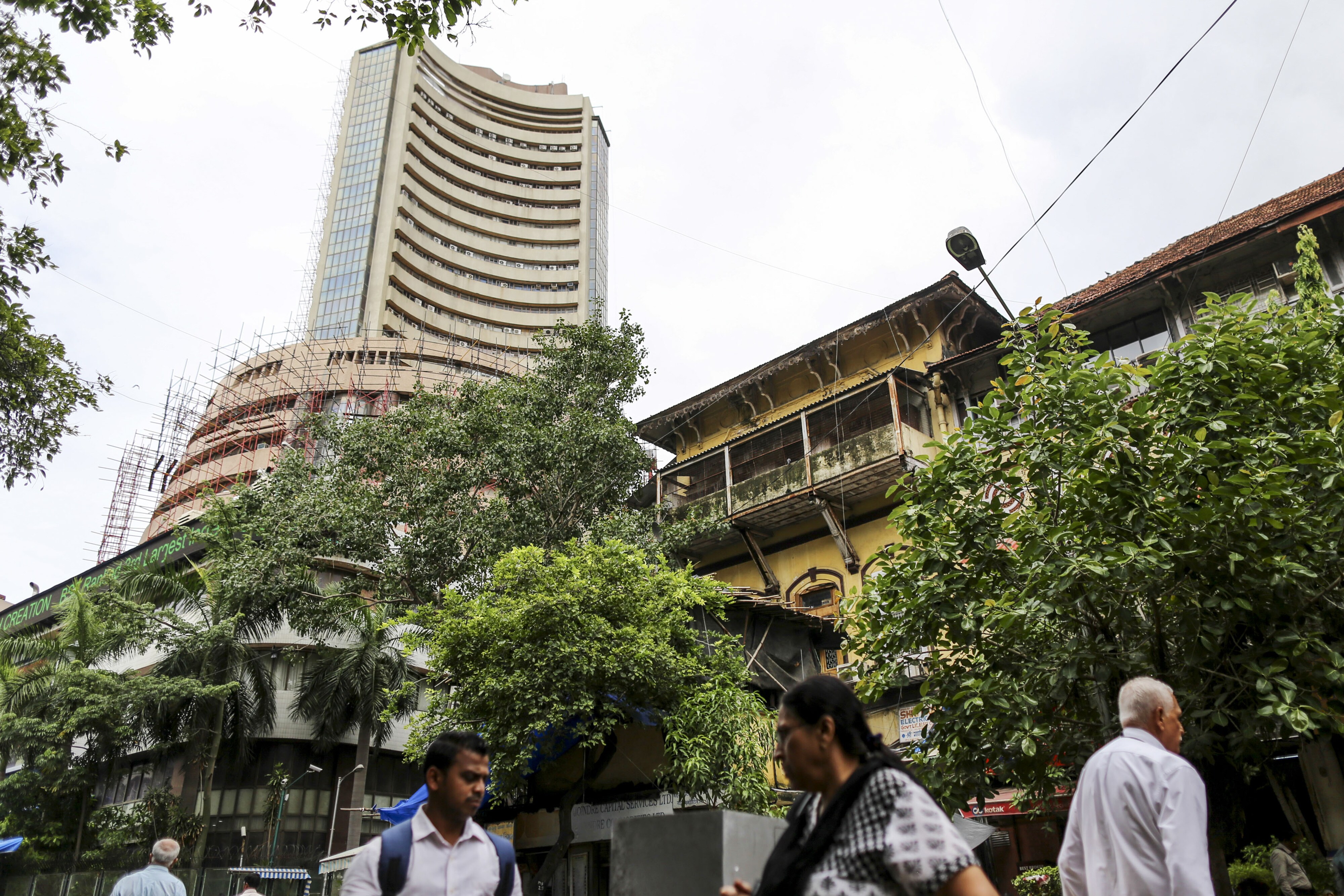
The equity benchmarks fell the most in six months as liquidity fears triggered by Infrastructure Leasing & Financial Services Ltd.'s defaults continue to roil Indian financial stocks.
The S&P BSE Sensex fell 1.46 percent to 36,305 points, while the broader Nifty 50 lost 1.58 percent to 10,967.40 points. That's the worst decline since March 16 this year. Both the indices have fallen more than 4.5 percent the past five sessions as multiple defaults by the IL&FS group entities triggered concerns in credit markets, putting pressure on financial counters.
Jyotivardhan Jaipuria, founder and managing director at Veda Investments, however, said the correction was warranted. The Indian markets are trading at nearly a 65 percent premium to emerging markets, he said. “In some sense, it's a market that's expensive and a bit of correction would probably be healthy.”
Yet, concerns about the quality of commercial paper can easily precipitate into a panic. Like on Friday when non-bank lenders were at the receiving end with Dewan Housing Finance Ltd. tumbling as much as 60 percent. The fears stemmed from DSP Mutual Fund's sale of its AAA-rated bonds at a higher yield, implying a higher risk usually associated with the paper of a lower credit profile. Indiabulls Housing Finance Ltd., too, plunged up to 35 percent but recovered most of the losses.
While Dewan rebounded more than 11.7 percent today, most banks and non-bank lenders declined. IIFL Holdings Ltd. ended 8.39 percent lower, Edelweiss Financial Services fell 8.31 percent, Indiabulls Housing Finance closed 7.5 percent down, while Bajaj Finance declined nearly 5 percent on the NSE.
Saurabh Mukherjea of Marcellus Investment told BloombergQuint that while there's not much reason to panic for an investor who is sensibly diversified across sectors, certain lenders could correct from the current levels despite the recent decline. “Wholesale funded lenders are still significantly overvalued and a further 30 percent correction in them is warranted.”
Sanjay Mookim, a director at Bank of America Merrill Lynch, also expects more downside to the market. Domestic risk-off is very much likely in the Indian markets due to upcoming elections, Mookim, told BloombergQuint in an interaction. “I think there is further downside to Indian equities.”
Fixed income asset managers, however, advised investors not to panic.
It's not a situation like 2008 and things have been blown out of proportion, said Lakhsmi Iyer, chief investment officer, fixed income at Kotak Mutual Fund. Regulators have stepped in to calm the nerves and “if they follow it up with the necessary actions... much of this can get reversed in an orderly manner”.
Agreed Mahendra Kumar Jajoo, head of fixed income at Mirae Asset Global Investments. Mutual funds give the safest and the fastest exit and that's why when people start panicking, the first thing they think about is redeeming their investments, he said. “I think there will be pressure but I don't think it's looking to be at this point that it will evolve into something of a bigger order crisis.”

-
A New Samvat Wishlist: Inclusive Prosperity And Human Development

India has strengthened its economic foundations through infrastructure, digital access and enterprise. Its next growth chapter must deepen productivity, create better livelihoods and widen participation in prosperity.
-
Why Prashant Jain's 3P Investment Managers Bought 2.5% Stake In This Healthcare Firm
After slowing acquisitions, Entero now has the opportunity to extract greater value from the network. The key, however, will be execution.
-
Taxing A Promise: The Unsettled Story Of GST On Corporate Guarantees
These concerns are particularly relevant for businesses in the infrastructure, real estate, power and EPC sectors, where guarantees run for several years over the duration of the project and involve substantial amounts.
-
Who Will Care When Women Work? That Is The Wrong Question
The debate on women and work becomes strangely patronising when even our most enlightened elites assume that care is a woman's natural duty.
-
AI Disruption Is Exponential, Businesses Need A Margin Of Safety: HDFC AMC's Navneet Munot
According to Munot, one of the biggest challenges in assessing AI's impact is that the pace of change is exponential rather than linear.
-
The AI Race Is Bigger Than AI Models | The Week In Whys
The AI race and the humanoid race may look like two different technology stories. But underneath, they are increasingly about the same thing: who controls the ecosystem needed to build the technology.
-
FCNR Deposits Beat Estimates, RBI To Pull Out Rs 6-7 Lakh Crore: Pranjul Bhandari
HSBC's chief India economist says the central bank must drain up to Rs 7 lakh crore of surplus liquidity within a fortnight, either through a cash reserve ratio hike or dollar sales, as Foreign Currency Non-Resident (Bank) deposits far outpace expectations
-
Joining The Dots | CAS Turmoil, The Large-Cap Debate And Zee's Almost Rs 22,000-Crore Haircut
Time bends on Dalal Street, Dylan's lyrics haunt the large-cap debate, and Zee's promoter picks up the bargain of the year.
-
India Wants To Be Vietnam; Vietnam Wants To Be China | The Reason Why
India may become a global hub for smartphones. It could also make more camera modules, batteries and semiconductor packaging over the years.