ONGC Rallies After Getting Another Target Price Hike, This Time From CLSA

Shares of Oil and Natural Gas Corp. were up over 4% in early trade on Tuesday after CLSA identified the company as a top pick, forecasting a 42% upside with a new target price of Rs 360 per share. The brokerage highlighted multiple volume and realisation triggers in 2025, alongside a significant undervaluation and an attractive 6% dividend yield.
ONGC's eastern offshore KG-98 field is expected to hit peak production of 45kbpd oil and 10mmscmd gas before the end of 2025, the brokerage said. This ramp-up could boost the company's domestic oil and gas output by 10% and 18%, respectively, over fiscal 2024 levels. CLSA estimates this field alone could contribute an incremental PAT of Rs 6,300 crore at peak production, accounting for 11% of its fiscal 2027 PAT forecast.
The government's revised gas pricing policy is a game-changer for ONGC, CLSA said. Gas from well interventions is now priced at a higher 12% slope compared to legacy gas, and CLSA projects that by fiscal 2027, 40% of ONGC's gas output will fetch these higher realisations, driving meaningful earnings upgrades.
The removal of the windfall tax could allow ONGC to benefit from crude prices exceeding $75 per barrel, further enhancing its profitability, the brokerage said.
Factoring in these triggers, CLSA has raised its earnings per share estimates for ONGC by 2-8% for fiscals 2025 to 2027.
With multiple material growth drivers, including peak production from the KG basin, higher gas realisations, and a potential crude price boost, ONGC is poised for significant upside. Its current undervaluation and strong dividend yield make it an attractive bet for long-term investors, as per the report.
ONGC Share Price Today
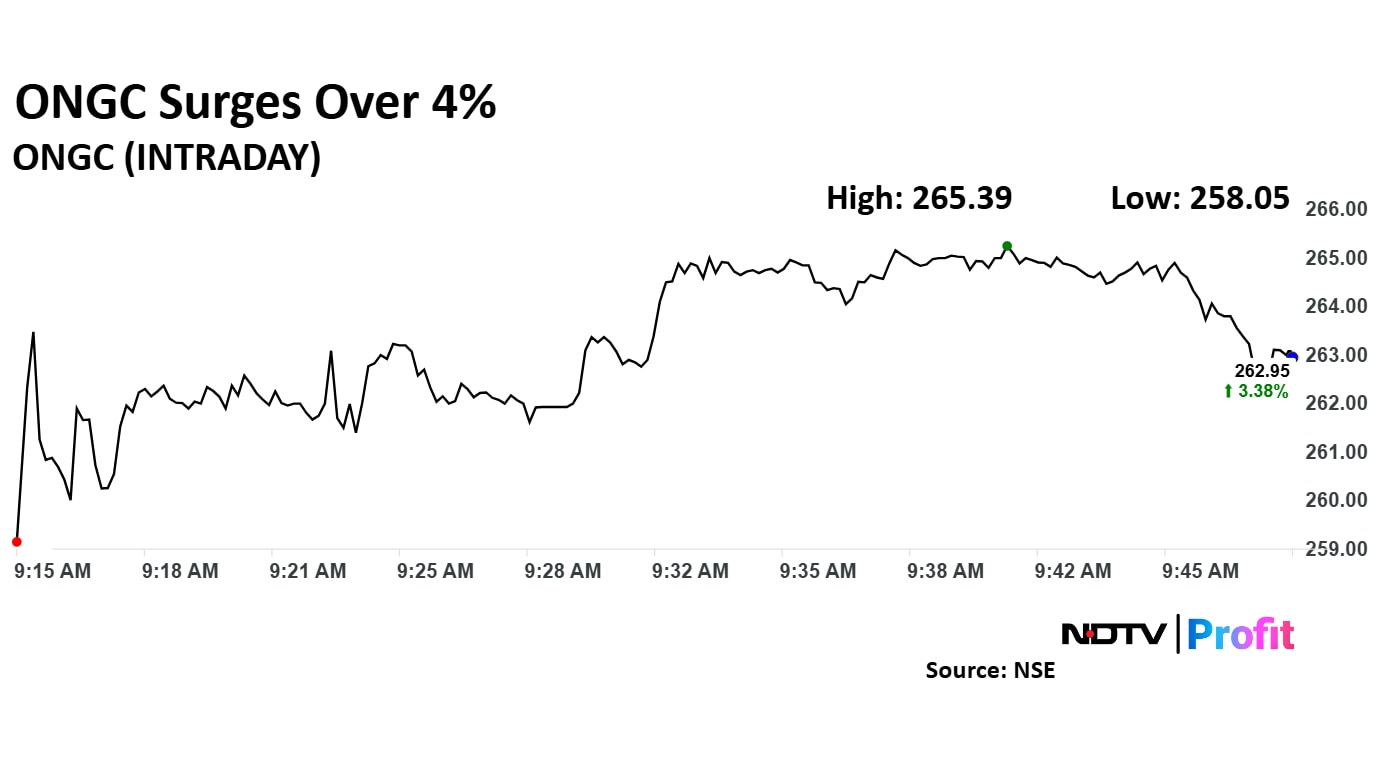
The scrip rose as much as 4.30% to Rs 265.30 apiece, the highest level since Nov. 8, 2024. It pared gains to trade 4.06% higher at Rs 264.68 apiece, as of 09:45 a.m. This compares to a 0.67% advance in the NSE Nifty 50.
It has risen 21.44% in the last 12 months. Total traded volume so far in the day stood at 4.9 times its 30-day average. The relative strength index was at 62.5.
Out of 30 analysts tracking the company, 20 maintain a 'buy' rating, five recommend a 'hold' and five suggest 'sell', according to Bloomberg data. The average 12-month analysts' consensus price target implies an upside of 20.2%.

-
Indians Stay With Family, Not In Hotels | The Reason Why

India still lacks enough clean, reliable and affordable hotels for budget-conscious travellers.
-
The Economic Imperative: Analysing The Material Driving Force Behind India-Canada Strategic Reset
This economic complementarity is further reinforced by deep institutional investment ties and talent mobility, which form the bedrock of the bilateral framework.
-
Medicine Pricing: Where Must Profit Stop?
India must confront excessive margins, hidden incentives and regulatory gaps that threaten the integrity of medicine.
-
Why Amazon And Flipkart Are Struggling To Beat Meesho In India's Smaller Cities
With 274 million users and lowest-cost logistics, Meesho is defending its value commerce crown against giants like Amazon and Flipkart.
-
High US Salaries, No Green Card Certainty: The Financial Calculation Facing Indian H-1B Families
The suspension of PERM processing at eight technology employers does not cancel existing H-1B visas. What it does is force a question many Indian families have been avoiding: is the US salary worth tying your career and family plans to one employer?
-
Swiggy vs Eternal: Food Delivery's Two Rivals Are No Longer In The Same Race
Eternal is building a private AI assistant, dark.ai. Swiggy is still working out how to make Instamart pay, with an operating loss of Rs 895 crore in the July-September quarter while Blinkit stayed profitable.
-
Where You Live Shapes How You Get To Work | The Reason Why
Two-wheelers are the most popular way to get to work in India, accounting for nearly 43% of workplace commutes.
-
Unhedged Position: Can India See An Indonesia-Style Time Correction?
The Nifty is trading below levels it first clocked in 2024. Is there, then, as I have suggested in the headline, potential that the current time correction drags on painfully for the next three-five, even ten years?
-
Navigating Friction And Energy Realities: An Analysis Of Marco Rubio's October Visit To India
Occurring at a critical juncture marked by stalled trade negotiations and escalating geopolitical pressures over global energy supplies, the visit offers a profound window into modern US-India relations.
-
India Exports Capital. Why Not Export Trusteeship?
The big question, then, is whether India can build an institution that global borrowers, investors, banks, and lawyers can trust, even without an Indian connection.










