Cipla Slumps To Five-Month Low As Analysts See Strain On Profitability
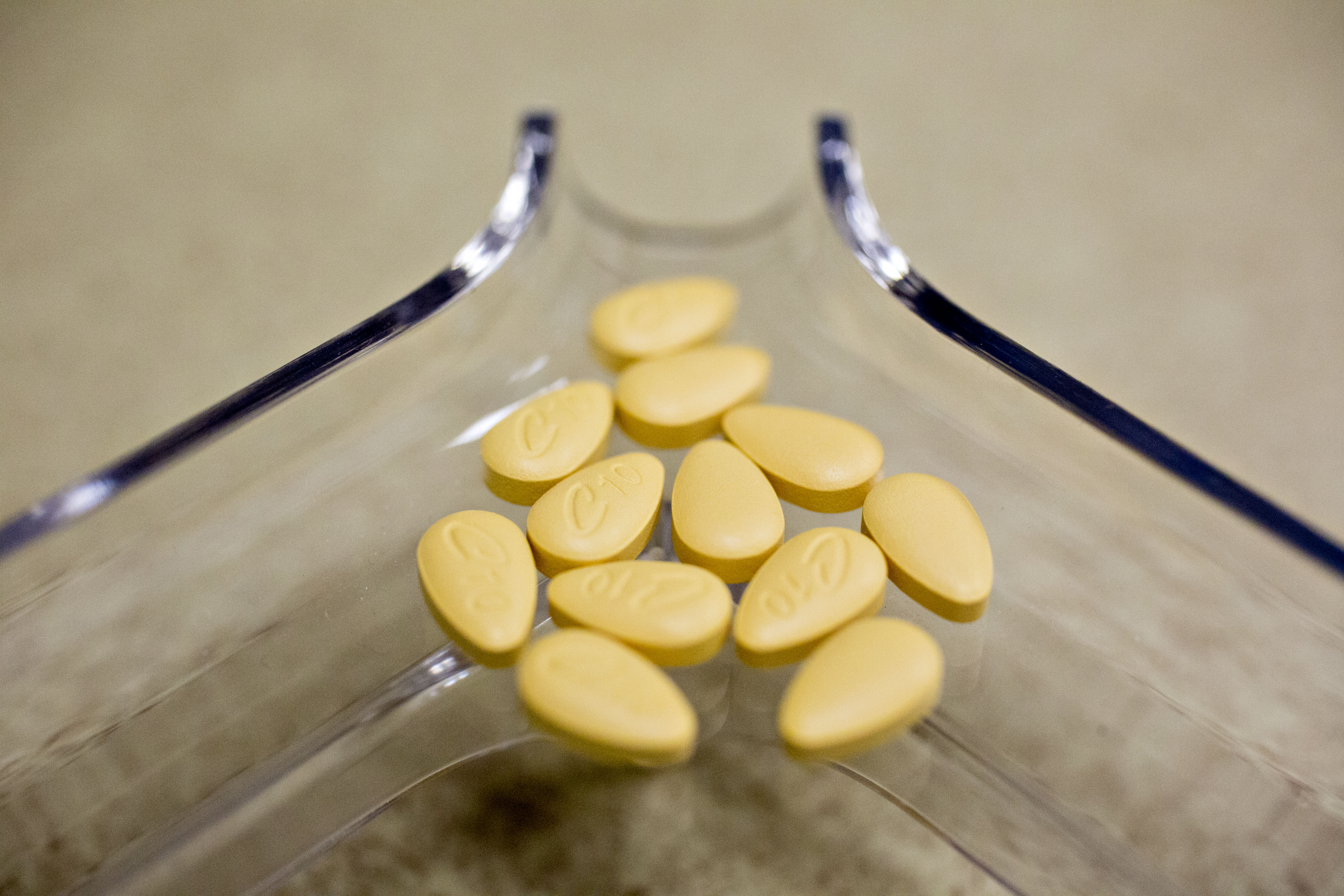
Shares of Cipla Ltd. slumped to a five-month low as analysts downgraded the stock and cut target price after the company hinted at multiple headwinds for the ongoing financial year and the quarterly profit missed estimates.
Earnings per share estimates for the financial year ending March 2019 were lowered in the range of 10-25 percent, according to brokerage reports.
India's second-largest drugmaker by market value, in its investor presentation, highlighted four challenges that it might face in the next couple of quarters.
- Sanctions to impact performance of certain businesses.
- Capacity balancing will have a short-term impact.
- Higher commodity and crude prices and escalation in China sourced supplies will continue
- Pressure on tender businesses across markets.
As a result, sales will be lower by Rs 100 crore per quarter, the management said in a post-earnings conference call. The capacity issue, it said, is being addressed and is likely to be resolved by the end of the financial year. The tender business, about 18 percent of total sales, is facing funding pressure and competition in markets for HIV and malaria products. Profitability in the near term will be similar to that of the second quarter, Cipla said.
The U.S. business, too, failed to meet the street's estimates but the management is confident of growth on the back of limited launch of products. Cipla aims to launch one limited competition product every quarter and one respiratory product a year starting financial year 2019-20. The pharma company also provided a revenue guidance of $125 million from the U.S. market by March 2019 compared with $108 million in the quarter ended September.
Cipla's second-quarter financials missed the Bloomberg consensus estimates on all fronts. While revenue fell 2 percent, profit lowered 11 percent, according to its exchange filing. The operating margin fell because of a weakness in the tender business in Africa, lower U.S. sales and late-onset infections in India.
Key Highlights From Conference Call
- Cipla retains India sales guidance at Rs 6,400-6,500 crore in the ongoing financial year.
- Weak India growth on restocking after the implementation of goods and services tax last year and late flu season.
- Rebalancing of acute portfolio will be a priority.
- Guides for delay of four months in Provetil HFA (delay of 3-4 months already).
- Ten abbreviated new drug application filed in the first half of the financial year; aims to maintain the trend of 20 filings in FY19.
The stock fell as much as 5.3 percent in early trade to Rs 533.20 apiece.
Watch Cipla Global CFO Kedar Upadhye's interview here

-
The Economic Imperative: Analysing The Material Driving Force Behind India-Canada Strategic Reset

This economic complementarity is further reinforced by deep institutional investment ties and talent mobility, which form the bedrock of the bilateral framework.
-
Medicine Pricing: Where Must Profit Stop?
India must confront excessive margins, hidden incentives and regulatory gaps that threaten the integrity of medicine.
-
Why Amazon And Flipkart Are Struggling To Beat Meesho In India's Smaller Cities
With 274 million users and lowest-cost logistics, Meesho is defending its value commerce crown against giants like Amazon and Flipkart.
-
High US Salaries, No Green Card Certainty: The Financial Calculation Facing Indian H-1B Families
The suspension of PERM processing at eight technology employers does not cancel existing H-1B visas. What it does is force a question many Indian families have been avoiding: is the US salary worth tying your career and family plans to one employer?
-
Swiggy vs Eternal: Food Delivery's Two Rivals Are No Longer In The Same Race
Eternal is building a private AI assistant, dark.ai. Swiggy is still working out how to make Instamart pay, with an operating loss of Rs 895 crore in the July-September quarter while Blinkit stayed profitable.
-
Where You Live Shapes How You Get To Work | The Reason Why
Two-wheelers are the most popular way to get to work in India, accounting for nearly 43% of workplace commutes.
-
Unhedged Position: Can India See An Indonesia-Style Time Correction?
The Nifty is trading below levels it first clocked in 2024. Is there, then, as I have suggested in the headline, potential that the current time correction drags on painfully for the next three-five, even ten years?
-
Navigating Friction And Energy Realities: An Analysis Of Marco Rubio's October Visit To India
Occurring at a critical juncture marked by stalled trade negotiations and escalating geopolitical pressures over global energy supplies, the visit offers a profound window into modern US-India relations.
-
India Exports Capital. Why Not Export Trusteeship?
The big question, then, is whether India can build an institution that global borrowers, investors, banks, and lawyers can trust, even without an Indian connection.
-
France's Economy & Politics Are In Crisis | The Reason Why
Let's look at how the French economy and politics evolved under Nicolas Sarkozy, Franois Hollande and Emmanuel Macron.










