Canara Bank Q4 Results: Profit Rises 18% On Higher Core Income, Lower Provisions
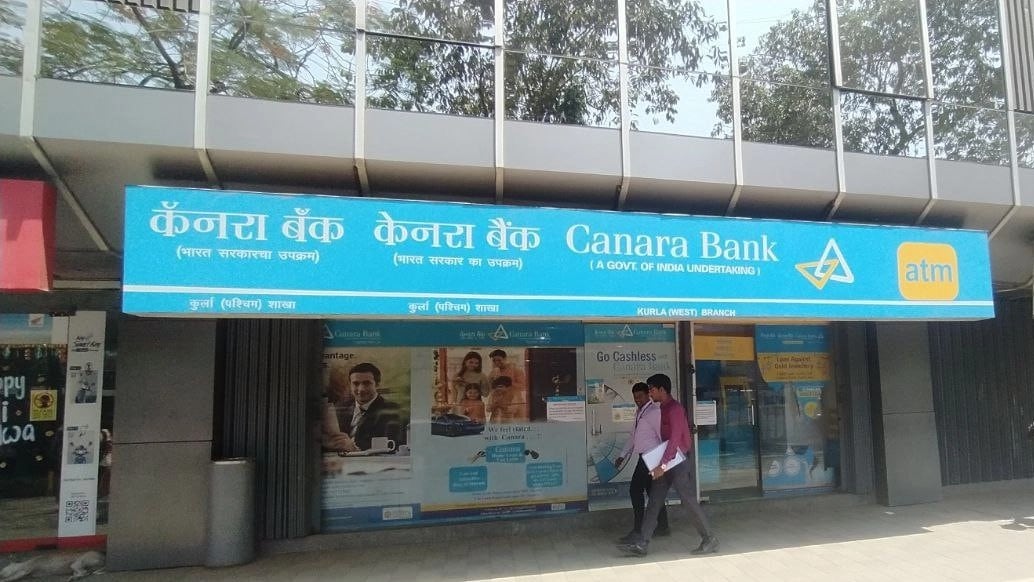
Canara Bank reported 18.3% rise in its standalone net profit in the fourth quarter of fiscal 2024 to Rs 3,757 crore, on account of increased net interest income and a drawdown in provisions.
Analysts polled by Bloomberg had pegged the bottom line at Rs 3,744.57 crore for the quarter.
On a sequential basis, the net profit of the lender grew 2.7%.
Canara Bank Q4 FY24 Results (Standalone)
Net profit up 18% to Rs 3,757 crore (YoY).
Net interest income up 11.2% to Rs 9,580.2 crore (YoY).
Gross NPA at 4.23% versus 4.39% (QoQ).
Net NPA at 1.27% versus 1.32% (QoQ).
Net interest income, or core income, rose 11.2% to Rs 9,580.2 crore in the quarter under review. The bank's net interest margin, a key indicator of profitability, improved to 3.05% for the quarter from 3.02% in Q3. The cumulative margin for FY24 stood at 2.95%.
Provisions held by the bank declined nearly 20% year-on-year to Rs 2,481.8 crore in the March quarter. Credit costs fell 21 basis points year-on-year to 0.96% during the period.
However, on a sequential basis, provisions increased by 30.7% as the bank set aside Rs 300 crore for a particular account to mitigate future default risks, according to K Satyanarayana Raju, managing director and chief executive officer of Canara Bank.
Provision coverage ratio improved to 89.10%, as of March 31, up 179 bps from the previous quarter.
Operating expenses, however, increased 20.7% year-on-year to Rs 7,410 crore during the quarter. Of this, employee costs rose 20% year-on-year to Rs 4,458 crore in Q3, on account of provisions against the bipartite settlement between Indian Banks' Association and employees on wage revision, the CEO said.
"We have made 100% provisions for retirement benefits, pension benefits, gratuity benefits. Last quarter, we had said we would need to make provisions worth Rs 150-200 crore. But, we have made provisions of Rs 350 crore in this quarter to provide fully, so that there is no burden next quarter onwards," Raju said.
On expenses related to technology, the bank has earmarked Rs 800 crore for capex requirements in FY25.
The bank's domestic advances grew 11.06% YoY to Rs 9.08 lakh crore during the quarter, driven by 13.5% growth in retail, agriculture and MSME loans. The bank management expects credit growth of 11-12% in FY25.
Further, domestic deposits rose nearly 11% YoY to Rs 12.1 lakh crore. Going forward, the deposit growth is seen at 9%. Canara Bank's credit-deposit ratio in Q4 stood at 73.20%, from 75.26% in the previous quarter.
"We are generally conservative on our guidance of credit and deposit growth," Raju told reporters in a post-earnings media call.
Owing to Reserve Bank of India's draft regulations on project finance, Raju said he does not expect "too much pressure" on core capital and margin of the bank, as the cost burden will be passed onto customers.
Canara Bank's total exposure to project finance stood at Rs 1-1.10 lakh crore at the end of the March quarter. However, the provision requirement of 5% proposed by RBI is not applicable on the entire portfolio, as it includes various categories, Raju said.
The bank is also seeking clarification on these regulations from the central bank to assess the financial impact of the circular on its balance sheet, he said.
The board recommended a dividend of Rs 16.10 per share for FY24, subject to shareholders' approval.

-
The Economic Imperative: Analysing The Material Driving Force Behind India-Canada Strategic Reset

This economic complementarity is further reinforced by deep institutional investment ties and talent mobility, which form the bedrock of the bilateral framework.
-
Medicine Pricing: Where Must Profit Stop?
India must confront excessive margins, hidden incentives and regulatory gaps that threaten the integrity of medicine.
-
Why Amazon And Flipkart Are Struggling To Beat Meesho In India's Smaller Cities
With 274 million users and lowest-cost logistics, Meesho is defending its value commerce crown against giants like Amazon and Flipkart.
-
High US Salaries, No Green Card Certainty: The Financial Calculation Facing Indian H-1B Families
The suspension of PERM processing at eight technology employers does not cancel existing H-1B visas. What it does is force a question many Indian families have been avoiding: is the US salary worth tying your career and family plans to one employer?
-
Swiggy vs Eternal: Food Delivery's Two Rivals Are No Longer In The Same Race
Eternal is building a private AI assistant, dark.ai. Swiggy is still working out how to make Instamart pay, with an operating loss of Rs 895 crore in the July-September quarter while Blinkit stayed profitable.
-
Where You Live Shapes How You Get To Work | The Reason Why
Two-wheelers are the most popular way to get to work in India, accounting for nearly 43% of workplace commutes.
-
Unhedged Position: Can India See An Indonesia-Style Time Correction?
The Nifty is trading below levels it first clocked in 2024. Is there, then, as I have suggested in the headline, potential that the current time correction drags on painfully for the next three-five, even ten years?
-
Navigating Friction And Energy Realities: An Analysis Of Marco Rubio's October Visit To India
Occurring at a critical juncture marked by stalled trade negotiations and escalating geopolitical pressures over global energy supplies, the visit offers a profound window into modern US-India relations.
-
India Exports Capital. Why Not Export Trusteeship?
The big question, then, is whether India can build an institution that global borrowers, investors, banks, and lawyers can trust, even without an Indian connection.
-
France's Economy & Politics Are In Crisis | The Reason Why
Let's look at how the French economy and politics evolved under Nicolas Sarkozy, Franois Hollande and Emmanuel Macron.










