BSE Trading Volume To Take A Hit Due To SEBI's New OI Calculation Rules
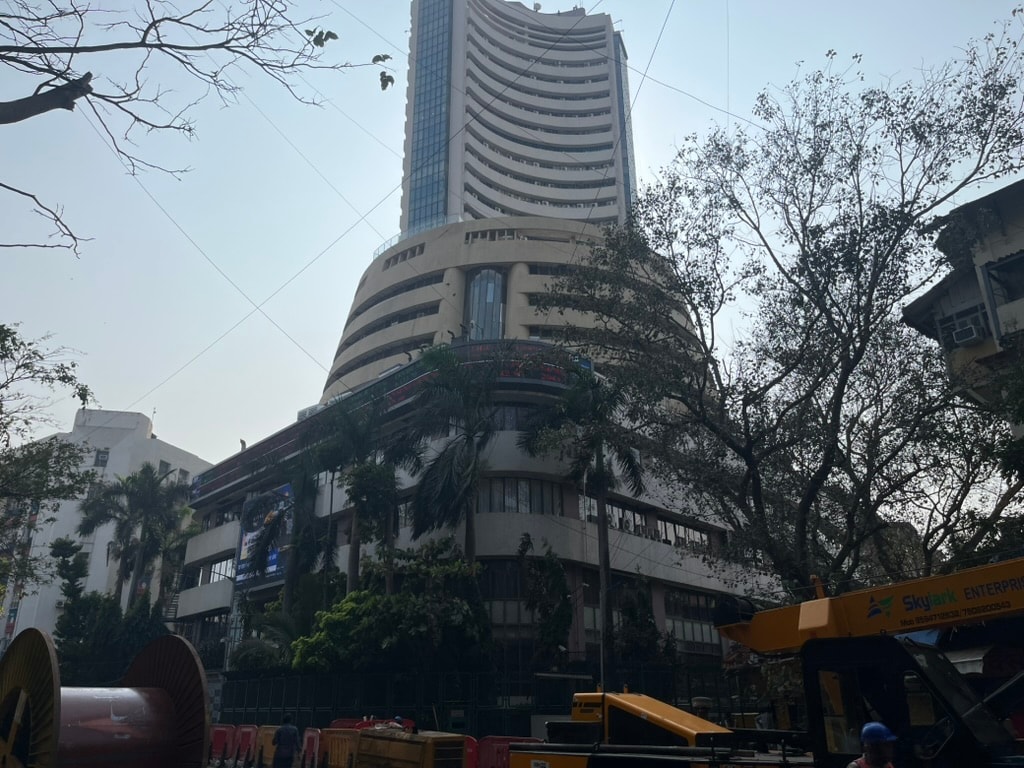
India's oldest bourse is bound to see its trading volumes hit by the securities market regulator's latest tweak in the derivates segment. Although, the extent of the fall varies among top analysts.
The Securities and Exchange Board of India proposed shifting to a ‘Future Equivalent' method of calculating open interest in equity derivatives. This tweak aims to help reflect accurate price sensitivity and prevent stocks from being manipulated and pushed into a ban period.
The aim of taming undue volatility doesn't bode well for an exchange where options trading accounts for around half of the top line, according to Goldman Sachs. The proposed changes could reduce activity from these proprietary trading groups, which consist of about 70% of BSE's derivatives' average daily turnover.
The brokerage lowered its industry options premium-to-cash equity turnover estimate from 0.4 times to 0.3 times. Analysts at Goldman Sachs, however, pointed out the market share gain after the partial implementation of options reforms. "BSE has gained market share at a pace faster than anticipated."
Goldman Sachs maintained its 'neutral' rating but slashed the target price to Rs 4,880 per share from Rs 5,650 apiece.
At present, open interest — the total number of outstanding derivative contracts — is measured by simply adding notional open interest from futures and options.
The latest tweak will see the open interest calculated by summing the Delta (estimate of how much an option's value may change) of all open positions. This would take into consideration the nature, price of the contract, price of the underlying and other technical factors.
These proposals would affect index derivatives volumes for exchanges. However, it is difficult to estimate it at present, Jefferies said in a note. The impact could be lower for BSE as the majority of its clients may be trading within the proposed limits.
Domestic High-frequency and proprietary traders may have the option to distribute their trading activity across multiple accounts, Jefferies said, thereby staying under the limits. "The impact on foreign high-frequency and prop traders may be higher."
Derivatives account for 45% of the revenue for BSE and 70% for the National Stock Exchange. An impact of 5-10% on volumes could affect BSE's topline by 3-5% and earnings per share by 2-5%, Jefferies said.
The market regulator is also tightening the eligibility criteria for derivatives on non-benchmark indices. Currently, many sectoral and thematic indices have a few dominant stocks that can lead to excessive concentration of risk.

-
Foreign Investors Own Half Of HDFC Bank and ICICI Bank. An LTCG Cut Could Matter Most Here

Foreign portfolio investors have US$115 billion parked in HDFC Bank, ICICI Bank. If the government cuts long-term capital gains tax, Jefferies says returning foreign money could land here first.
-
'Never Seen This Level Of Negativity': Sandeep Tandon Says The Next Rally May Be Closer Than You Think
Veteran investor Sandeep Tandon says foreign selling is easing, large-caps are due a comeback and mid-caps are crowded, while he turns positive on gold, power and pharma this Diwali.
-
Indians Stay With Family, Not In Hotels | The Reason Why
India still lacks enough clean, reliable and affordable hotels for budget-conscious travellers.
-
The Economic Imperative: Analysing The Material Driving Force Behind India-Canada Strategic Reset
This economic complementarity is further reinforced by deep institutional investment ties and talent mobility, which form the bedrock of the bilateral framework.
-
Medicine Pricing: Where Must Profit Stop?
India must confront excessive margins, hidden incentives and regulatory gaps that threaten the integrity of medicine.
-
Why Amazon And Flipkart Are Struggling To Beat Meesho In India's Smaller Cities
With 274 million users and lowest-cost logistics, Meesho is defending its value commerce crown against giants like Amazon and Flipkart.
-
High US Salaries, No Green Card Certainty: The Financial Calculation Facing Indian H-1B Families
The suspension of PERM processing at eight technology employers does not cancel existing H-1B visas. What it does is force a question many Indian families have been avoiding: is the US salary worth tying your career and family plans to one employer?
-
Swiggy vs Eternal: Food Delivery's Two Rivals Are No Longer In The Same Race
Eternal is building a private AI assistant, dark.ai. Swiggy is still working out how to make Instamart pay, with an operating loss of Rs 895 crore in the July-September quarter while Blinkit stayed profitable.
-
Where You Live Shapes How You Get To Work | The Reason Why
Two-wheelers are the most popular way to get to work in India, accounting for nearly 43% of workplace commutes.
-
Unhedged Position: Can India See An Indonesia-Style Time Correction?
The Nifty is trading below levels it first clocked in 2024. Is there, then, as I have suggested in the headline, potential that the current time correction drags on painfully for the next three-five, even ten years?










