Bond Market Expects No More Rate Hikes, Sees Prolonged Pause
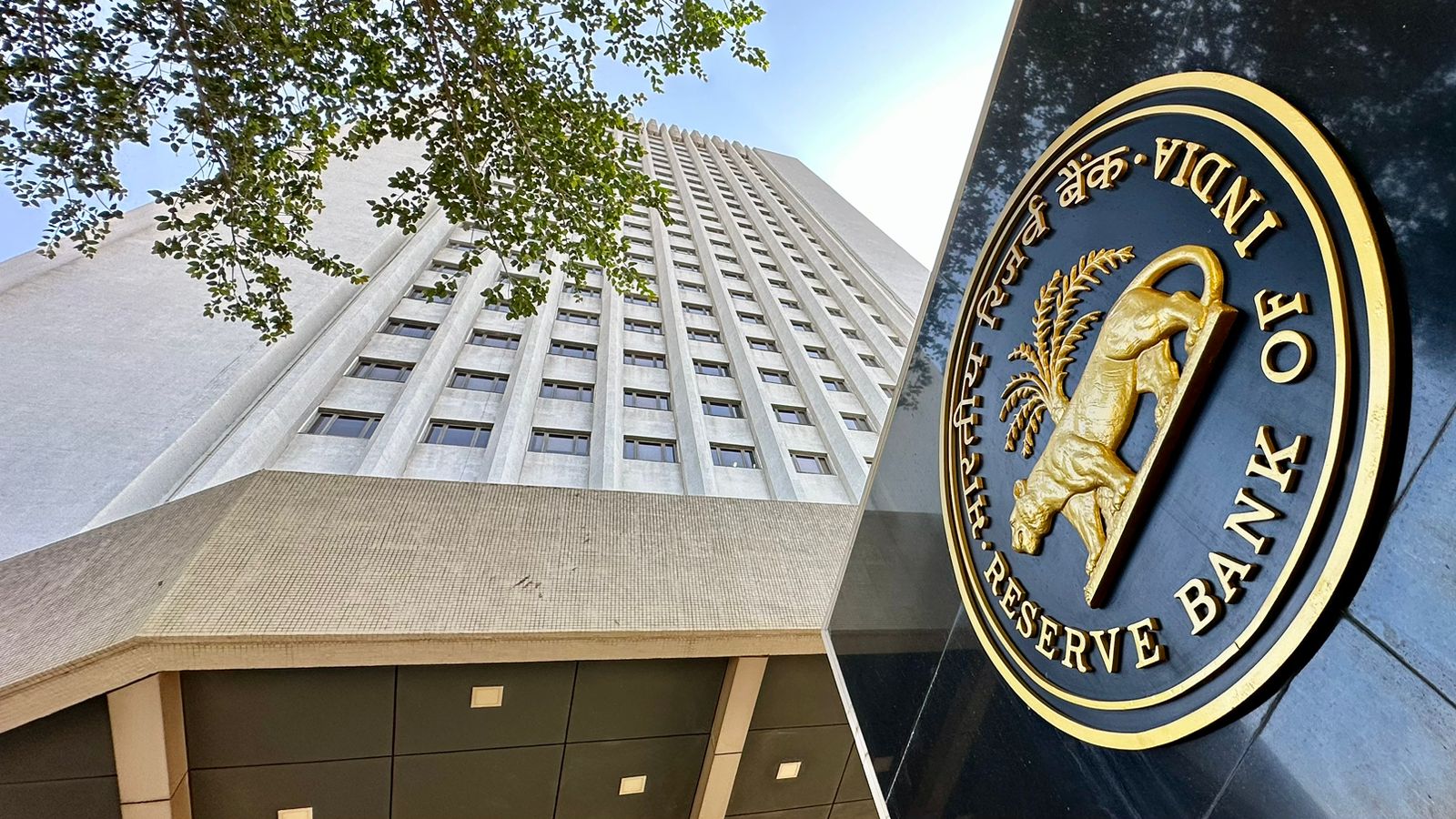
The unanimous decision by the Monetary Policy Committee of the RBI to pause its rate hike cycle came as a bit of a surprise for bond market participants on Thursday, with yields declining across maturities.
According to multiple market participants, the base case is now a prolonged pause by the central bank—an expectation that is reflected in the bond market reaction. This comes despite Reserve Bank of India Governor Shaktikanta Das carefully leaving room for future rate hikes and saying categorically that this is "a pause and not a pivot."
Soon after the announcement by the RBI, the yield on the benchmark 10-year government bond declined sharply from its previous close of 7.27% to a low of 7.18%. Yields on lower maturity Treasury bills saw deeper cuts.
"The bond market believes that the RBI is done with the rate hike cycle," said Dhawal Dalal, chief investment officer (fixed income) at Edelweiss Mutual Fund. "There has been a big reaction in the bond yields."
"The decision to pause was unanimous. The last time a unanimous decision was reached was in August 2022. The MPC members are seemingly concerned about the growth-inflation dynamic," Dalal said.
Deepak Agrawal, chief investment officer (fixed income) at Kotak Mahindra Mutual Fund, concurred. "As a base case, we are now assuming that there will be no more rate hikes from the RBI," he said.
The projection for inflation is for an average of 5.25% in the first half of the financial year, he told BQ Prime. "The actual number may turn out to be lower, in which case the RBI will have the leeway to stay on hold."
For the full financial year, the RBI revised its projections lower for retail inflation. Consumer price inflation is seen at 5.2%. Since May last year, the RBI has hiked the policy repo rate by 250 basis points, and the impact of these hikes is still playing through the system, Das said.
There has been a lot of government action recently in terms of managing inflation. And the RBI has already done its part in the form of rate increases since May last year, according to Dinesh Ahuja, fund manager at SBI Mutual Fund. "The mantle is shifting to the government."
Ahuja said that the RBI would be watchful of the external environment, particularly the economic activity in the U.S. and the monetary policy action by the Federal Reserve.
"There are already cracks visible in the U.S. because of the rate hikes that have been undertaken," he said. "It is more than likely that we will start seeing softer numbers on growth and economic activity there."
Where Do We Go From Here?
Investors in bond funds will have reaped the benefit of the fall in yields from the recent peak. Less than a month ago, the yield on the benchmark 10-year government bond hit 7.43%. Since then, the collapse of three banks in the U.S. and the forced acquisition of Credit Suisse have pushed global bond yields lower.
"You should expect the yield curve to remain flat," Ahuja said. "At the most, you might see a 10–15 basis point movement."
There is an expectation that the RBI wants to keep liquidity at neutral levels. Therefore, it is unlikely that the yields on the short end of the curve will come off substantially from this point, according to Ahuja.
All three fund managers expect the yield on the 10-year benchmark government bond to remain range-bound in the coming months, between 7.15% and 7.3%.
Agrawal has a slightly different expectation. "If we're going to see a prolonged pause, the yield curve is likely to get steeper," he said. "If, however, we start to get an indication of a rate cut by the U.S. Fed, the market will start building expectations of a cut here, too, and it will initially lead to flattening of the yield curve and steepening post actual cuts."
"Do remember that the U.S. has hiked far more than the RBI," Agrawal said. "So, when the Fed pivots, we expect the RBI to act with a lag, and the quantum of rate cuts in India would be limited."

-
The Economic Imperative: Analysing The Material Driving Force Behind India-Canada Strategic Reset

This economic complementarity is further reinforced by deep institutional investment ties and talent mobility, which form the bedrock of the bilateral framework.
-
Medicine Pricing: Where Must Profit Stop?
India must confront excessive margins, hidden incentives and regulatory gaps that threaten the integrity of medicine.
-
Why Amazon And Flipkart Are Struggling To Beat Meesho In India's Smaller Cities
With 274 million users and lowest-cost logistics, Meesho is defending its value commerce crown against giants like Amazon and Flipkart.
-
High US Salaries, No Green Card Certainty: The Financial Calculation Facing Indian H-1B Families
The suspension of PERM processing at eight technology employers does not cancel existing H-1B visas. What it does is force a question many Indian families have been avoiding: is the US salary worth tying your career and family plans to one employer?
-
Swiggy vs Eternal: Food Delivery's Two Rivals Are No Longer In The Same Race
Eternal is building a private AI assistant, dark.ai. Swiggy is still working out how to make Instamart pay, with an operating loss of Rs 895 crore in the July-September quarter while Blinkit stayed profitable.
-
Where You Live Shapes How You Get To Work | The Reason Why
Two-wheelers are the most popular way to get to work in India, accounting for nearly 43% of workplace commutes.
-
Unhedged Position: Can India See An Indonesia-Style Time Correction?
The Nifty is trading below levels it first clocked in 2024. Is there, then, as I have suggested in the headline, potential that the current time correction drags on painfully for the next three-five, even ten years?
-
Navigating Friction And Energy Realities: An Analysis Of Marco Rubio's October Visit To India
Occurring at a critical juncture marked by stalled trade negotiations and escalating geopolitical pressures over global energy supplies, the visit offers a profound window into modern US-India relations.
-
India Exports Capital. Why Not Export Trusteeship?
The big question, then, is whether India can build an institution that global borrowers, investors, banks, and lawyers can trust, even without an Indian connection.
-
France's Economy & Politics Are In Crisis | The Reason Why
Let's look at how the French economy and politics evolved under Nicolas Sarkozy, Franois Hollande and Emmanuel Macron.










