Bhavish Aggarwal Among Seven Billionaires Created By India’s IPO Boom In 2024

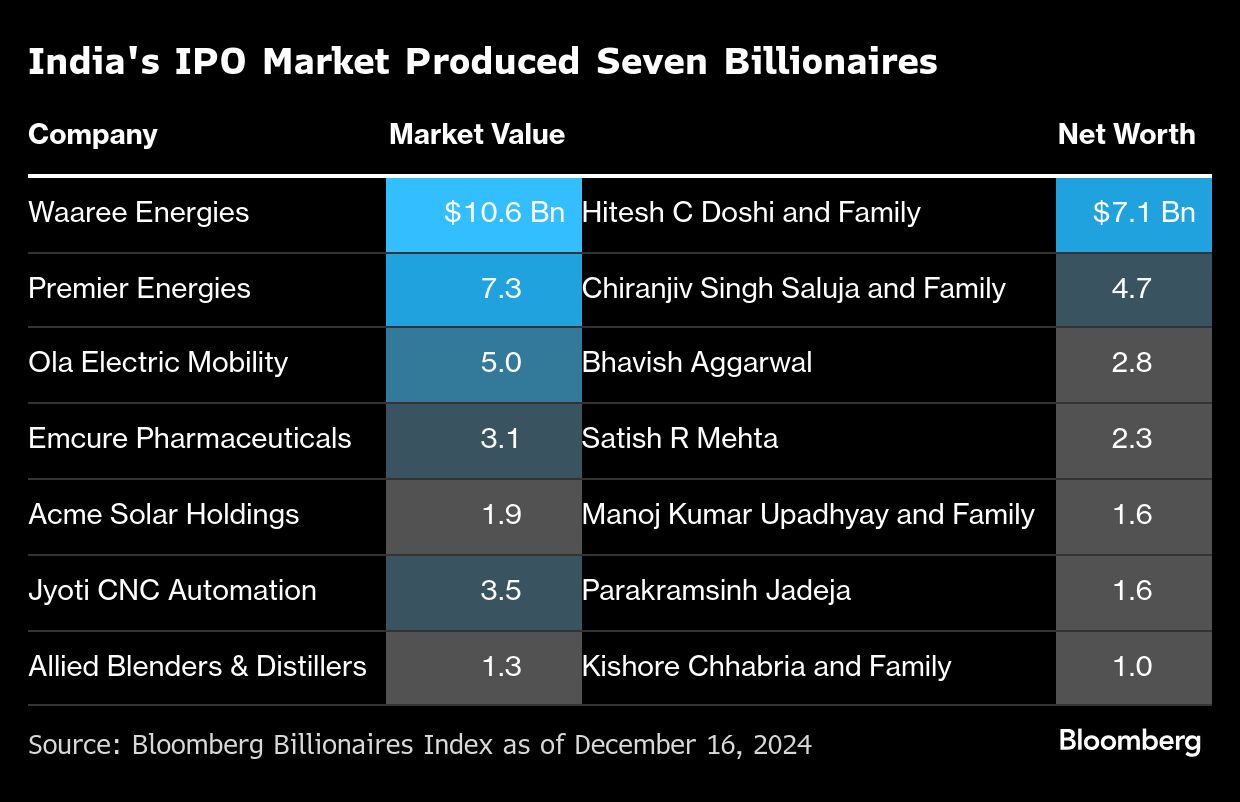
A blockbuster year for initial public offerings in India catapulted seven entrepreneurs into the dollar billionaires league, many of them early movers in the country's booming renewable energy sector.
Chiranjeev Singh Saluja of Premier Energies is among those who successfully rode the wave.
“My father was in the business of supplying hand pumps to rural villages,” the 51-year-old said in an interview. “He saw that access to electricity was sparse in those areas, so he started Premier Solar in 1995,” Saluja said.
Three decades on, the company rechristened Premier Energies is the country's second largest integrated solar module and solar cell manufacturer behind the Adani Group. Investors bullish on the government's investments in solar energy have bid up Premier shares nearly threefold since their debut in September, valuing it at roughly $7 billion.
Saluja is one of the four entrepreneurs in the renewable energy space whose personal fortunes have soared after their companies listed on the stock exchanges last year.
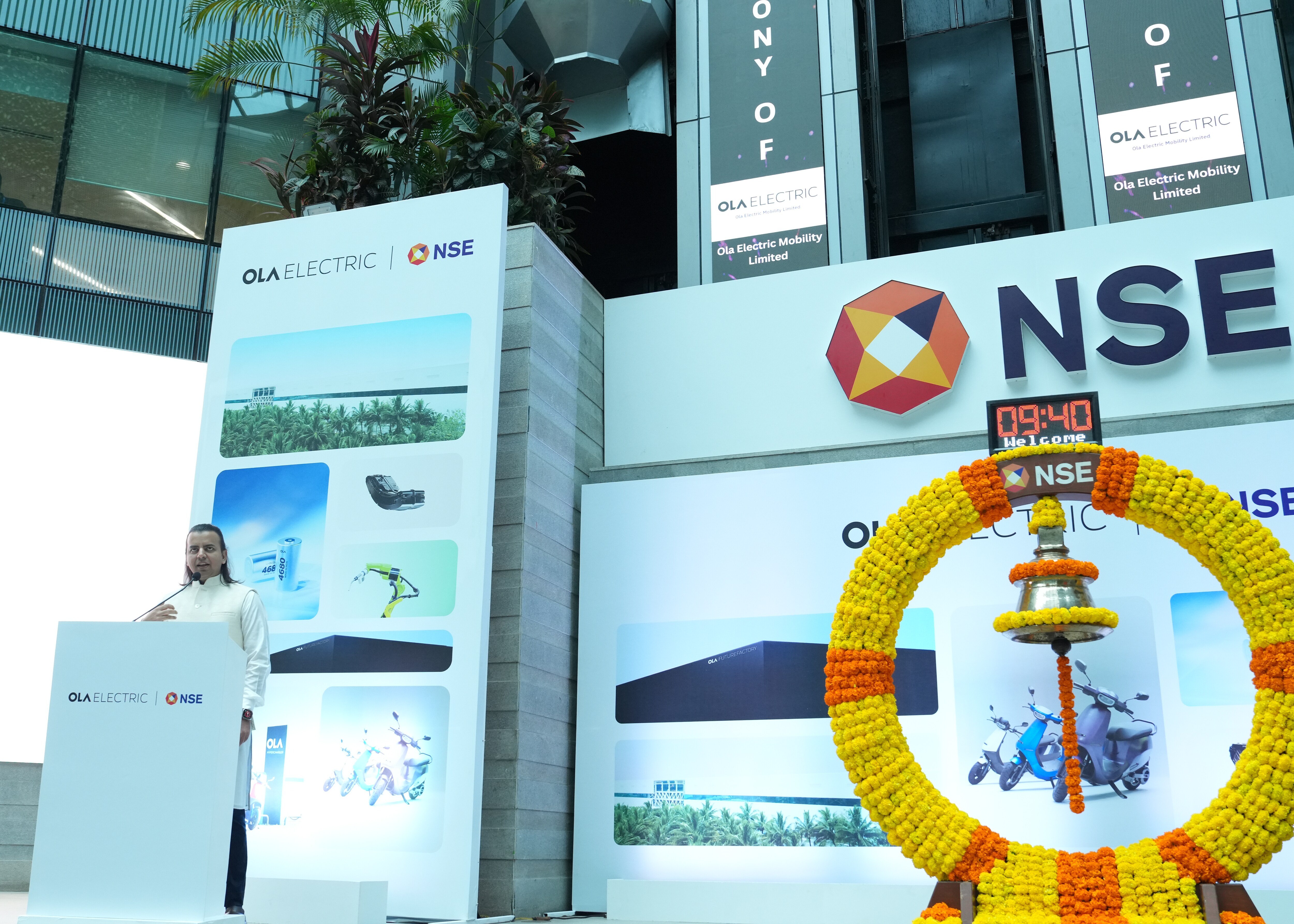
The others are Hitech C Doshi of the Waaree Group, which also makes solar modules, Bhavish Aggarwal of electric vehicle maker Ola Electric Mobility Ltd and Manoj K Upadhyaya of solar energy generator Acme Solar Holdings Ltd..
Prospects for solar players appear bright as India aims to add another 100 GW of capacity in the next four years, according to a report by Frost & Sullivan. But this could be a double-edged sword, said Saluja.
He sees a surge in new capacity in solar cell and module manufacturing over the next 18-24 months. “There is definitely going to be consolidation in the sector, so only those who scale up will survive,” Saluja said.
A similar trend could play out in India's equity market, which was on a roll in 2024, with a record 1.66 trillion rupees ($19.82 billion) raised through IPOs compared to 650 billion rupees last year. This was fueled by a 27% rise in the number of unique investors on the main bourse to 109 million.
Around 85 companies aim to list on the stock exchanges in 2025, collectively targeting 1.53 trillion rupees ($18 billion), according to data from Prime Database.
At the same time, issuers will have to brace for headwinds from a slowing economy, weak corporate profits, volatile rupee, tepid consumer spending and incoming US President Donald Trump's tariff policies.
Kunal Rambhia, fund manager and head of trading strategies at The Streets, a Mumbai-based long-short fund expects rising global tensions and the threat of tariffs to trigger a deep correction in the market this year.
“The IPO trend will continue for the first half of 2025, but could slowdown in the second. Startups and tech-companies will find it harder to list, particularly in the second half because there could be a liquidity crunch,” he said.
Others are more sanguine, considering that domestic inflows into equities have been strong for a while now.
“The Indian IPO market is no longer dependent on foreign investors as domestic investors and domestic institutions have enough money,” said Himanshu Kohli, co-founder of Client Associates, a multi-family office and private wealth adviser managing over $6 billion in assets.
“Private equity firms and family offices have moved a huge amount of money into unlisted shares and pre-IPO companies over the last year in anticipation of a successful exit in 2025,” said Kohli.
That should hearten IPO-bound companies, with the pipeline likely to be dominated by financial services companies, electronic manufacturers, power generation firms and software companies. Big names expected to file for listing this year include Nexus Venture Partners-backed online grocer Zepto, Walmart Inc.-backed e-commerce giant Flipkart India Pvt, Prosus NV-owned payments firm PayU and its rival Peak XV Partners-backed Pine Labs.
Billionaire Mukesh Ambani's Reliance Industries Ltd is expected to carve out its retail business and telecom entity as separate listed companies.
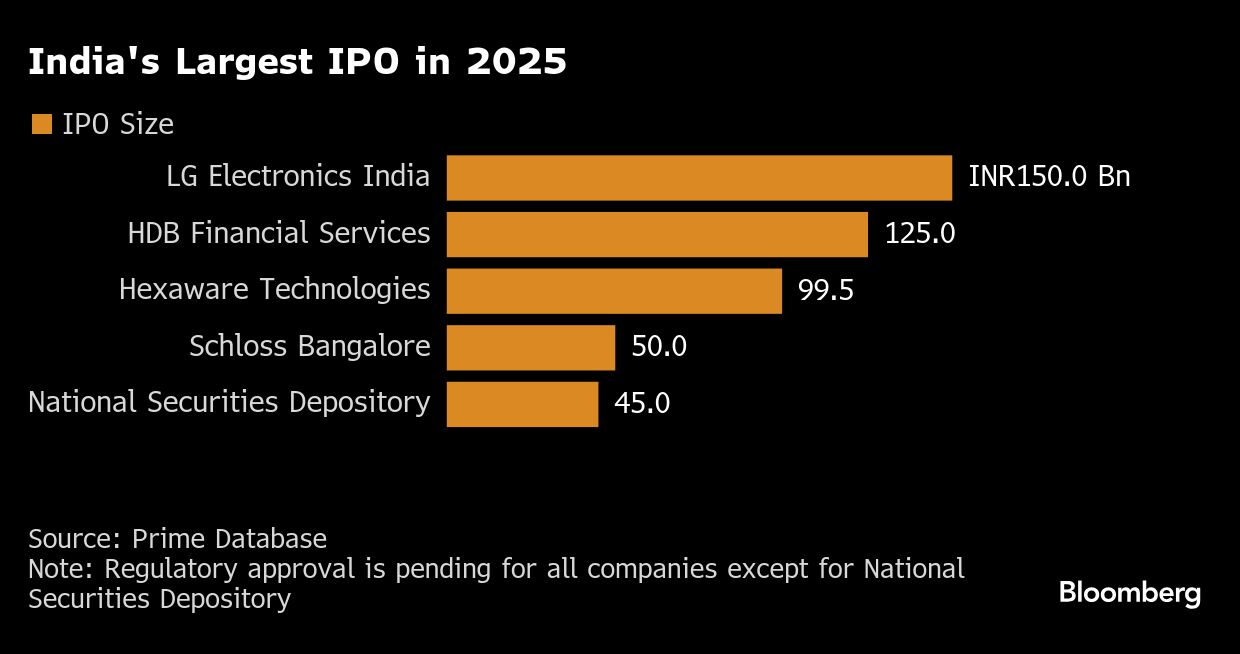
Over the last three years, India's IPO markets have been dominated by a flood of micro, small and medium-sized companies, with 90% of them raising less than $100 million, according to data compiled by Bloomberg. While 2025 may see some large well-known companies list their shares, everyday entrepreneurs across India do not want to miss out on the IPO boom.
“Founders have realized that its better to own 75% of a $100 million company listed on the exchanges than own 100% of a $10 million company,” said Vishnu Agarwal, chief executive officer of Stock Knocks, a Kolkata-based investment research company.
“There are going to be a tsunami of deals in the coming year as founders are hungry for growth,” he said.

-
'Never Seen This Level Of Negativity': Sandeep Tandon Says The Next Rally May Be Closer Than You Think

Veteran investor Sandeep Tandon says foreign selling is easing, large-caps are due a comeback and mid-caps are crowded, while he turns positive on gold, power and pharma this Diwali.
-
Indians Stay With Family, Not In Hotels | The Reason Why
India still lacks enough clean, reliable and affordable hotels for budget-conscious travellers.
-
The Economic Imperative: Analysing The Material Driving Force Behind India-Canada Strategic Reset
This economic complementarity is further reinforced by deep institutional investment ties and talent mobility, which form the bedrock of the bilateral framework.
-
Medicine Pricing: Where Must Profit Stop?
India must confront excessive margins, hidden incentives and regulatory gaps that threaten the integrity of medicine.
-
Why Amazon And Flipkart Are Struggling To Beat Meesho In India's Smaller Cities
With 274 million users and lowest-cost logistics, Meesho is defending its value commerce crown against giants like Amazon and Flipkart.
-
High US Salaries, No Green Card Certainty: The Financial Calculation Facing Indian H-1B Families
The suspension of PERM processing at eight technology employers does not cancel existing H-1B visas. What it does is force a question many Indian families have been avoiding: is the US salary worth tying your career and family plans to one employer?
-
Swiggy vs Eternal: Food Delivery's Two Rivals Are No Longer In The Same Race
Eternal is building a private AI assistant, dark.ai. Swiggy is still working out how to make Instamart pay, with an operating loss of Rs 895 crore in the July-September quarter while Blinkit stayed profitable.
-
Where You Live Shapes How You Get To Work | The Reason Why
Two-wheelers are the most popular way to get to work in India, accounting for nearly 43% of workplace commutes.
-
Unhedged Position: Can India See An Indonesia-Style Time Correction?
The Nifty is trading below levels it first clocked in 2024. Is there, then, as I have suggested in the headline, potential that the current time correction drags on painfully for the next three-five, even ten years?
-
Navigating Friction And Energy Realities: An Analysis Of Marco Rubio's October Visit To India
Occurring at a critical juncture marked by stalled trade negotiations and escalating geopolitical pressures over global energy supplies, the visit offers a profound window into modern US-India relations.










