U.S. Treasuries Selloff Deepens As Traders Push Back First Rate Cut

(Bloomberg) -- A rough start to the year for bond traders worsened Friday as data showed a buoyant US labor market with few of the stresses that could prompt the Federal Reserve to lower interest rates.
Traders ceased fully pricing in a Fed rate cut before September after the March employment report revealed that US payrolls expanded by the most in nearly a year and the unemployment rate declined.
US government bonds yields approached their highest levels this year, with the benchmark 10-year rate jumping as much as nine basis points to about 4.40%. The two-year note's yield reached its highest level of the day after Dallas President Lorie Logan said it's too soon to consider cutting interest rates.
Swap contracts that predict the central bank's rate decisions cut the probability of rate cut in June to about 52%, and to just under 100% for July. For all of 2024, traders now see only about 67 basis points of rate reductions — lagging behind the three quarter—point reductions Fed officials have signaled.
“This data certainly doesn't give the Fed the impetus to cut anytime soon,” said Peter Tchir, head of macro strategy at Academy Securities Inc. “Treasury yields are poised to continue to move higher. The strong data and rising oil prices likely means the 10—year yield is headed to crack 4.5% to 4.6%.”
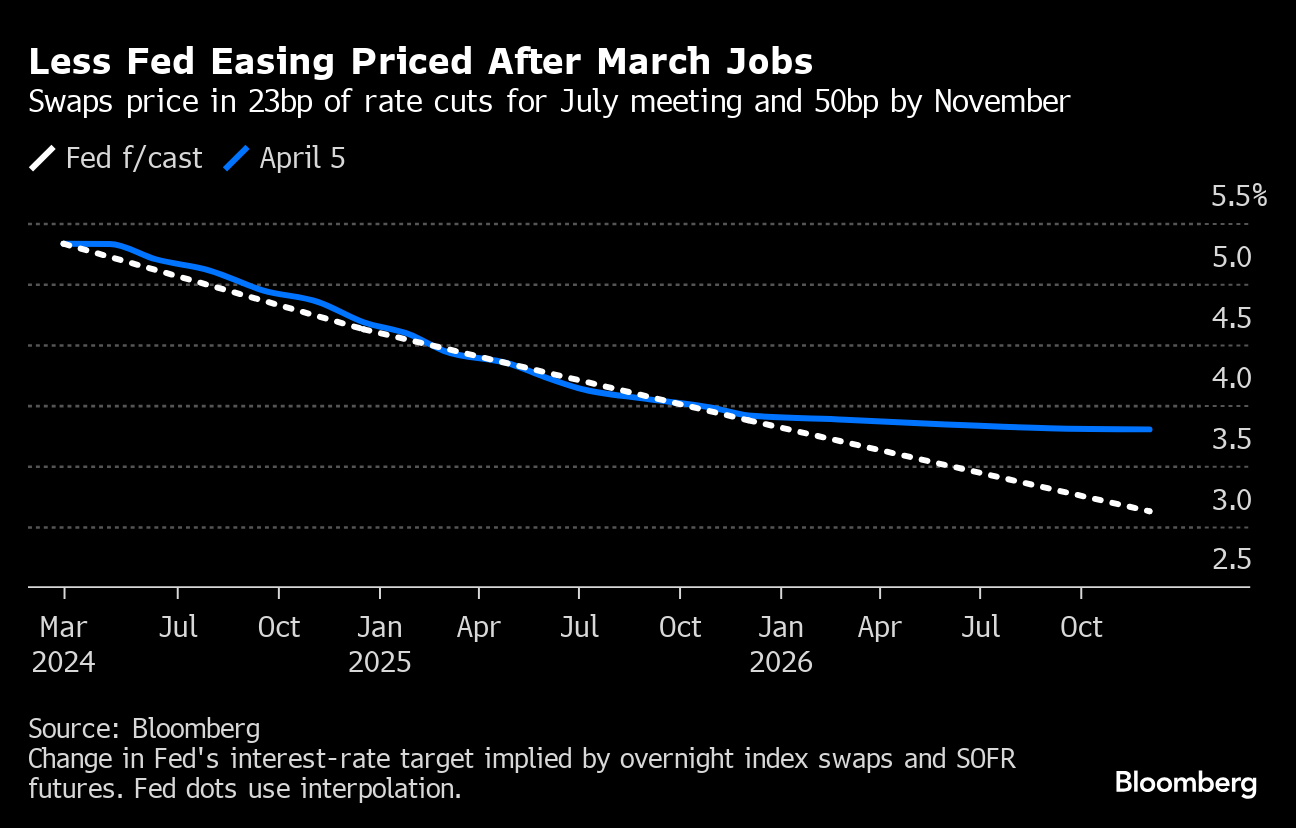
Treasury yields of all maturities were at least five basis points higher on the day shortly before noon in New York — short of year-to-date highs reached by five- to 30-year yields earlier in the week in response to strong economic data, rising oil prices and hawkish comments by two other Fed officials — Atlanta Fed President Raphael Bostic and Minneapolis Fed President Neel Kashkari. The two-year rose as much as 8 basis points to 4.72%.
The selloff was limited by other elements of the employment report including a rise in labor-force participation with the potential to temper wage pressures. The participation rate inched up to 62.7% from 62.5%, exceeding consensus estimates of 62.6%.
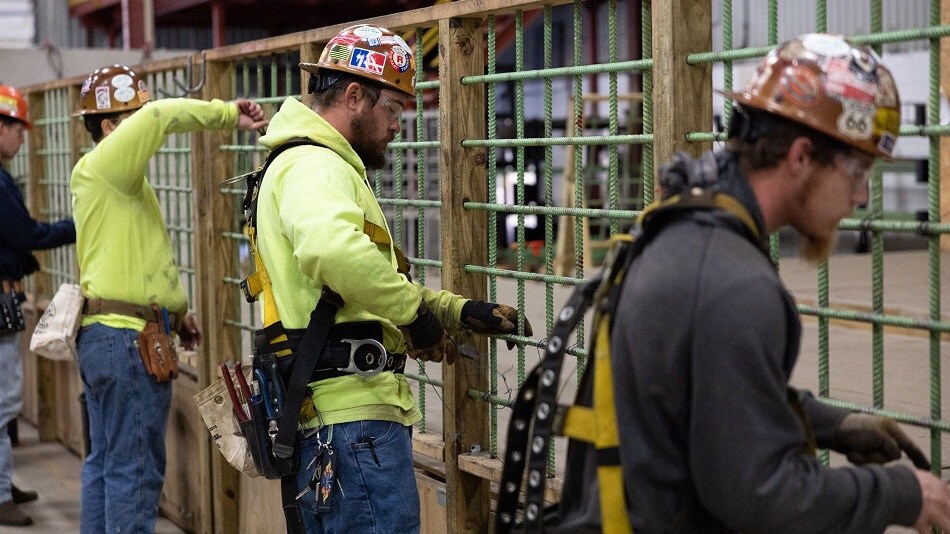
“The key thing in this report is labor force participation” and that “it's impact offsetting some of the wage concerns,” Randy Kroszner, former Fed governor and currently a professor at the University of Chicago Booth school, said on Bloomberg television. “I think that's kind of the good news” and why there's “a more modest reaction in the bond market from a headline beat.”
Strategists at ING Financial Markets warned ahead of the jobs report release that the benchmark 10-year yield is set to revisit the 4.5% level last seen in November before a massive year-end rally kicked in. In the options market, traders also were set up a few days ago with wagers targeting a move to almost 4.5% and for overall higher yields.
Read more: Forces Build for US 10-Year to Revisit 4.5% as Jobs Data Await
What Bloomberg Intelligence Says..
“It'll be difficult for the Fed to make the case to cut rates if they are truly data dependent. We'll look at 4.5% as the next important technical level for 10-year Treasury yield.”
— Ira Jersey
At the start of the year, expectations were widespread that the Fed's 11 rate increases in the past two years would not only curb inflation but also cause economic stress, leading the central bank to drop rates by at least 1.5 percentage points this year. Instead, progress toward lower inflation has slowed, growth metrics have remained robust, and investors continue to shovel money into stocks and corporate bonds at a pace that suggests the economy doesn't yet require lower rates.
“The data are modestly bearish for bonds in that they cement the probabilities of a later start to rate cuts,” said Guy LeBas, chief fixed income strategist for Janney Montgomery Scott. The data also reduce the risk of a recession, leading investors to demand higher rates of return.
Any further move higher in yields could present a buying opportunity for longer-term investors. The bond market continues to benefit from conviction that yields are sufficiently high relative to the effective overnight rate determined by the Fed.
That was the finding of BMO Capital Markets' monthly survey of investor intentions following the employment data. The share of investors that said they would buy if the data cause yields to rise was 57%, compared with a six-month average of 47%.
Next week brings key inflation readings in the form of the March consumer price index. February CPI increases were higher than estimated, spurring Treasury yields higher. Market-based inflation expectations have been rising with oil and gasoline futures prices; retail gasoline is a major component of the CPI.
--With assistance from Alice Gledhill.
(Adds Logan comment in third paragraph; a previous version corrected the unemployment rate in second paragraph.)
More stories like this are available on bloomberg.com
©2024 Bloomberg L.P.

-
Talking Points This Week: Leadership Shock At Nvidia, Earnings Strength, And The Fog Over Hormuz

The Anthropic IPO pricing and first trading day, Nvidia's upcoming earnings, and any fresh signals from Iran will set the tone for the following week.
-
Signature Play: The Classic Cocktail Is Dead. Or Is It?
Classic cocktails are disappearing from India's cocktail menus. But they're still being ordered, taught to bartenders and borrowed from. So, who's really having the last drink?
-
A New Samvat Wishlist: Inclusive Prosperity And Human Development
India has strengthened its economic foundations through infrastructure, digital access and enterprise. Its next growth chapter must deepen productivity, create better livelihoods and widen participation in prosperity.
-
Love, Sex Aur Dhokha: The Audacious Plot To Spy On Jensen Huang
A Taipei dinner, a Singapore chip buyer and a suspected Chinese asset: inside the alleged spy operation that got close to NVIDIA's Jensen Huang.
-
Ten Things I Learnt This Samvat
Patience can be a trap. Cheap stocks can stay cheap. Leverage can wipe you out. What did Samvat 2082 teach us? Niraj Shah writes on 10 lessons from the year gone by.
-
Talking Points This Week: Tech Nerves, FII Buying, And A Faraway Banking Shock
The global markets are not shining this Diwali. The exception in the large markets is, India.
-
Midterm Rally Lasted A Day. The Hard Reality Of A Divided US May Last Two Years | Opinion
Between a contested AI boom, a debt ceiling that arrives in 2027 and a president with every incentive to act alone, the next two years may prove more volatile than the first day's rally suggests.
-
Blue Wave Will Derail the AI Trade but Won't Dismantle the AI Era | Unhedged Position
The Democrats' sweep of the US Congress will see politics collide with economic forces both over the long and short term.
-
It's Time To Take The GST Council's Bet On Trust Global
Payment records can prove India's services exports, and clear, proportionate rules can bring foreign digital sellers into the tax net.
-
Opinion | India at 38: From Innovation Overperformer to Innovation Powerhouse
India now has 453 VC-backed deep science startups, 18 of them late-stage, after 117 percent growth since 2020. Laurus Labs, at USD 9.3 billion, is the most valuable deep science company in any middle-income economy outside China.









