Asian Bonds To Get Little Support From Currency Gains In 2024
(Bloomberg) -- Sovereign bonds in emerging Asia will benefit more from rate-cut expectations than currency gains this year.
A dovish Fed would make space for Asian central banks to trim interest rates faster, boosting bonds. However, dollar losses aren't a given due to the US economy's resilience, which means it's uncertain whether local currencies would strengthen enough to support bonds.
“Duration is likely to outperform with the turning of the global interest rate and inflation cycles,” said Alvin Tan, head of Asia FX strategy at RBC Capital Markets in Singapore. In comparison, many EM currencies may see either limited gains or losses in the first half, as the broad dollar will remain largely resilient and range-bound, he said.
Asian currencies are already off to a bad start in 2024 as they fell the most in over nine months on the first trading session of the new year as tensions in the Middle East and Europe deterred risk-taking. The dollar on the other hand posted its biggest gain since October.
History also suggests currency performance tends to lag in the run-up to Federal Reserve easing. While the Fed was on pause from the end of 2018 up until late July 2019, the Bloomberg EM Asia bond index recorded a total return of around 4.90%. Gains in bond prices and income from coupons contributed 5.30% but on the currency side, there was a loss of 0.4%.
“The Fed's shift opens up more room for Asian central banks to ease policy and is, therefore, more supportive of broader duration,” Goldman Sachs analysts including Kamakshya Trivedi wrote in a note in December. The global disinflation trend will allow other central banks to respond more aggressively to falling inflation, which would “allow EM duration to outperform currency returns.”
The disinflation narrative has taken hold in emerging Asia. In November, six out of eight emerging Asian nations saw inflation undershoot economist estimates, with price growth lagging forecasts by the most since March.
READ: Goldman Sees India to Australia Easing Policy Earlier After Fed
Real Rates
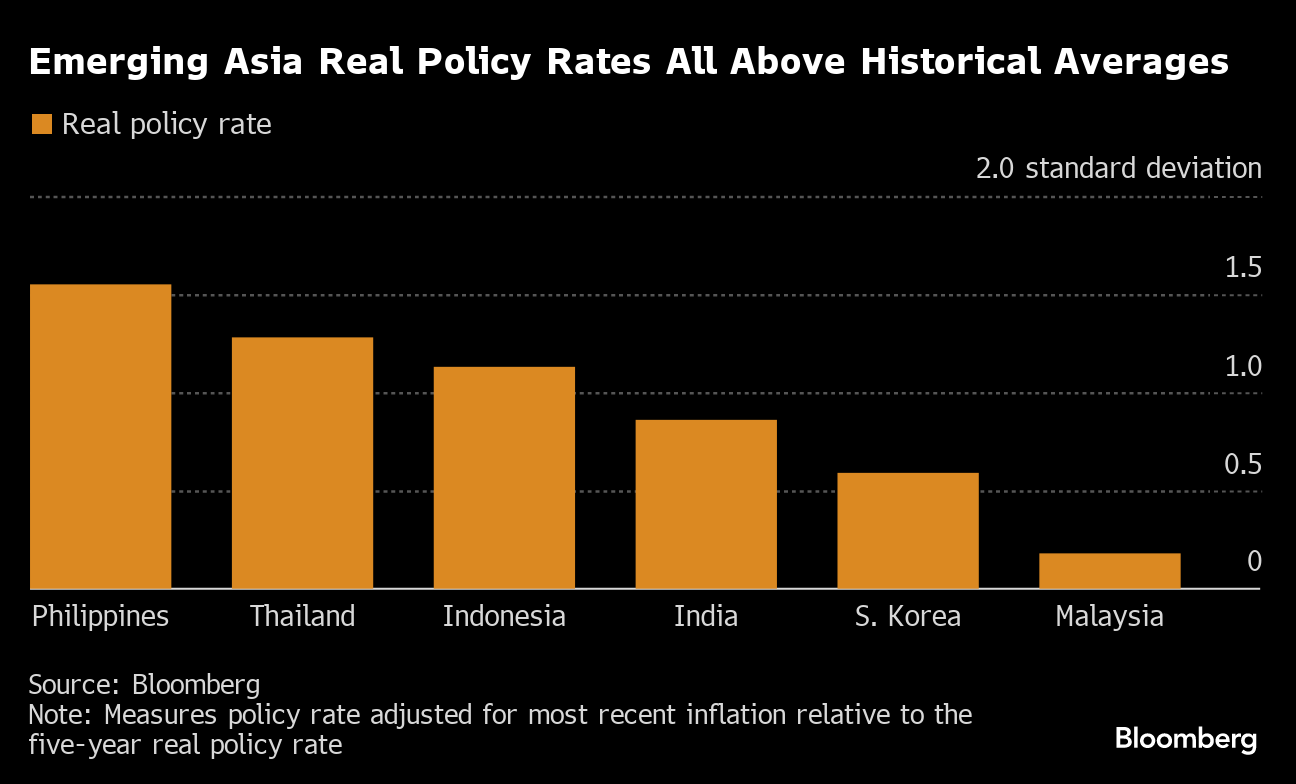
Meanwhile, real policy rates in the region are above historical averages — signaling that authorities have room to cut rates. For example, Bangko Sentral ng Pilipinas' benchmark rate after adjusting for most recent inflation stands at 2.4% — which is 1.5 standard deviations above the five-year average. This same gauge for Thailand and Indonesia is also around one standard deviation higher.
“Global core yields continue to soften and, alongside retracement in oil prices, shape an encouraging set-up for EM Asia duration too,” Citigroup Inc. strategists including Gaurag Garg wrote in a note in December.
More stories like this are available on bloomberg.com
©2024 Bloomberg L.P.

-
Getting To Work Costs Women More | The Reason Why

It is not just about women paying more than men. It is about women paying much more in cities than in villages.
-
AI Bias In Investing Cannot Be Eliminated, But It Can Be Governed
Framing is a particularly important example as identical financial information presented in terms of gains rather than losses can lead an LLM to reach a different assessment.
-
Joining The Dots | Dark Skies, Steady Diya: Why Hope Holds This Diwali
With war, a weak rupee and foreign outflows weighing on sentiment, policymakers at the NDTV World Summit and market veterans at NDTV Profit Ignite: Diwali Edition offered the same advice: stay invested and filter out the noise.
-
The Curious Case of Equitas Small Finance Bank And A CEO Who Quit For Stock
PN Vasudevan believes persistent investor concerns over a perceived conflict of interest had become a governance overhang on Equitas Small Finance Bank's stock, even as the lender improved profitability and asset quality.
-
Talking Points This Week: AI Cash Burn, A Tiger Comeback And An India That Still Finds Its Own Path
India is not immune to higher oil or tighter global liquidity, yet its earnings base is broader, its domestic policy levers are still available.
-
Foreign Investors Own Half Of HDFC Bank and ICICI Bank. An LTCG Cut Could Matter Most Here
Foreign portfolio investors have US$115 billion parked in HDFC Bank, ICICI Bank. If the government cuts long-term capital gains tax, Jefferies says returning foreign money could land here first.
-
'Never Seen This Level Of Negativity': Sandeep Tandon Says The Next Rally May Be Closer Than You Think
Veteran investor Sandeep Tandon says foreign selling is easing, large-caps are due a comeback and mid-caps are crowded, while he turns positive on gold, power and pharma this Diwali.
-
Indians Stay With Family, Not In Hotels | The Reason Why
India still lacks enough clean, reliable and affordable hotels for budget-conscious travellers.
-
The Economic Imperative: Analysing The Material Driving Force Behind India-Canada Strategic Reset
This economic complementarity is further reinforced by deep institutional investment ties and talent mobility, which form the bedrock of the bilateral framework.
-
Medicine Pricing: Where Must Profit Stop?
India must confront excessive margins, hidden incentives and regulatory gaps that threaten the integrity of medicine.










