Aavas Financiers’ IPO: Here’s All You Need To Know
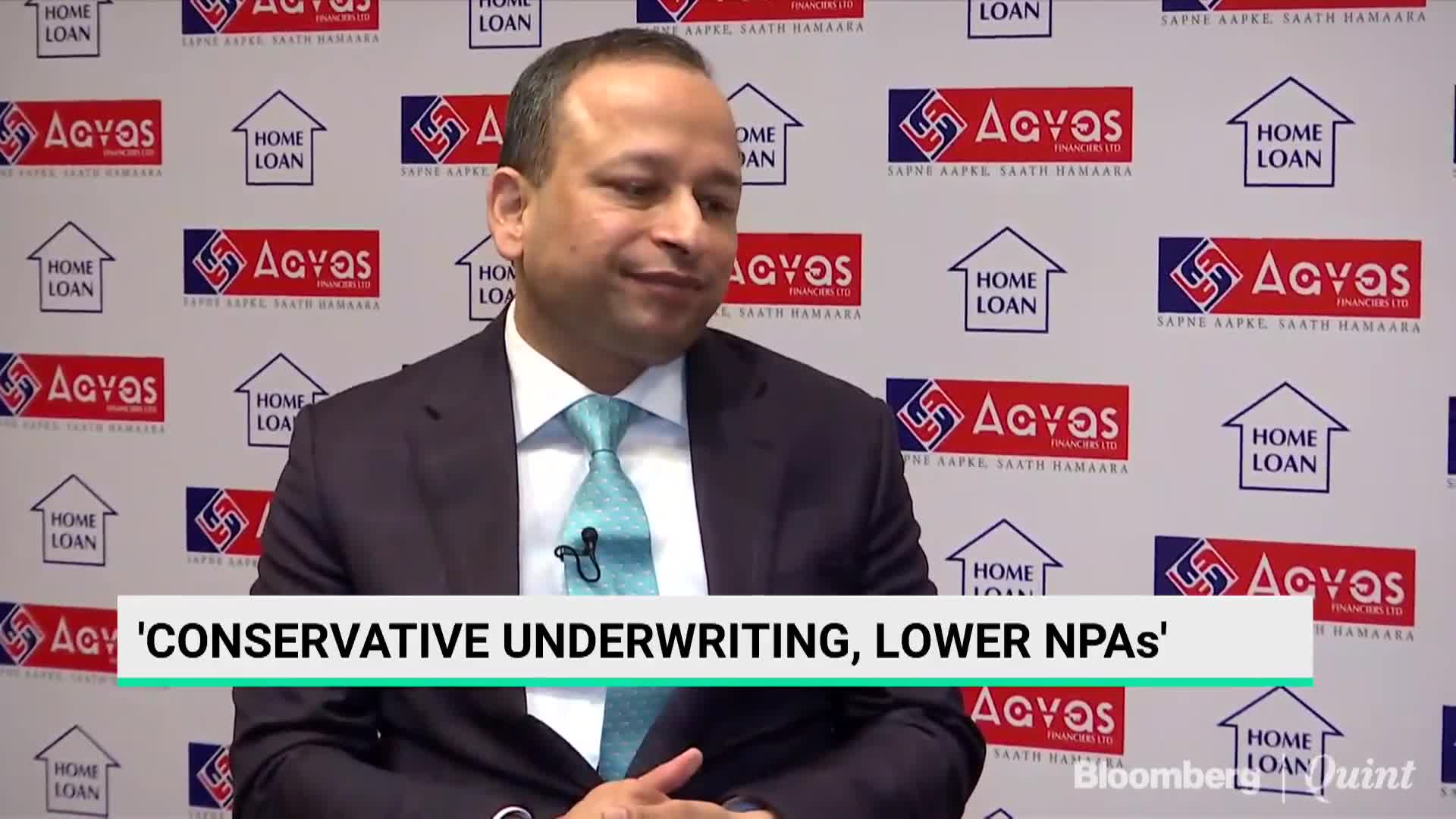
Aavas Financiers Ltd. plans to raise up to Rs 1,734 crore through its three-day initial public offering that opens today as investors sell part of their stake and the mortgage lender raises funds to augment its capital.
The housing finance company will issue fresh shares worth Rs 400 crore, and its promoters and investors will sell 1.62 crore shares at Rs 818-821 apiece. At the upper price band, it will be valued at Rs 6,450 crore.
Promoters Lake District Holdings Ltd., Partners Group Private Equity Master Fund LLC and Partners Group ESCL will sell 24.2 percent of their shareholding from the existing 81.26 percent. The rest of the shares will be offloaded by Kedaara Capital (0.32 percent), Sushil Agarwal (1.24 percent) and Vivek Vig (0.17 percent), non-executive nominee director of the company.
The firm has raised Rs 520 crore from anchor investors that include AU Small Finance Bank, Abhu Dhabi Investment Authority-Behave, DSp Blackrock Tax Saver Fund, SBI Life, Bajaj Life Insurance and Morgan Stanley India Investment. It allocated 63.36 lakh equity shares at Rs 821 per script.
ICICI Securities Ltd., Citigroup Global Markets India Private Ltd., Edelweiss Financial Services Ltd. and Spark Capital Advisors (India) Pvt Ltd. are the book running lead managers for the issue.
Business
Aavas Financiers, which started operations in March 2012 to fund affordable housing, is an erstwhile subsidiary of AU Small Finance Bank. The lender, now promoted by private equity firms Kedaara Capital and Partners Group, mainly offers low-ticket, high-yield loans to low-income rural and semi-urban self-employed borrowers.
The company's portfolio comprises loans for purchase, construction, repair/renovation and extension of homes. It also offers loans against property. Aavas operates through a network of 165 branches covering 95 districts across eight states: Rajasthan, Gujarat, Maharashtra, Madhya Pradesh, Haryana, Delhi, Uttar Pradesh and Chhattisgarh. Rajasthan contributes 47 percent of its loan book.
Financials
- The company consistently delivered high profit growth in the last five years.
- It invested in creating capacity and increasing the number of branches, which helped its loan book grow at an annualised rate of 58.6 percent and profit at 71.3 percent.
- Gross non-performing loans were 0.34 per cent of total advances as of March, while its net interest margin is high at more than 7 percent.
- Aavas has a strong capital adequacy ratio of 61.55 percent, leading to lower return on equity of 11.2 percent in the year through March.
Valuations
At the upper end of the price band, the company demands a price that is 4.1 times its post-infusion book value for the year 2017-18. That's higher than its established peers, especially when it offers a lower return on equity.
Brokerage View
Emkay
- Recommend ‘Subscribe'.
- As the company accelerates its overall leverage, the likely probability of achieving superior return on equity of about 20 percent remains fairly high.
- With sufficient capital already in place, further risk of dilution is also quite limited.
Antique Broking
- Recommend ‘Subscribe' from a long-term perspective.
- Valuations don't leave much upside in the near term.
Anand Rathi
- Recommend ‘Subscribe'.
- Aavas Financiers offers the near-impossible trinity: high spread, explosive growth and good asset quality.
- While valuation appears high, most financial inclusion plays (Bandhan Bank, Bharat Financial and Gruh Finance) generally command a premium over mainstream peers.
Prabhudas Lilladher
- Recommend ‘Avoid'.
- Valuations stand at a significant premium over peers, pricing in all the positives.
- Elevated capital adequacy ratio at 61 percent, challenging market conditions, coupled with higher valuations entail greater risk to high growth and an improvement in RoE.
- Long-term prospects look positive, valuations leave scope for negative surprises.

-
Indians Are Travelling, But Not Every Journey Is A Holiday | The Week In Whys

Pilgrims, patients and working women are the real travellers, and the system hasn't quite caught up with them.
-
Getting To Work Costs Women More | The Reason Why
It is not just about women paying more than men. It is about women paying much more in cities than in villages.
-
AI Bias In Investing Cannot Be Eliminated, But It Can Be Governed
Framing is a particularly important example as identical financial information presented in terms of gains rather than losses can lead an LLM to reach a different assessment.
-
Joining The Dots | Dark Skies, Steady Diya: Why Hope Holds This Diwali
With war, a weak rupee and foreign outflows weighing on sentiment, policymakers at the NDTV World Summit and market veterans at NDTV Profit Ignite: Diwali Edition offered the same advice: stay invested and filter out the noise.
-
The Curious Case of Equitas Small Finance Bank And A CEO Who Quit For Stock
PN Vasudevan believes persistent investor concerns over a perceived conflict of interest had become a governance overhang on Equitas Small Finance Bank's stock, even as the lender improved profitability and asset quality.
-
Talking Points This Week: AI Cash Burn, A Tiger Comeback And An India That Still Finds Its Own Path
India is not immune to higher oil or tighter global liquidity, yet its earnings base is broader, its domestic policy levers are still available.
-
Foreign Investors Own Half Of HDFC Bank and ICICI Bank. An LTCG Cut Could Matter Most Here
Foreign portfolio investors have US$115 billion parked in HDFC Bank, ICICI Bank. If the government cuts long-term capital gains tax, Jefferies says returning foreign money could land here first.
-
'Never Seen This Level Of Negativity': Sandeep Tandon Says The Next Rally May Be Closer Than You Think
Veteran investor Sandeep Tandon says foreign selling is easing, large-caps are due a comeback and mid-caps are crowded, while he turns positive on gold, power and pharma this Diwali.
-
Indians Stay With Family, Not In Hotels | The Reason Why
India still lacks enough clean, reliable and affordable hotels for budget-conscious travellers.
-
The Economic Imperative: Analysing The Material Driving Force Behind India-Canada Strategic Reset
This economic complementarity is further reinforced by deep institutional investment ties and talent mobility, which form the bedrock of the bilateral framework.










