A Single Bet On Deutsche Bank’s Credit Default Swaps Is Seen Behind Friday’s Rout
(Bloomberg) -- Regulators are singling out a trade on Deutsche Bank AG's credit default swaps that they suspect fueled a global sell off on Friday.
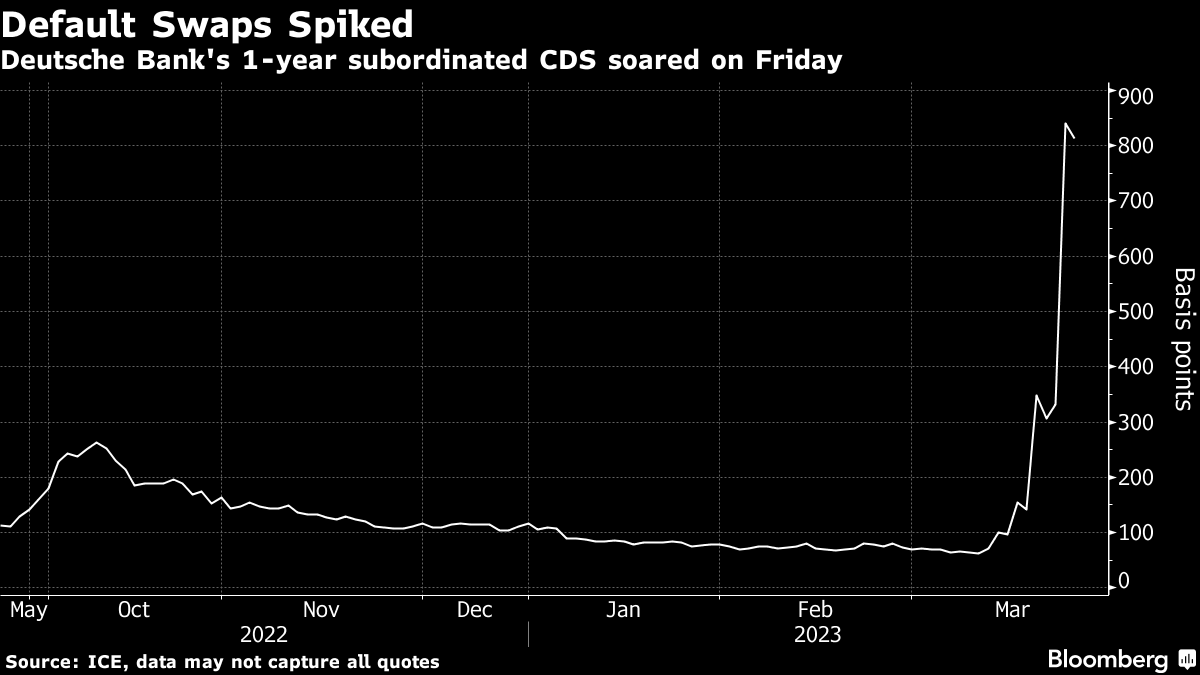
It was a roughly €5 million ($5.4 million) bet on swaps tied to the German bank's junior debt, according to people familiar with the matter, who said regulators have spoken to market participants about the transaction. The contracts can be illiquid, so a single bet can trigger big moves. A spokesperson for Deutsche Bank declined to comment.
The suspected knock-on effect was a rout that sent banking stocks tumbling, government bonds higher and CDS prices for lenders soaring, trimming about €1.6 billion off Deutsche Bank's market value and more than €30 billion off an index that tracks European banking stocks. That's because investors have been on edge since the collapse of several US banks and rescue of Credit Suisse Group AG, with the market searching for clues on whether other lenders would also face strain.
European banks and their regulators have sought to underline that they have a close watch on risks — including rising rates — and that the industry is on a sound footing. Amid the unwanted attention, the German lender published a presentation on Monday that cited its “well diversified portfolio” of deposits, a key focus for investors following the collapse of Silicon Valley Bank. Deutsche Bank and the broader index rebounded on Monday, erasing some of Friday's losses.
“Investors see Deutsche Bank as one of the higher beta names; so in case you want to bet generally against weak sentiment, then these kind of names may be interesting,” said Suvi Platerink Kosonen, a banking credit analyst at ING Groep NV.
It's unclear who placed the relevant bet or why they did it. And there's no evidence so far of anything nefarious about the trade, said the people. Some data point to the trades being for hedging purposes, said one of the people. There's also a transaction on Deutsche Bank's five-year, senior CDS contracts executed on Thursday that attracted scrutiny, one of the people said.
Illiquid Market
Of Deutsche Bank's CDS contracts, the most actively traded were the dollar denominated, five-year swaps tied to the lender's senior debt, with at least $51 million notional in the two days through Friday, according to DTCC data compiled by Bloomberg. The number is probably higher, given that reported data for single trades is capped at around $5 million. The trading volumes for the euro-denominated contracts instead stood at around €12 million across all instruments during the same period.
The search for triggers underscores a general lack of transparency in the asset class, which Andrea Enria, the ECB's top oversight official, flagged on Tuesday. He also called for global financial regulators to take a closer look at the CDS market. The European Central Bank is Deutsche Bank's top banking regulator, but that watchdog doesn't oversee securities trading, meaning pursuing any irregularities is the purview of market regulators.
“There are markets like the single name CDS market which are very opaque, very shallow, very illiquid,” Enria said at a conference hosted by German newspaper Handelsblatt. “With a few millions, you can move the CDS spreads” of a major bank “and contaminate also stock prices and possibly also deposit outflows,” he said, without naming any banks.
--With assistance from , , , and .
(Updates with wider volume of CDS in the seventh paragraph)
More stories like this are available on bloomberg.com
©2023 Bloomberg L.P.

-
One Battle After Another: India's Corporate Dynasties Battle For Control

2026 could go down as Corporate India's year of succession wars, governance battles and family fault lines.
-
Rs 50-Lakh Gold In Bank Locker, Rs 3 Lakh Of Protection: The Gap Most Families Don't Know About
The RBI ties a bank's liability to the annual locker rent and families who want to insure their jewellery face a separate question about how to prove what was inside.
-
The More Food Turns Into Fuel, The Harder It Is To Read Agricultural Markets | The Reason Why
A policy designed to reduce dependence on imported fuel can create new pressures elsewhere in the food economy.
-
Your iPhone Costs 12 Grams Of Gold, A Car About 100. What Does Your Life Weigh?
Measured in rupees, almost everything looks more expensive than it did a generation ago. Measured in grams of gold, a lot of it has become cheaper.
-
Gold Is Rs 22,000 Cheaper Than A Month Ago. Should You Buy Amid The Wedding Season?
Gold's potential slide to $3,500 could save around Rs 4,700 per 10 grams, but a soft inflation print could just as easily push prices back up. One way to split the risk is to buy in parts, some now and the rest after the Fed's Dec. 9 decision.
-
AI Agents Are Gaining Power. Who Governs Them?
Artificial intelligence agents promise to transform productivity by moving machines from assisting decisions to executing them. But as organisations delegate greater authority to these AI-agents, they must first establish who controls that authority and who remains accountable when things go wrong.
-
Why Swapping Your Old Gold Can Trigger A Rs 5 Lakh Tax Bill, And How You Can Avoid It Legally
Swapping old gold for new is taxed as a sale and a fresh purchase. Getting your own gold remade can cut most of that bill, though it has its own costs.
-
The AI Trade is Done. The Real Opportunity for Investors Starts in 2027 | Unhedged Position
As pureplay AI stocks plunge and circular, capex-led financing unwinds, 2027 is set to be a year of reckoning for AI companies. Yet the bust clears the way for a better opportunity for investors in 2027 -- shifting the spotlight from AI builders to the companies using AI.
-
Leadership As Mission: Why The Age Of AI Demands More Human Leadership
Debjani Ghosh examines how AI is changing leadership, arguing that its success must be measured by its impact on people and the accountability of those guiding its use.
-
We May Need Another Tukaram Mundhe To Fight Air Pollution | The Reason Why
Developers may install basic measures such as sprinklers and green nets, resume work, and continue violating rules when this equipment stops working.









