Watch: NASA Broadcasts Total Solar Eclipse as Witnessed in US
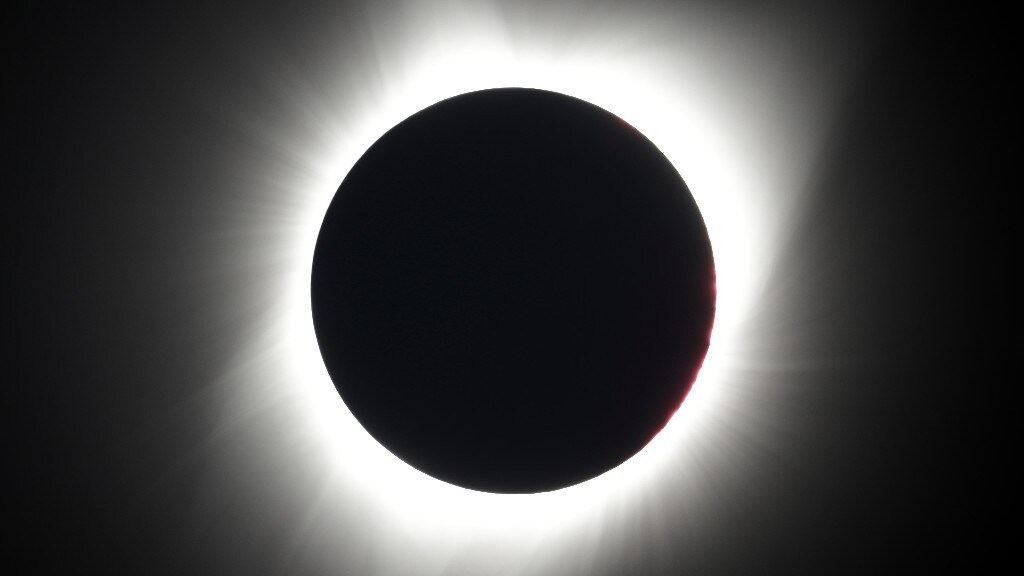
Watch Live: NASA Broadcasts Total Solar Eclipse Witnessed in US
The United States is witnessing a total solar eclipse on Monday.
Total solar eclipses occur every so often, often in the middle of nowhere like the South Pacific or Antarctic. But what makes Monday's eclipse so special is that it will cut diagonally across the entire US.
Indians, however, will have to wait for at least 17 years! The next total solar eclipse in India will not be before 2034.
What You Need to Know About Monday's Eclipse
The total eclipse on 21 August, which will be seen for the first time in 99 years, has been dubbed "The Great American Eclipse", and is the first eclipse to cover the entire US in the 21st century.
It will travel diagonally from Oregon in the northwest to South Carolina in the southeast. The partial phase of the Great American Eclipse begins over the Pacific Ocean at 1546 GMT or 9:16 PM IST. The total eclipse ends at 1848 GMT near Charleston, South Carolina.
Evil Omen?
Solar eclipses are viewed with superstition in India. The phenomenon is considered to be inauspicious, especially for pregnant women and their families. They are instructed to not eat sour food items or use knives and scissors, among others. People believe the sudden changes in light and temperature affect the behaviour of some animals.
The eclipse has sent people in the US scrambling for special glasses to view it with. Those on the outskirts of US, well into Canada, Central America and even the top of South America, will be treated to a partial eclipse. Here in India, however, we'll just have to be content with a livestream of this special event, while we wait.
(With inputs from AP)
(#TalkingStalking: Have you ever been stalked? Share your experience with The Quint and inspire others to shatter the silence surrounding stalking. Send your stories to editor@thequint.com or WhatsApp @ +919999008335.)

-
Extracting Value From Battery Scrap Could Be Challenging For India | The Reason Why

A discarded lithium-ion battery still contains valuable materials such as lithium, nickel and cobalt. These can be recovered and reused. When such batteries are crushed and shredded, they produce a dark powder called black mass.
-
One El Nino, India Can Handle. Two Could Break The Granary
India's grain stocks can absorb one bad year, but a second El Nino could drain the buffer in two to three years, economists say.
-
India's Troika Of Good Luck | Joining The Dots
As Jensen Huang's exit drags Nvidia down, a cooling AI trade and resilient earnings have revived investor interest in India. A likely RBI rate hike looms.
-
Talking Points This Week: Leadership Shock At Nvidia, Earnings Strength, And The Fog Over Hormuz
The Anthropic IPO pricing and first trading day, Nvidia's upcoming earnings, and any fresh signals from Iran will set the tone for the following week.
-
Signature Play: The Classic Cocktail Is Dead. Or Is It?
Classic cocktails are disappearing from India's cocktail menus. But they're still being ordered, taught to bartenders and borrowed from. So, who's really having the last drink?
-
A New Samvat Wishlist: Inclusive Prosperity And Human Development
India has strengthened its economic foundations through infrastructure, digital access and enterprise. Its next growth chapter must deepen productivity, create better livelihoods and widen participation in prosperity.
-
Love, Sex Aur Dhokha: The Audacious Plot To Spy On Jensen Huang
A Taipei dinner, a Singapore chip buyer and a suspected Chinese asset: inside the alleged spy operation that got close to NVIDIA's Jensen Huang.
-
Ten Things I Learnt This Samvat
Patience can be a trap. Cheap stocks can stay cheap. Leverage can wipe you out. What did Samvat 2082 teach us? Niraj Shah writes on 10 lessons from the year gone by.
-
Talking Points This Week: Tech Nerves, FII Buying, And A Faraway Banking Shock
The global markets are not shining this Diwali. The exception in the large markets is, India.
-
Midterm Rally Lasted A Day. The Hard Reality Of A Divided US May Last Two Years | Opinion
Between a contested AI boom, a debt ceiling that arrives in 2027 and a president with every incentive to act alone, the next two years may prove more volatile than the first day's rally suggests.









