Tata Motors Is Uniquely Positioned To Make The Most Of India-UK FTA
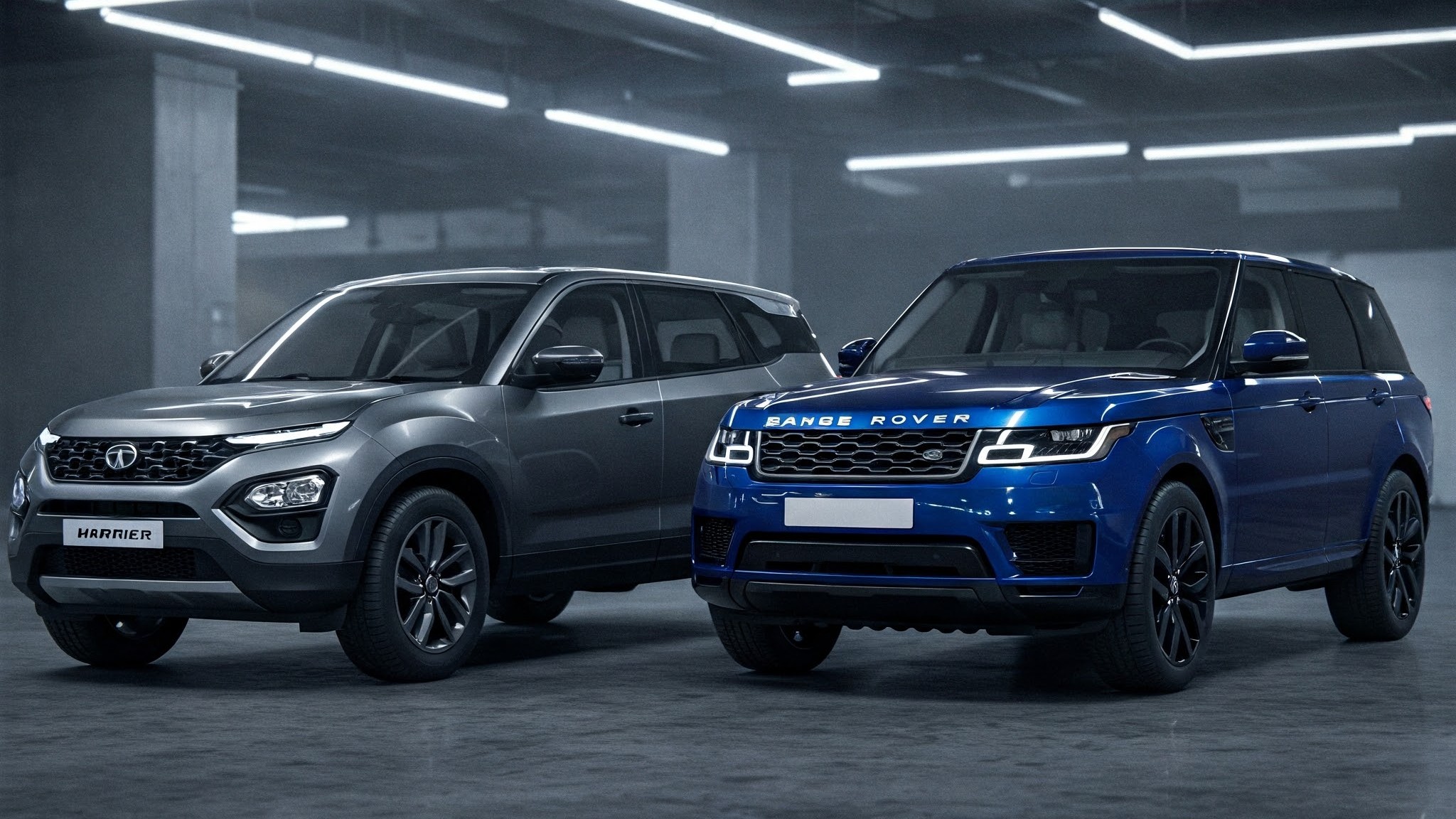
Shares of Tata Motors Ltd. surged the most in 15 trading sessions after it emerged that the India-UK free trade agreement works to its advantage in more ways than one.
Certain Land Rover SUVs can get cheaper by as much as 50% in India after the India-UK FTA slashed auto tariffs to 10% from over 100% at present, at least three industry watchers told NDTV Profit on the condition of anonymity. And in the event that Tata Motors decides to make Jaguar electric cars at its Chennai plant, that would still be lucrative.
Citi has backed the assessment.
“JLR could see some market share gains in India,” Arvind Sharma, director, equity research – India Autos & Transportation at Citi, said in a note Wednesday. “While absolute volumes are limited—JLR's India sales stood at 6,200-odd units in FY25—it could gain some market share from some of the European OEMs like Mercedes-Benz (19,000 units in FY25), BMW (15,800 units in FY25) and Audi (6,000 units in FY25).”
Additionally, Tata Motors can ship locally made auto components to the UK at reduced tariffs and use them on Land Rover SUVs made in that country. That would save costs further.
Jaguar Land Rover is the UK subsidiary of Tata Motors that still brings in two-thirds of revenue for its Indian parent. Land Rover has some assembly operations in Pune, but a majority of its Range Rover SUVs are made in Solihull and Halewood. Jaguar, which will turn into a fully electric brand in 2026, has its headquarters in Castle Bromwich.
The Import Math
One of the industry watchers cited above broke down the math of how JLR cars would be priced in India after the FTA comes into effect.
Today, the base price of an Rs 80-lakh fully imported Range Rover is not more than Rs 20-25 lakh if you remove the dealer margin at 10%, GST and compensation cess at 43%, and 110% customs duty. Under the India-UK FTA regime, the ex-showroom price would reduce to Rs 40-50 lakh, including GST and compensation cess at 43% and customs duty of 10%.
The price reduction wouldn't be that pronounced in the case of completely knocked-down units, which attract a customs duty of 16.5%. Some additional savings can also come by way of reduced tax on spare parts that are imported from the UK.
The EV Angle
The FTA opens up the electric cars made in India for exports to the UK, but Tata Motors is unlikely to take that bet immediately since it's largely an unknown in that country. Yes, the company has plans to take its electric cars global, but not a lot has happened on that front since last year.
Until and unless mass-market carmakers like Toyota, Citroen, Vauxhall or Nissan—which have manufacturing plants in the UK—decide to export electric cars to India, Tata Motors EV has no reason to tap the British market to open a new revenue stream.
Instead, Tata Motors can choose to make Jaguar's electric cars at its upcoming plant in Chennai and export them to the UK under the FTA regime, one of the industry watchers cited earlier said. That would aid margins even further.
Essentially, Tata Motors is uniquely positioned to make the most of the cheaper luxury imports into India and budget exports to the UK. When contacted, a company spokesperson said the company would first study the fineprint of the India-UK FTA before offering its views.
On Wednesday, Tata Motors shares rose 5.05% to Rs 680.50 apiece to emerge as the top gainer on the Nifty 50 index. The benchmark ended the day 0.14% higher at 24,414.40 points.

-
Indians Are Travelling, But Not Every Journey Is A Holiday | The Week In Whys

Pilgrims, patients and working women are the real travellers, and the system hasn't quite caught up with them.
-
Getting To Work Costs Women More | The Reason Why
It is not just about women paying more than men. It is about women paying much more in cities than in villages.
-
AI Bias In Investing Cannot Be Eliminated, But It Can Be Governed
Framing is a particularly important example as identical financial information presented in terms of gains rather than losses can lead an LLM to reach a different assessment.
-
Joining The Dots | Dark Skies, Steady Diya: Why Hope Holds This Diwali
With war, a weak rupee and foreign outflows weighing on sentiment, policymakers at the NDTV World Summit and market veterans at NDTV Profit Ignite: Diwali Edition offered the same advice: stay invested and filter out the noise.
-
The Curious Case of Equitas Small Finance Bank And A CEO Who Quit For Stock
PN Vasudevan believes persistent investor concerns over a perceived conflict of interest had become a governance overhang on Equitas Small Finance Bank's stock, even as the lender improved profitability and asset quality.
-
Talking Points This Week: AI Cash Burn, A Tiger Comeback And An India That Still Finds Its Own Path
India is not immune to higher oil or tighter global liquidity, yet its earnings base is broader, its domestic policy levers are still available.
-
Foreign Investors Own Half Of HDFC Bank and ICICI Bank. An LTCG Cut Could Matter Most Here
Foreign portfolio investors have US$115 billion parked in HDFC Bank, ICICI Bank. If the government cuts long-term capital gains tax, Jefferies says returning foreign money could land here first.
-
'Never Seen This Level Of Negativity': Sandeep Tandon Says The Next Rally May Be Closer Than You Think
Veteran investor Sandeep Tandon says foreign selling is easing, large-caps are due a comeback and mid-caps are crowded, while he turns positive on gold, power and pharma this Diwali.
-
Indians Stay With Family, Not In Hotels | The Reason Why
India still lacks enough clean, reliable and affordable hotels for budget-conscious travellers.
-
The Economic Imperative: Analysing The Material Driving Force Behind India-Canada Strategic Reset
This economic complementarity is further reinforced by deep institutional investment ties and talent mobility, which form the bedrock of the bilateral framework.










