Tata Motors Begins First Hydrogen Truck Trials In Breakaway From Diesel
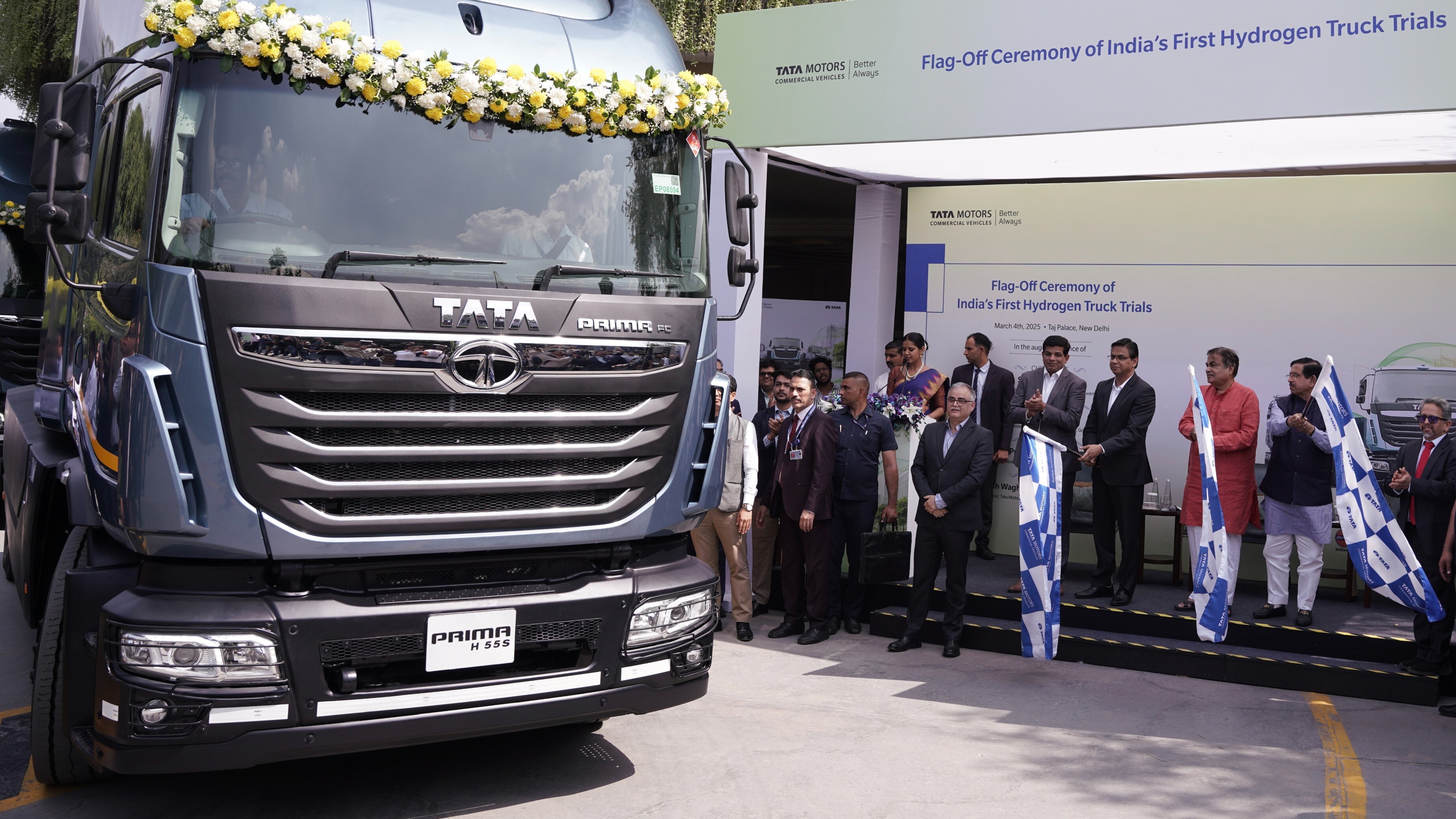
Tata Motors Ltd. has started the first-ever trials of heavy-duty hydrogen trucks to break away from the diesel-guzzling ways of road transport in India.
On Tuesday, Union Transport Minister Nitin Gadkari along with Tata Motors CV's Executive Director Girish Wagh flagged off 16 hydrogen trucks for real-world and on-road trials over the next two years. They will ply on some of India's busiest freight routes, including Mumbai, Pune, Gujarat and Delhi-NCR, as well as Jamshedpur and Kalinganagar.
“Hydrogen is the fuel of the future with immense potential to transform the transportation sector by reducing emissions and enhancing energy self-reliance,” Gadkari was quoted as saying in a statement. “Such initiatives will accelerate the transition to sustainable mobility in heavy-duty trucking, and move us closer to an efficient, low-carbon future.”
Under the National Green Hydrogen Mission, Tata Motors had won a tender from the Union Ministry of Renewable Energy to start trials of hydrogen trucks. These are powered by an internal-combustion engine as well as fuel cells with an operational range of 300-500 km. The vehicles get advanced driver-assist safety features that will keep the drivers in relative comfort during the trial period.
The company already has 15 hydrogen-powered buses on the road.
“As a company with a long-standing commitment to nation-building, we have continuously embraced innovation to develop mobility solutions that contribute to India's growth and development,” Tata Motors' Wagh said in the statement.
“Today, with the commencement of these hydrogen truck trials, we are proud to further this legacy for clean, long-haul transportation.”

-
Foreign Investors Own Half Of HDFC Bank and ICICI Bank. An LTCG Cut Could Matter Most Here

Foreign portfolio investors have US$115 billion parked in HDFC Bank, ICICI Bank. If the government cuts long-term capital gains tax, Jefferies says returning foreign money could land here first.
-
'Never Seen This Level Of Negativity': Sandeep Tandon Says The Next Rally May Be Closer Than You Think
Veteran investor Sandeep Tandon says foreign selling is easing, large-caps are due a comeback and mid-caps are crowded, while he turns positive on gold, power and pharma this Diwali.
-
Indians Stay With Family, Not In Hotels | The Reason Why
India still lacks enough clean, reliable and affordable hotels for budget-conscious travellers.
-
The Economic Imperative: Analysing The Material Driving Force Behind India-Canada Strategic Reset
This economic complementarity is further reinforced by deep institutional investment ties and talent mobility, which form the bedrock of the bilateral framework.
-
Medicine Pricing: Where Must Profit Stop?
India must confront excessive margins, hidden incentives and regulatory gaps that threaten the integrity of medicine.
-
Why Amazon And Flipkart Are Struggling To Beat Meesho In India's Smaller Cities
With 274 million users and lowest-cost logistics, Meesho is defending its value commerce crown against giants like Amazon and Flipkart.
-
High US Salaries, No Green Card Certainty: The Financial Calculation Facing Indian H-1B Families
The suspension of PERM processing at eight technology employers does not cancel existing H-1B visas. What it does is force a question many Indian families have been avoiding: is the US salary worth tying your career and family plans to one employer?
-
Swiggy vs Eternal: Food Delivery's Two Rivals Are No Longer In The Same Race
Eternal is building a private AI assistant, dark.ai. Swiggy is still working out how to make Instamart pay, with an operating loss of Rs 895 crore in the July-September quarter while Blinkit stayed profitable.
-
Where You Live Shapes How You Get To Work | The Reason Why
Two-wheelers are the most popular way to get to work in India, accounting for nearly 43% of workplace commutes.
-
Unhedged Position: Can India See An Indonesia-Style Time Correction?
The Nifty is trading below levels it first clocked in 2024. Is there, then, as I have suggested in the headline, potential that the current time correction drags on painfully for the next three-five, even ten years?










