Raghav Bahl Presents President Mukherjee His Book ‘SuperEconomies’
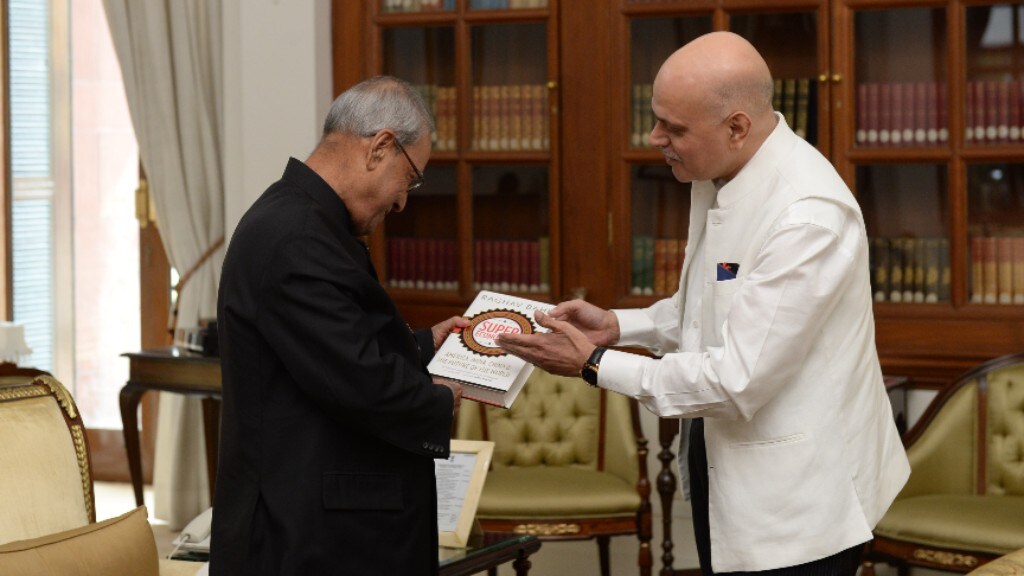
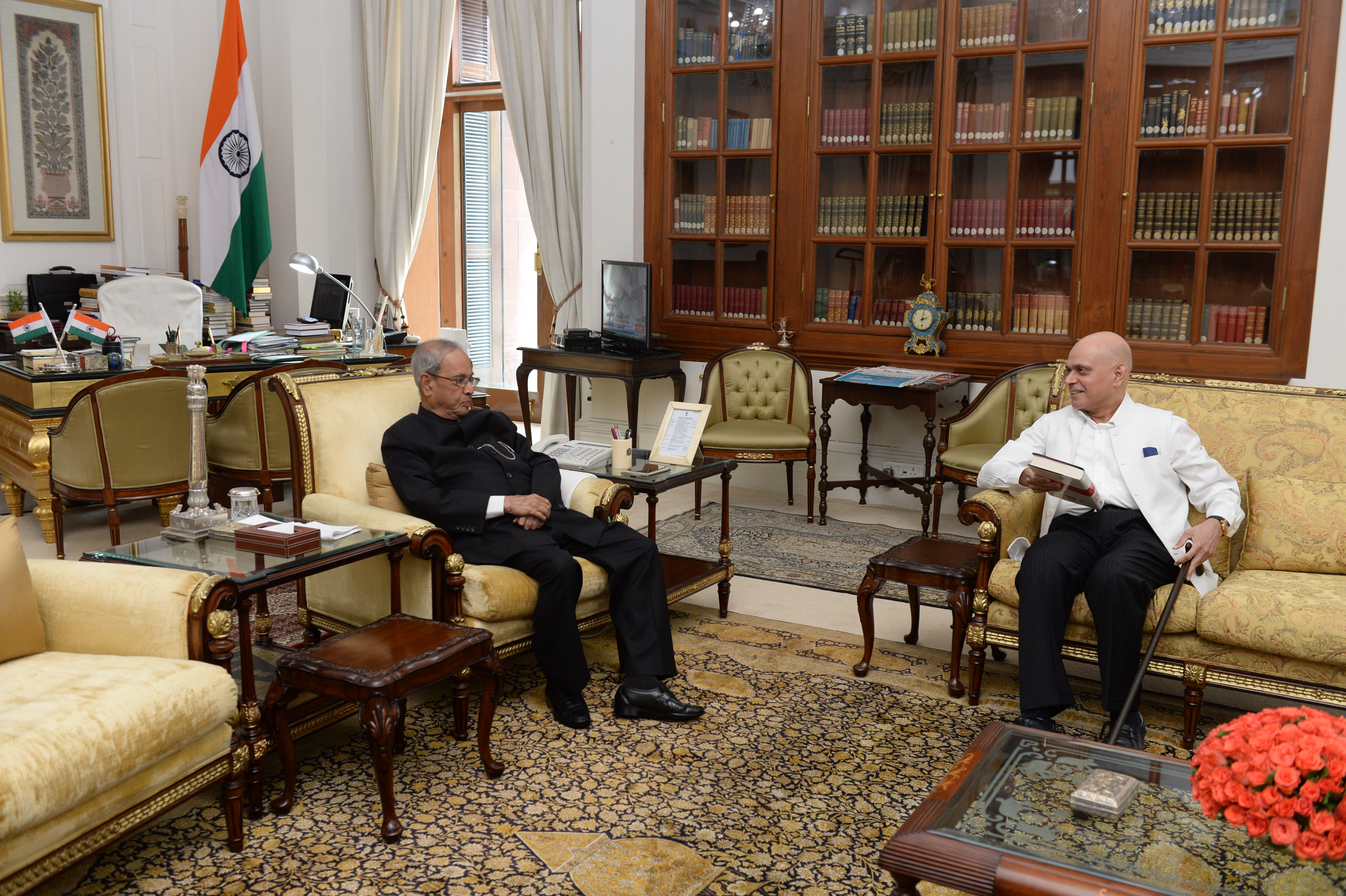
On Tuesday, Quintillion Media founder Raghav Bahl met with President Pranab Mukherjee to present him with his book, SuperEconomies. Bahl's book draws on history, current affairs and political analyses to project how India can soon become a world leader and help secure a future of peace and prosperity for all.
About ‘SuperEconomies'
In the introduction to the book, Bahl writes:
Global shifts are born of great turmoil. The six-year span of the Second World War rearranged the geopolitical landscape to produce the Age of Superpowers...
The great conflict between the Soviet bloc and the US and its NATO allies was primarily ideological – Communism versus democracy – but it played out largely militarily, through the nuclear arms race that came to define the Cold War. Only when the Berlin Wall fell in 1989 did the Cold War end and, with it, the bipolar Superpower era. For a time, America reigned supreme...
And as the Soviets collapsed, the Age of Superpowers ended with the 20th Century.
The 21st Century began with the decimation of the World Trade Centre towers on 9/11; seven years later, on 15/11, Lehman Brothers filed for bankruptcy, triggering another tectonic power shift. Then America began to recover, China levelled off, and India continued to rise – in the new Age of SuperEconomies.
What the Superpowers achieved with missiles and warships, the Super Economies seek to achieve with economic leadership: organising multilateral dialogues, setting the terms of inter-country engagement, and using tough negotiations to establish everything from exchange rates to climate policy. In the Age of the SuperEconomies, the path to success lies in cooperation, not domination.
Praise for the Book
The book has been praised widely by businesspeople, ministers, and big-wigs from the technology sector, among others.
In ‘SuperEconomies', Raghav Bahl makes a provocative case for how an emerging axis of the major democracies – America's might combined with India's potential might – could counteract the rise of China in the coming years. It's an optimistic vision in a world shadowed by post-crisis gloom, and seems particularly timely at a moment when the leaders of India and the US are cementing a genuine friendship.Ruchir Sharma, Head of Emerging Markets at Morgan Stanley and Author, Breakout Nations
This book provides a fresh and insightful take on the world that gave rise to the BRICS acronym, and offers a thought-provoking glimpse of the ways in which it might evolve.Jim O'Neill, Former Chairman of Goldman Sachs and Father of the BRICS concept
Raghav Bahl has written a perceptive book about the emerging geopolitics of the globe. He integrates economics and politics into his analysis, which is marked by intelligence, common sense and lucid prose. All in all, a refreshing, optimistic account of the future.Fareed Zakaria, CNN Anchor and Author, The Post–American World
A well-researched and analytical account of the future of global power dynamics and the dominant role SuperEconomies are set to play in this evolution.Sunil Mittal, CEO, Bharti Enterprises
Well researched, impressively structured and compellingly argued, Raghav Bahl's ‘SuperEconomies' makes an insightful argument fir the evolution and dominance of the US, China and India in the first half of the twenty-first century. Mr Bahl marshals his material well and writes fluidly. A book that succeeds in being both interesting and instructive.Shashi Tharoor, Member of Parliament and former Under Secretary General of the United Nations

-
We May Need Another Tukaram Mundhe To Fight Air Pollution | The Reason Why

Developers may install basic measures such as sprinklers and green nets, resume work, and continue violating rules when this equipment stops working.
-
Extracting Value From Battery Scrap Could Be Challenging For India | The Reason Why
A discarded lithium-ion battery still contains valuable materials such as lithium, nickel and cobalt. These can be recovered and reused. When such batteries are crushed and shredded, they produce a dark powder called black mass.
-
One El Nino, India Can Handle. Two Could Break The Granary
India's grain stocks can absorb one bad year, but a second El Nino could drain the buffer in two to three years, economists say.
-
India's Troika Of Good Luck | Joining The Dots
As Jensen Huang's exit drags Nvidia down, a cooling AI trade and resilient earnings have revived investor interest in India. A likely RBI rate hike looms.
-
Talking Points This Week: Leadership Shock At Nvidia, Earnings Strength, And The Fog Over Hormuz
The Anthropic IPO pricing and first trading day, Nvidia's upcoming earnings, and any fresh signals from Iran will set the tone for the following week.
-
Signature Play: The Classic Cocktail Is Dead. Or Is It?
Classic cocktails are disappearing from India's cocktail menus. But they're still being ordered, taught to bartenders and borrowed from. So, who's really having the last drink?
-
A New Samvat Wishlist: Inclusive Prosperity And Human Development
India has strengthened its economic foundations through infrastructure, digital access and enterprise. Its next growth chapter must deepen productivity, create better livelihoods and widen participation in prosperity.
-
Love, Sex Aur Dhokha: The Audacious Plot To Spy On Jensen Huang
A Taipei dinner, a Singapore chip buyer and a suspected Chinese asset: inside the alleged spy operation that got close to NVIDIA's Jensen Huang.
-
Ten Things I Learnt This Samvat
Patience can be a trap. Cheap stocks can stay cheap. Leverage can wipe you out. What did Samvat 2082 teach us? Niraj Shah writes on 10 lessons from the year gone by.
-
Talking Points This Week: Tech Nerves, FII Buying, And A Faraway Banking Shock
The global markets are not shining this Diwali. The exception in the large markets is, India.









