Dogs Are People Too – At Least in Wes Anderson’s Films
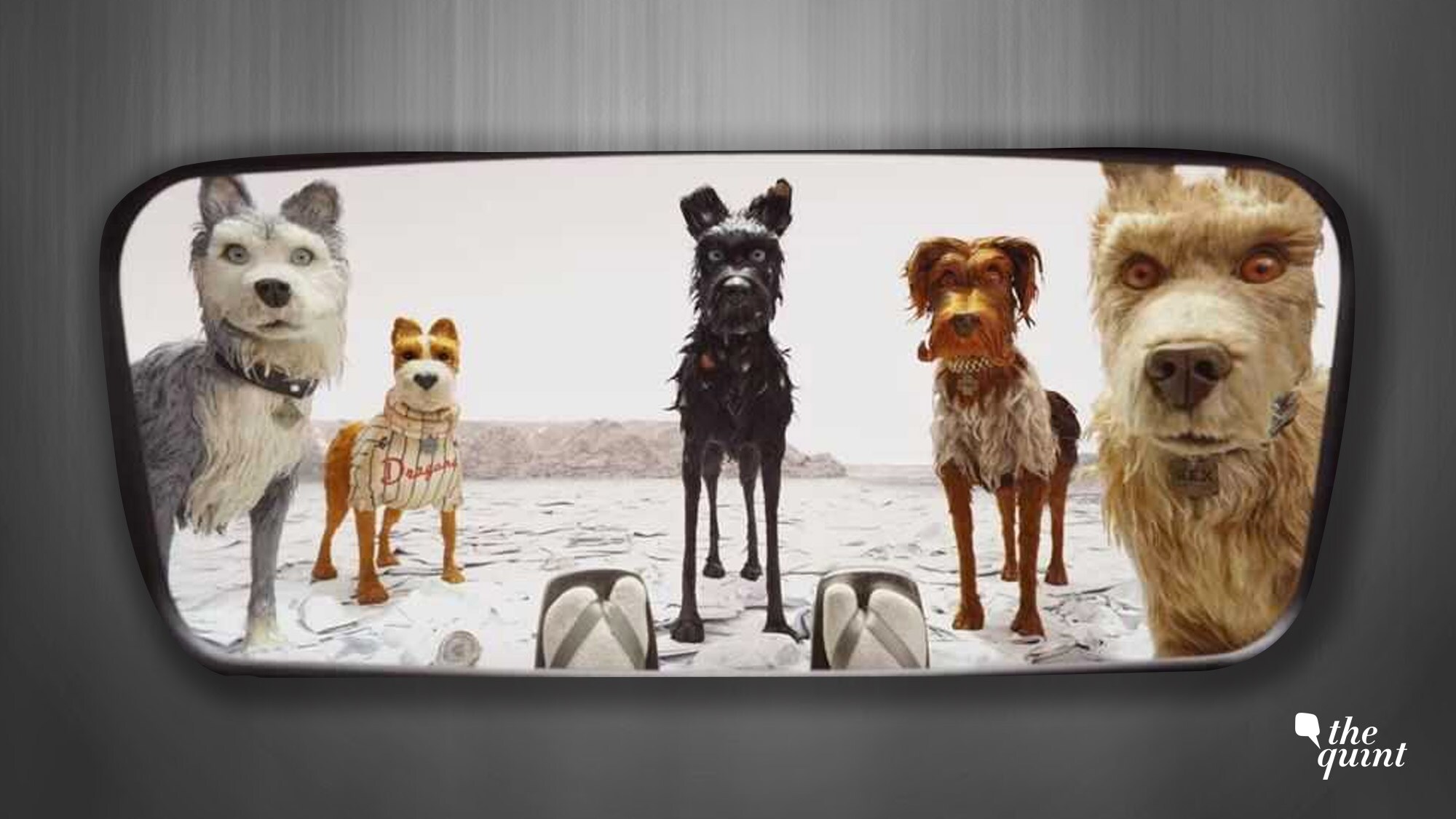
How many of you talk to your dog? Or your cat, or parrot, or hamster.... you get the drift. I've never owned a pet, growing up in a family that was mortally afraid of (most) animals (except humans).
But Wes Anderson's surreal cinema has shown me – more than once – that animals also have human traits – sometimes, more human than humans themselves.
A Dog's Life
Wes Anderson's latest release Isle of Dogs aptly sums up the phrase ‘it's a dog's life'. But it wasn't always a dog's life for the canines of the fictitious city of Megasaki, in a dystopian Japan. Most of the canines, in this stop-motion film, grew up as house pets before they were thrown into the pits of Hell, aka Trash Land – an island of garbage and toxic waste.
This 105-minute long animated film has Wes Anderson's stamp all over it. It's also almost a throwback to his first work of animation, Fantastic Mr Fox (2009). But in this latest masterpiece, Anderson ups the ante. Dare I say, Anderson's use of stop-motion in Isle of Dogs could give the formidable Tim Burton a run for his money.
Calling every frame of this film a painting would be to quote a cliché – but that's what Anderson's films are – art in motion.
In his patent style, Anderson's palette contains pastels – with a bit of urban Japan's neon skyline thrown in. Much like the British school boys on a deserted island in the iconic novel Lord of the Flies, these scruffy dogs on a wasteland fight for survival – often at the cost of shedding the blood of their canine compatriots.
Meet some of the flu-infested refugees of Trash Land: Chief (voiced by Bryan Cranston), Rex (Edward Norton), King (Bob Balaban), Boss (Bill Murray) and Nutmeg (Scarlett Johansson). With sewer water being their champagne, and turpentine their everyday Brandy, the future of these canines is doomed. That is until a 12-year-old orphaned boy, Atari Kobayashi, flies down to Trash Land to search for his exiled bodyguard dog, Spot.
Despite the obvious language barrier between Atari and the refugee dogs, and some initial hostility, Atari manages to win over his new dog friends. In the end, Atari also manages to win the trust and loyalty of the most hostile of Trash Land's canines – Chief.
Parallel to Atari's noble mission, is the story of a poisoned scientist and city-wide holler for a dog-ban in Megasaki.
A Parable for Our Times
Wes Anderson spins a dark tale about our times. Think the global refugee crisis, Trump's anti-immigration agenda, corruption, crony capitalism, and a general atmosphere of fear – especially among minorities – both in large democracies like the US and India.
The rumour doing the rounds in Trash Land, that a big corporation had been dumping its toxic waste in it, hits home – reminiscent of the Sterlite protests in Tuticorin.
And of course, staying true to real life, the evil mayor of Megasaki allows these (human) animal-rights violations to take place with impunity. Later in the film, one finds out that the creation of dog-flu was actually part of a political agenda to ban dogs – Holocaust allegory anyone?
Going back to the canine characters of the film – they are all too human – I wouldn't have been surprised had they stepped out of the screen to shake my hand.
I can hardly think of another filmmaker who can so effortlessly humanise animals. Their emotions are so real, you can cut them with a knife.
Wes Anderson's dystopia is further brought to life through Alexandre Desplat's haunting background score. In keeping with the film's setting, the use of oriental instruments, such as the Chinese drums and the shamisen, lend authenticity and are used effectively to convey tension and fear.
Isle of Dogs is as much a children's film as Alice in Wonderland was a children's book. Anderson, in his usual style, delivers a strong message without preaching – masterfully using the allegory of the present, to portray a frightening picture of the future – and where we are likely headed.
It's a dog's life, after all.

-
The Economic Imperative: Analysing The Material Driving Force Behind India-Canada Strategic Reset

This economic complementarity is further reinforced by deep institutional investment ties and talent mobility, which form the bedrock of the bilateral framework.
-
Medicine Pricing: Where Must Profit Stop?
India must confront excessive margins, hidden incentives and regulatory gaps that threaten the integrity of medicine.
-
Why Amazon And Flipkart Are Struggling To Beat Meesho In India's Smaller Cities
With 274 million users and lowest-cost logistics, Meesho is defending its value commerce crown against giants like Amazon and Flipkart.
-
High US Salaries, No Green Card Certainty: The Financial Calculation Facing Indian H-1B Families
The suspension of PERM processing at eight technology employers does not cancel existing H-1B visas. What it does is force a question many Indian families have been avoiding: is the US salary worth tying your career and family plans to one employer?
-
Swiggy vs Eternal: Food Delivery's Two Rivals Are No Longer In The Same Race
Eternal is building a private AI assistant, dark.ai. Swiggy is still working out how to make Instamart pay, with an operating loss of Rs 895 crore in the July-September quarter while Blinkit stayed profitable.
-
Where You Live Shapes How You Get To Work | The Reason Why
Two-wheelers are the most popular way to get to work in India, accounting for nearly 43% of workplace commutes.
-
Unhedged Position: Can India See An Indonesia-Style Time Correction?
The Nifty is trading below levels it first clocked in 2024. Is there, then, as I have suggested in the headline, potential that the current time correction drags on painfully for the next three-five, even ten years?
-
Navigating Friction And Energy Realities: An Analysis Of Marco Rubio's October Visit To India
Occurring at a critical juncture marked by stalled trade negotiations and escalating geopolitical pressures over global energy supplies, the visit offers a profound window into modern US-India relations.
-
India Exports Capital. Why Not Export Trusteeship?
The big question, then, is whether India can build an institution that global borrowers, investors, banks, and lawyers can trust, even without an Indian connection.
-
France's Economy & Politics Are In Crisis | The Reason Why
Let's look at how the French economy and politics evolved under Nicolas Sarkozy, Franois Hollande and Emmanuel Macron.










