China Rare Earth Export Ban: India Auto Sector Has One Month To Secure Fresh Supply
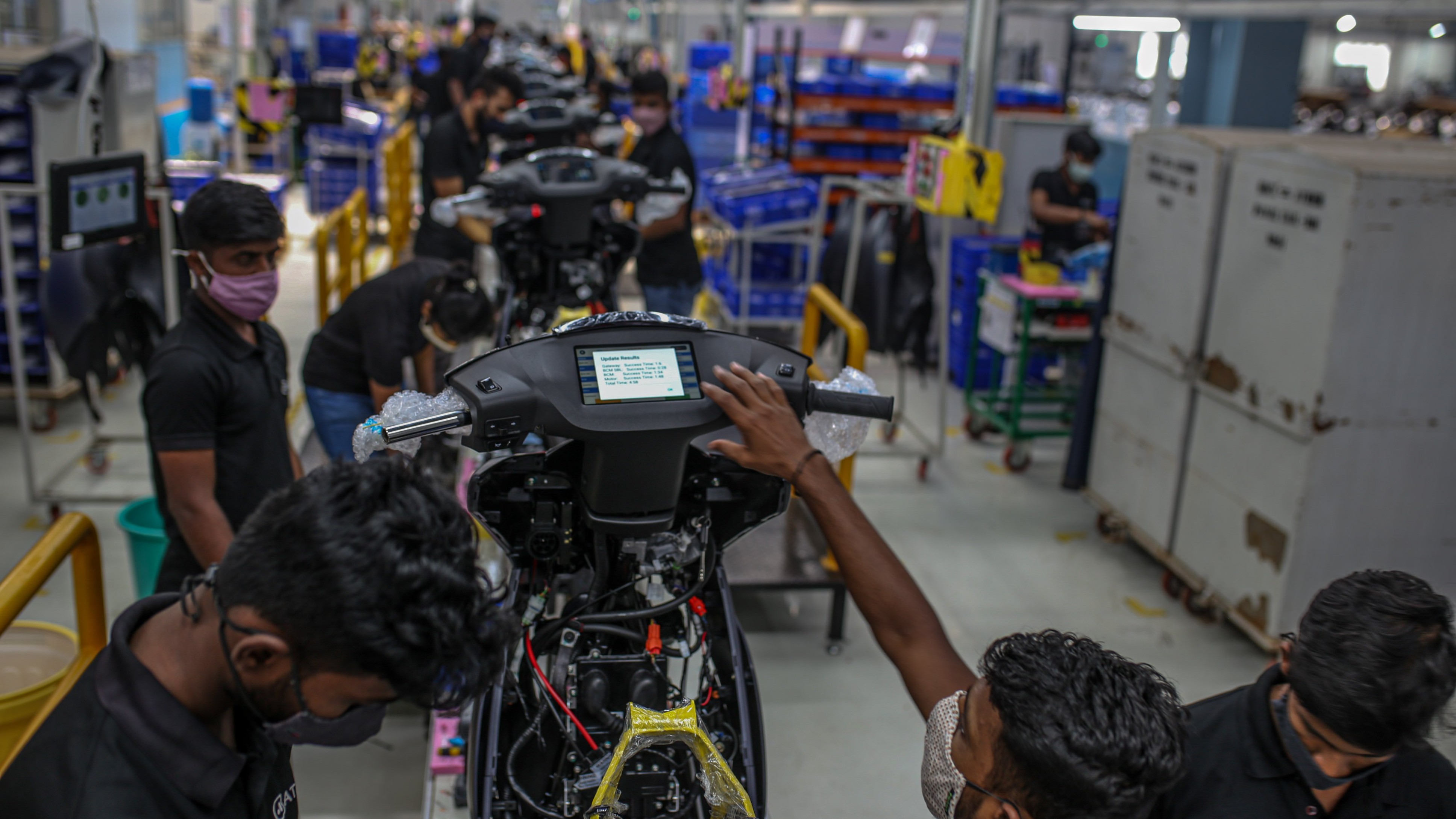
Indian automakers have exactly one month to secure fresh supply of rare earth magnets from China, a lack of which can bring vehicle production in the world's third largest automotive market to a grinding halt.
China's ban on export of rare earth magnets on April 4 meant that India's auto parts makers and original equipment manufacturers had 90 days of supplies, people aware of the matter told NDTV Profit. The ban also meant that an Indian entity now has to apply for a fresh licence to access the rare earth stash.
The process for a new licence takes at least 60 days, and there's no guarantee of approval, one of the people cited above said. They requested anonymity citing the sensitive nature of the situation at hand.
Thirty days of supply versus 60 days of licence—that's clearly a risk.
The Situation
China controls 90% of the global processing capacity for rare earth magnets, which are used in appliances to automobiles and aerospace. When US President Donald Trump first imposed tariffs on April 4, Beijing turned off this tap as part of its retaliatory move.
Now, China requires importers to submit an application detailing the end use of the rare earth magnets, with assurances that the materials won't be used in military operations or routed to the US in any form. The process has to be initiated by the importer, then endorsed by Chinese authorities before being submitted for final clearance. An approval is not guaranteed.
Forget approval, the application process itself is arduous, people in the know said.
An Indian supplier has to initiate the process for a new licence via the Directorate General of Foreign Trade of the Union Ministry of Commerce and Industry. A file with the application and necessary documents will then go to the Ministry of External Affairs. Upon further whetting, this file will be submitted to the Chinese embassy in New Delhi.
At this juncture, if everything is in place, the embassy will contact the Chinese supplier of rare earth magnets in Mainland China. This supplier will then submit the licence application to the Ministry of Commerce, People's Republic of China.
The process in China itself takes 45 days, the second person said. There's no guarantee of approval. Thirty such applications have been submitted so far. None have been approved.
OEMs and industry bodies SIAM and ACMA are now in talks with the government to speed up the licence process at least at the India level, the second person said. A 50-member team was supposed to go to China this week to figure out the process, but that hasn't happened. A future timeline for the visit wasn't immediately available.
The Impact
To be sure, it's not yet time to panic.
“The current situation remains stable and manageable,with automakers and suppliers actively exploring alternatives such as product mix adjustments and alternative sourcing,” Gaurav Vangaal, associate director – light vehicle production forecasting for India at S&P Global Mobility, told NDTV Profit over the phone. “However, continuous monitoring is essential, as a prolonged disruption could significantly affect production lines.”
Still, electric two-wheelers are squarely in the line of impact because their electric motors cannot do without a rare earth magnet. Additionally, a lot more electric scooters are sold in India than electric cars.
“The rare earth situation is difficult one. Supplies and stocks are depleting fast,” Rakesh Sharma, executive director at Bajaj Auto, said during a post-earnings conference call on May 29. “If there's no relief, production will be seriously impaired in July. That's the current case for the auto industry.”
TVS Motor Co. echoed the opinion.
“While EV sales continue to grow steadily, disruptions in the EV supply chain, particularly concerning magnet availability, are expected to pose challenges in the short- to medium term,” according to an exchange filing on June 1.
Bajaj Auto and TVS Motor are the largest electric two-wheeler makers in India. The electric powertrain cannot do without rare earth magnets. There's no workaround.
The local carmakers are relatively better placed.
Maruti Suzuki India Ltd., the country's largest carmaker by volume, has submitted an import application for rare earth magnets, Senior Executive Director Rahul Bharti said during a media call on June 2, but refused to give details until it received a response.
“It is not a restriction. It is an endorsement of end use. In case there is an issue, we will inform all our stakeholders, including the stock exchange,” he had said then.
Tata Motors Ltd., the largest electric car maker in India, doesn't see an immediate impact.
“There is dependency on rare earth elements in both the ICE and EV worlds. As far as we are concerned, there is no immediate impact…,” Shailesh Chandra, managing director of Tata Motors' PV and EV business, said on the sidelines of a launch event for the Harrier.ev on June 3.
“SIAM and ACMA are in constant discussions with the government. We are getting all kinds of support…hope this gets resolved fast.”

-
Gold Is Rs 22,000 Cheaper Than A Month Ago. Should You Buy Amid The Wedding Season?

Gold's potential slide to $3,500 could save around Rs 4,700 per 10 grams, but a soft inflation print could just as easily push prices back up. One way to split the risk is to buy in parts, some now and the rest after the Fed's Dec. 9 decision.
-
AI Agents Are Gaining Power. Who Governs Them?
Artificial intelligence agents promise to transform productivity by moving machines from assisting decisions to executing them. But as organisations delegate greater authority to these AI-agents, they must first establish who controls that authority and who remains accountable when things go wrong.
-
Why Swapping Your Old Gold Can Trigger A Rs 5 Lakh Tax Bill, And How You Can Avoid It Legally
Swapping old gold for new is taxed as a sale and a fresh purchase. Getting your own gold remade can cut most of that bill, though it has its own costs.
-
The AI Trade is Done. The Real Opportunity for Investors Starts in 2027 | Unhedged Position
As pureplay AI stocks plunge and circular, capex-led financing unwinds, 2027 is set to be a year of reckoning for AI companies. Yet the bust clears the way for a better opportunity for investors in 2027 -- shifting the spotlight from AI builders to the companies using AI.
-
Leadership As Mission: Why The Age Of AI Demands More Human Leadership
Debjani Ghosh examines how AI is changing leadership, arguing that its success must be measured by its impact on people and the accountability of those guiding its use.
-
We May Need Another Tukaram Mundhe To Fight Air Pollution | The Reason Why
Developers may install basic measures such as sprinklers and green nets, resume work, and continue violating rules when this equipment stops working.
-
Extracting Value From Battery Scrap Could Be Challenging For India | The Reason Why
A discarded lithium-ion battery still contains valuable materials such as lithium, nickel and cobalt. These can be recovered and reused. When such batteries are crushed and shredded, they produce a dark powder called black mass.
-
One El Nino, India Can Handle. Two Could Break The Granary
India's grain stocks can absorb one bad year, but a second El Nino could drain the buffer in two to three years, economists say.
-
India's Troika Of Good Luck | Joining The Dots
As Jensen Huang's exit drags Nvidia down, a cooling AI trade and resilient earnings have revived investor interest in India. A likely RBI rate hike looms.
-
Talking Points This Week: Leadership Shock At Nvidia, Earnings Strength, And The Fog Over Hormuz
The Anthropic IPO pricing and first trading day, Nvidia's upcoming earnings, and any fresh signals from Iran will set the tone for the following week.









