Book Excerpt: Suketu Mehta Finds A Planet On The Move
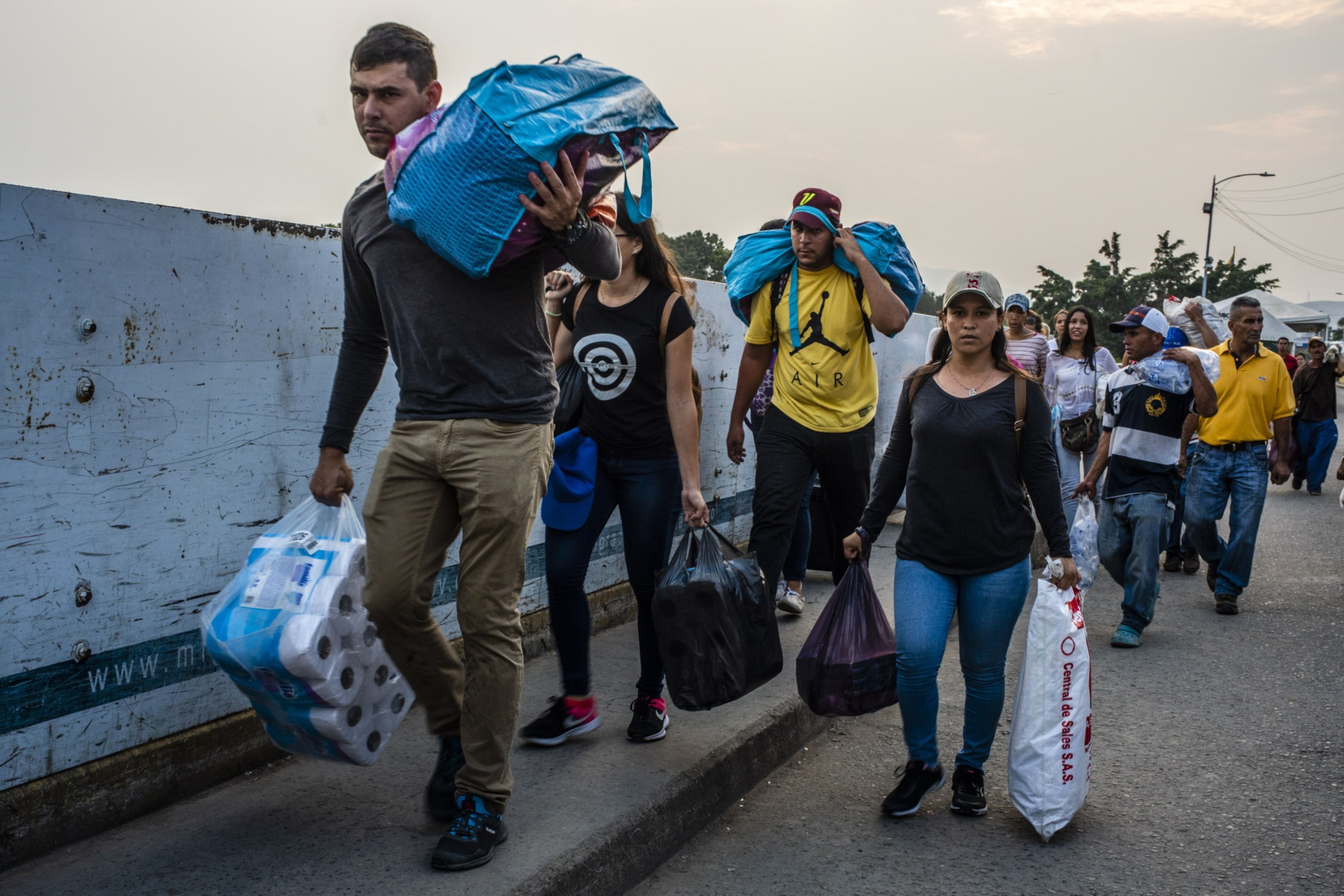
Excerpted from This Land Is Our Land, An Immigrant's Manifesto, by Suketu Mehta, with permission from Penguin Random House India.
One day in the 1980s, my maternal grandfather was sitting in a park in suburban London. An elderly British man came up to him and wagged a finger in his face. ‘Why are you here?' the man demanded. ‘Why are you in my country?'
‘Because we are the creditors,' responded my grandfather, who was born in India, worked all his life in colonial Kenya, and was now retired in London. ‘You took all our wealth, our diamonds. Now we have come to collect.' We are here, my grandfather was saying, because you were there.
These days, a great many people in the rich countries complain loudly about migration from the poor ones. But as the migrants see it, the game was rigged: First, the rich countries colonized us and stole our treasure and prevented us from building our industries. After plundering us for centuries, they left, having drawn up maps in ways that ensured permanent strife between our communities. Then they brought us to their countries as ‘guest workers' – as if they knew what the word ‘guest' meant in our cultures – but discouraged us from bringing our families.
Having built up their economies with our raw materials and our labour, they asked us to go back and were surprised when we did not. They stole our minerals and corrupted our governments so that their corporations could continue stealing our resources; they fouled the air above us and the waters around us, making our farms barren, our oceans lifeless; and they were aghast when the poorest among us arrived at their borders, not to steal but to work, to clean their shit, and to fuck their men.
Still, they needed us. They needed us to fix their computers and heal their sick and teach their kids, so they took our best and brightest, those who had been educated at the greatest expense of the struggling states they came from, and seduced us again to work for them. Now, again they ask us not to come, desperate and starving though they have rendered us, because the richest among them need a scapegoat. This is how the game is rigged today.

My family has moved all over the earth, from India to Kenya to England to the United States and back again – and is still moving. One of my grandfathers left rural Gujarat for Calcutta in the salad days of the twentieth century; my other grandfather, living half a day's bullock-cart ride away, left soon after for Nairobi. In Calcutta, my paternal grandfather joined his older brother in the jewellery business; in Nairobi, my maternal grandfather began his career, at sixteen, sweeping the floors of his uncle's accounting office. Thus began my family's journey from the village to the city. It was, I now realize, less than a hundred years ago.
I am now among the quarter of a billion people living in a country other than the one they were born in. I'm one of the lucky ones; in surveys, nearly three-quarters of a billion people want to live in a country other than the one they were born in, and will do so as soon as they see a chance. Why do we move? Why do we keep moving?

On 1 October 1977, my parents, my two sisters and I boarded a Lufthansa plane in the dead of night in Bombay. We were dressed in new, heavy, uncomfortable clothes and had been seen off by our entire extended family, who had come to the airport with garlands and lamps; our foreheads were anointed with vermilion. We were going to America.
To get the cheapest tickets, our travel agent had arranged a circuitous journey in which we disembarked in Frankfurt, where we were to take an internal flight to Cologne, and then onward to New York. In Frankfurt, the German border officer scrutinized the Indian passports belonging to my father, my sisters and me, and stamped them. Then he held up my mother's passport with distaste. ‘You are not allowed to enter Germany,' he said.
It was a British passport, given to citizens of Indian origin who had been born in Kenya before independence, like my mother. But the British did not want them. Nine years earlier, Parliament had passed the Commonwealth Immigrants Act, summarily depriving hundreds of thousands of British passport holders in East Africa of their right to live in the country that had conferred their nationality. The passport was literally not worth the paper it was printed on.

The German officer decided that because of her uncertain status, my mother might somehow desert her husband and three small children to make a break for it and live in Germany by herself. So we had to leave directly from Frankfurt. Seven hours and many airsickness bags later, we stepped out into the international arrivals lounge at John F. Kennedy International Airport. A graceful orangeand-black-and-yellow Alexander Calder mobile twirled above us against the backdrop of a huge American flag, and multicoloured helium balloons dotted the ceiling, souvenirs of past greetings. As each arrival was welcomed to the new land by their relatives, the balloons rose to the ceiling to make way for the newer ones. They provided hope to the newcomers: look, in a few years, with luck and hard work, you, too, can rise here. All the way to the ceiling.
It was 2 October – Mahatma Gandhi's birthday. We made our way in a convoy of cars carrying our eighteen bags and steamer trunks to a studio apartment in Jackson Heights where The Six Million Dollar Man was playing on the television. On the first night, the building super cut off the electricity because there were too many people in one room. I stepped out and looked at the rusting elevated train tracks above Roosevelt Avenue and wondered: where was the Statue of Liberty?

Suketu Mehta is the New York-based author of ‘Maximum City: Bombay Lost and Found,' and an Associate Professor of Journalism at New York University.
The views expressed here are those of the author and do not necessarily represent the views of BloombergQuint or its editorial team.

-
Getting To Work Costs Women More | The Reason Why

It is not just about women paying more than men. It is about women paying much more in cities than in villages.
-
AI Bias In Investing Cannot Be Eliminated, But It Can Be Governed
Framing is a particularly important example as identical financial information presented in terms of gains rather than losses can lead an LLM to reach a different assessment.
-
Joining The Dots | Dark Skies, Steady Diya: Why Hope Holds This Diwali
With war, a weak rupee and foreign outflows weighing on sentiment, policymakers at the NDTV World Summit and market veterans at NDTV Profit Ignite: Diwali Edition offered the same advice: stay invested and filter out the noise.
-
The Curious Case of Equitas Small Finance Bank And A CEO Who Quit For Stock
PN Vasudevan believes persistent investor concerns over a perceived conflict of interest had become a governance overhang on Equitas Small Finance Bank's stock, even as the lender improved profitability and asset quality.
-
Talking Points This Week: AI Cash Burn, A Tiger Comeback And An India That Still Finds Its Own Path
India is not immune to higher oil or tighter global liquidity, yet its earnings base is broader, its domestic policy levers are still available.
-
Foreign Investors Own Half Of HDFC Bank and ICICI Bank. An LTCG Cut Could Matter Most Here
Foreign portfolio investors have US$115 billion parked in HDFC Bank, ICICI Bank. If the government cuts long-term capital gains tax, Jefferies says returning foreign money could land here first.
-
'Never Seen This Level Of Negativity': Sandeep Tandon Says The Next Rally May Be Closer Than You Think
Veteran investor Sandeep Tandon says foreign selling is easing, large-caps are due a comeback and mid-caps are crowded, while he turns positive on gold, power and pharma this Diwali.
-
Indians Stay With Family, Not In Hotels | The Reason Why
India still lacks enough clean, reliable and affordable hotels for budget-conscious travellers.
-
The Economic Imperative: Analysing The Material Driving Force Behind India-Canada Strategic Reset
This economic complementarity is further reinforced by deep institutional investment ties and talent mobility, which form the bedrock of the bilateral framework.
-
Medicine Pricing: Where Must Profit Stop?
India must confront excessive margins, hidden incentives and regulatory gaps that threaten the integrity of medicine.










