A New And Improved Restaurant Model? Or Food Court 2.0?
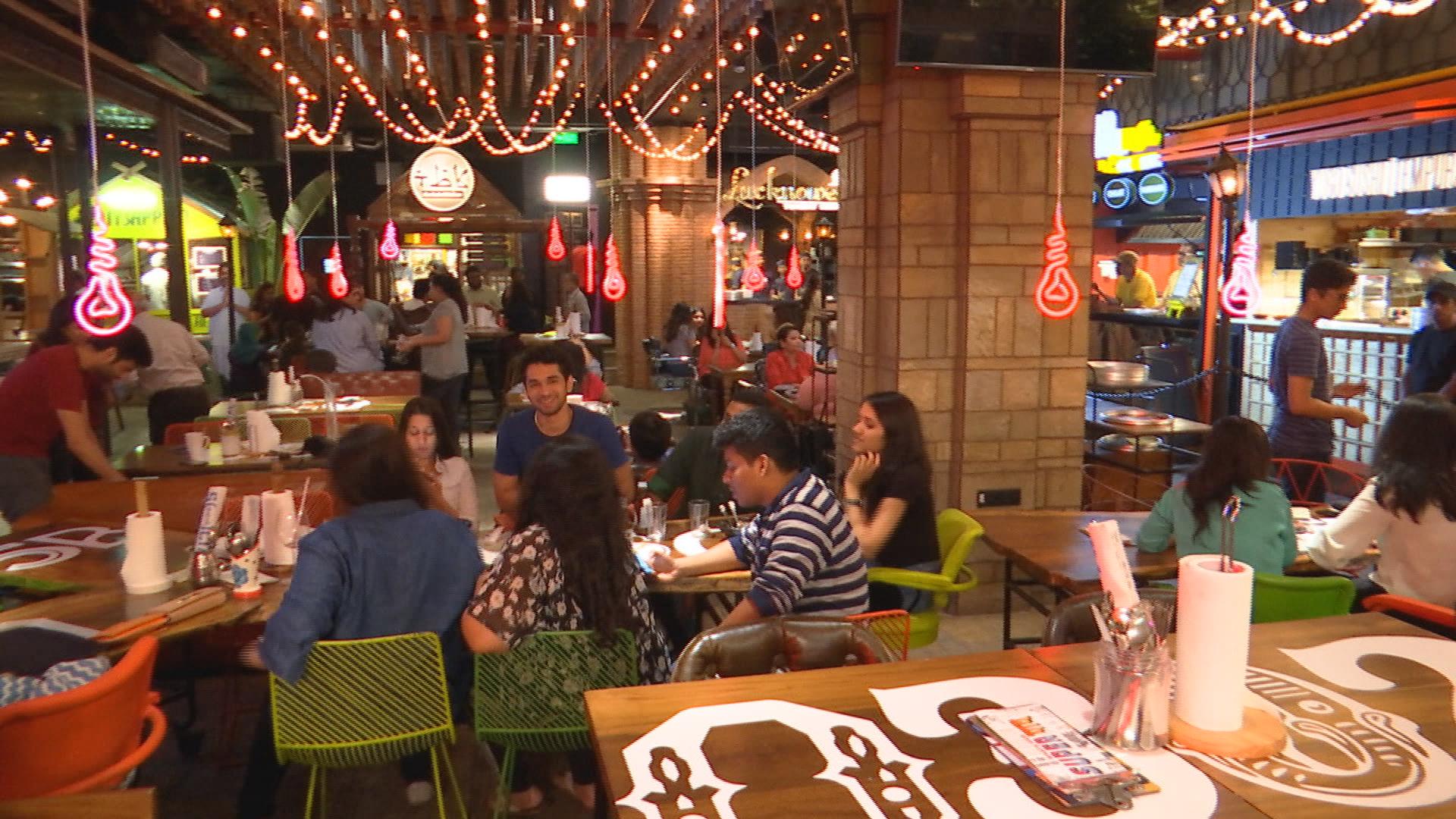
In 21st century Mumbai, perhaps because of the soaring costs of everything from real estate to transport, shops and businesses are turning towards the sharing economy model.
Taxi aggregators are offering ride sharing services, co-working spaces are becoming common place, and Airbnb is giving traditional hospitality a run for its money. It seems, the restaurant business might be in for a change too.
You might argue that food courts have existed for decades. You've probably been to several at the various malls that have cropped up in urban India. But, Riyaz Amlani, the chief executive officer and managing director of Impressario, is of the opinion that his recently launched Flea Bazaar Cafe in Mumbai's Lower Parel, is a break from the norm.
Amlani, who through Impressario, runs several successful restaurants in the city, said, “I think it's a collaborative venue. In my head, it is a music festival with a lot of food punctuated. There will be live performances. It's a fun place, not as sterile as a food court.”
As part of the model, Amlani has connected with several chefs that are looking to set up shop, but don't have the wherewithal or resources, and some established businesses that are looking to diversify.
Among the 14 food brands that have set up shop at the Flea Bazaar Cafe are new-age brands like The Bohri Kitchen, Watsappam and Lucknowee Tunday Kebaab, which brings the spices and flavours of the Lucknow's iconic Tunday Kebaab to the Maximum City.
For The Bohri Kitchen, which so far has served guests at the home of its proprietors - Nafisa Kapadia and son Munaf - this is the first time the mother-son duo has moved their kitchen outdoors.
Munaf, a former Google employee, who quit his job to enter the food business joked that his parents were not thrilled with his decision to leave a lucrative career to sell mutton samosas.

“We opened a delivery outlet, which is doing very well. I figured that the next step is to open a restaurant. I did two days of research and I realised I don't have the courage to do that. it is very scary for someone from a middle class family to take that plunge,” he said.
Is it Scalable?
The businesses that have joined hands with the Flea Bazaar Cafe are operating on a revenue share model. The cost of setting-up and the technicalities involved in getting the requisite permissions are taken care of by Amlani's Impressario, he said.
In a city where renting out property in central business districts is a daunting prospect to say the least, this model allows would-be restaurateurs to test the waters and establish their brands.
The deals that are struck by the individual businesses with Impressario are on a case-to-case basis, Amlani said. He also clarified that he doesn't own any part in the businesses that currently operate within his premises.
“It's a highly over regulated environment for young food entrepreneurs. I think they are better served focusing on the product and customer experience. And letting old guys like me worry about the non-fun things,” said the 43-year-old Amlani.
The current rendition of the Flea Bazaar Cafe is a pilot. The fixtures could potentially see some churn. If it works, Amlani sees no reason why it can't be taken to central business districts not just in Mumbai, but also to other metropolitan cities.

-
Signature Play: The Classic Cocktail Is Dead. Or Is It?

Classic cocktails are disappearing from India's cocktail menus. But they're still being ordered, taught to bartenders and borrowed from. So, who's really having the last drink?
-
A New Samvat Wishlist: Inclusive Prosperity And Human Development
India has strengthened its economic foundations through infrastructure, digital access and enterprise. Its next growth chapter must deepen productivity, create better livelihoods and widen participation in prosperity.
-
Love, Sex Aur Dhokha: The Audacious Plot To Spy On Jensen Huang
A Taipei dinner, a Singapore chip buyer and a suspected Chinese asset: inside the alleged spy operation that got close to NVIDIA's Jensen Huang.
-
Ten Things I Learnt This Samvat
Patience can be a trap. Cheap stocks can stay cheap. Leverage can wipe you out. What did Samvat 2082 teach us? Niraj Shah writes on 10 lessons from the year gone by.
-
Talking Points This Week: Tech Nerves, FII Buying, And A Faraway Banking Shock
The global markets are not shining this Diwali. The exception in the large markets is, India.
-
Midterm Rally Lasted A Day. The Hard Reality Of A Divided US May Last Two Years | Opinion
Between a contested AI boom, a debt ceiling that arrives in 2027 and a president with every incentive to act alone, the next two years may prove more volatile than the first day's rally suggests.
-
Blue Wave Will Derail the AI Trade but Won't Dismantle the AI Era | Unhedged Position
The Democrats' sweep of the US Congress will see politics collide with economic forces both over the long and short term.
-
It's Time To Take The GST Council's Bet On Trust Global
Payment records can prove India's services exports, and clear, proportionate rules can bring foreign digital sellers into the tax net.
-
Opinion | India at 38: From Innovation Overperformer to Innovation Powerhouse
India now has 453 VC-backed deep science startups, 18 of them late-stage, after 117 percent growth since 2020. Laurus Labs, at USD 9.3 billion, is the most valuable deep science company in any middle-income economy outside China.









