A Book That Helped Nestle’s Suresh Narayanan Tide Over The Maggi Crisis
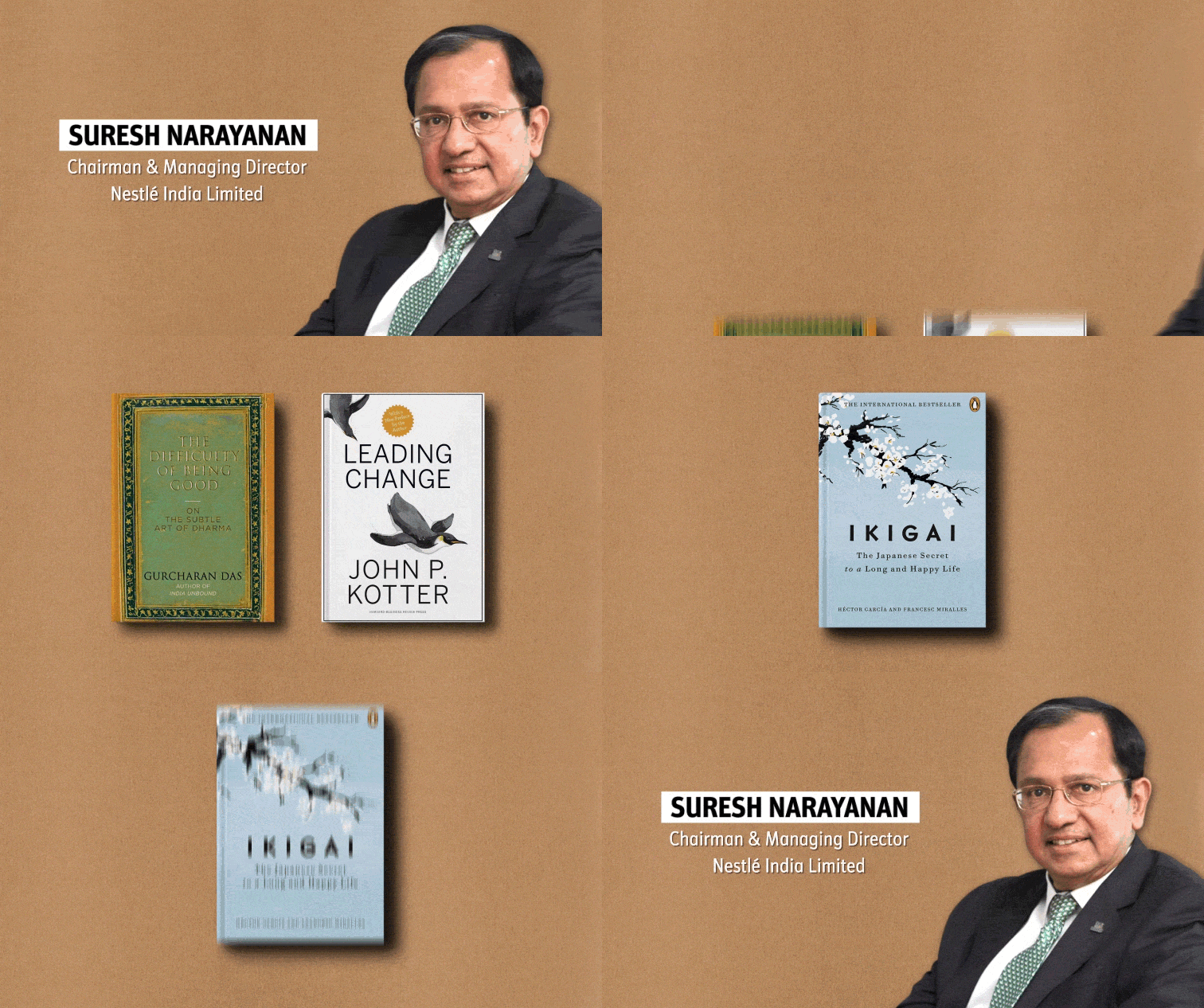
A book that helped Nestle India's Chairman & Managing Director deal with the Maggi crisis. A defining treatise that changed the way businesses perceived consumption opportunities for the poor. A management book on eight steps to achieve sustainable results in an organisation. A book on the “secret sauce” of longevity.
Suresh Narayanan discusses a Japanese book that helps him unwind, why Mahabharata and the Bhagvad Gita offer the best life lessons, and leadership values he learnt from CK Prahalad and Lee Kuan Yew. Here's a look at his reading list.
The Difficulty of Being Good, By Gurcharan Das
The Mahabharata and the Bhagavad Gita are inextricably related as offering some of the best and most succinct “life lessons” and dilemmas that were imparted by the Charioteer Lord Krishna to the warrior Arjuna as he set out to vanquish his brethren, the Kauravas. I have greatly admired the masterly interpretation of the characters of the Mahabharata by Gurcharan Das and moored them in modern day reality in terms of what they impart and teach us about life's journey.
When I went through the Maggi saga, its lessons were my constant companion, and I learnt as much from Krishna as I did from a Bhishma or Arjuna.

Ikigai-The Japanese Secret To A Long And Happy Life, By Hector Garcia & Francesc Miralles
What a beautiful word Ikigai is, to be so simple and yet so profound as “life's purpose”. The Okinawans have their “secret sauce” of longevity as centenarians by embracing a life of active engagement, simple habits, healthy food and striving to be happy each day with what they have. They do what they love and teach us that happiness is a state of mind, devoid of material riches, and pure for those who seek it. As I lead a hectic life, it teaches me to seek a world beyond the drama of corporate agendas and endless meetings.

The Fortune At The Bottom Of The Pyramid, By CK Prahalad
In my view this is THE defining treatise that changed the way we look at “poverty”, being “poor” and the “consumption “opportunity that the less privileged had across the world. In a sense, it brought “respectability and attention” rather than “pity and sorrow” at the plight of the poor, because Professor Prahalad saw them as a consuming economic class that was defined by their own rules of engagement from product propositions to price points and route to markets. It shook up many marketing and commercial organisations over two decades ago to the “business opportunity in the bottom of the pyramid which spawned a new generation of “Popularly Priced & Positioned Products”.
Leading Change, By John Kotter
This book by this Harvard Business School professor is one of my favourite reads in matters of “leadership capacity” and “management of change”. A very clear and simple exposition on what constitutes “change” and the eight steps that a leader can do to manage, transition and guide the process to achieve sustainable results. I would recommend this book to young managers and leaders at start-ups as they set up teams, create a sense of urgency, forge a purpose, empower, communicate, consolidate, generate short-term wins and anchor key elements of culture for the future.

The Singapore Story, By Lee Kuan Yew
Having had the privilege of helming Nestlé Singapore for almost three years about a decade ago, I became an unabashed admirer of the “Singapore Model” of governance, growth and future seeking attitude of its leaders. The story of Singapore as told by its legendary founding Prime Minister, Mr. Lee Kuan Yew (also known in later years as MM Lee) is fascinating. “It tells you the story about how tough it was to manage races like Indians, Chinese and Malays who came together in a very poor and resource-starved “shrimp” of a land mass called Singapura to create a world-class city state that it is today, the envy of many for its governance, efficiency, wealth and global outreach.”
The power of leadership, vision, risk-taking, strong teamwork and tenacity grips you as it exemplifies the “success mantras” of great organisations of which Singapore is a fine example.

-
The Curious Case of Equitas Small Finance Bank And A CEO Who Quit For Stock

PN Vasudevan believes persistent investor concerns over a perceived conflict of interest had become a governance overhang on Equitas Small Finance Bank's stock, even as the lender improved profitability and asset quality.
-
Talking Points This Week: AI Cash Burn, A Tiger Comeback And An India That Still Finds Its Own Path
India is not immune to higher oil or tighter global liquidity, yet its earnings base is broader, its domestic policy levers are still available.
-
Foreign Investors Own Half Of HDFC Bank and ICICI Bank. An LTCG Cut Could Matter Most Here
Foreign portfolio investors have US$115 billion parked in HDFC Bank, ICICI Bank. If the government cuts long-term capital gains tax, Jefferies says returning foreign money could land here first.
-
'Never Seen This Level Of Negativity': Sandeep Tandon Says The Next Rally May Be Closer Than You Think
Veteran investor Sandeep Tandon says foreign selling is easing, large-caps are due a comeback and mid-caps are crowded, while he turns positive on gold, power and pharma this Diwali.
-
Indians Stay With Family, Not In Hotels | The Reason Why
India still lacks enough clean, reliable and affordable hotels for budget-conscious travellers.
-
The Economic Imperative: Analysing The Material Driving Force Behind India-Canada Strategic Reset
This economic complementarity is further reinforced by deep institutional investment ties and talent mobility, which form the bedrock of the bilateral framework.
-
Medicine Pricing: Where Must Profit Stop?
India must confront excessive margins, hidden incentives and regulatory gaps that threaten the integrity of medicine.
-
Why Amazon And Flipkart Are Struggling To Beat Meesho In India's Smaller Cities
With 274 million users and lowest-cost logistics, Meesho is defending its value commerce crown against giants like Amazon and Flipkart.
-
High US Salaries, No Green Card Certainty: The Financial Calculation Facing Indian H-1B Families
The suspension of PERM processing at eight technology employers does not cancel existing H-1B visas. What it does is force a question many Indian families have been avoiding: is the US salary worth tying your career and family plans to one employer?
-
Swiggy vs Eternal: Food Delivery's Two Rivals Are No Longer In The Same Race
Eternal is building a private AI assistant, dark.ai. Swiggy is still working out how to make Instamart pay, with an operating loss of Rs 895 crore in the July-September quarter while Blinkit stayed profitable.










