TVS Supply Chain Solutions Ends At Over 2% Premium To IPO Price On Debut
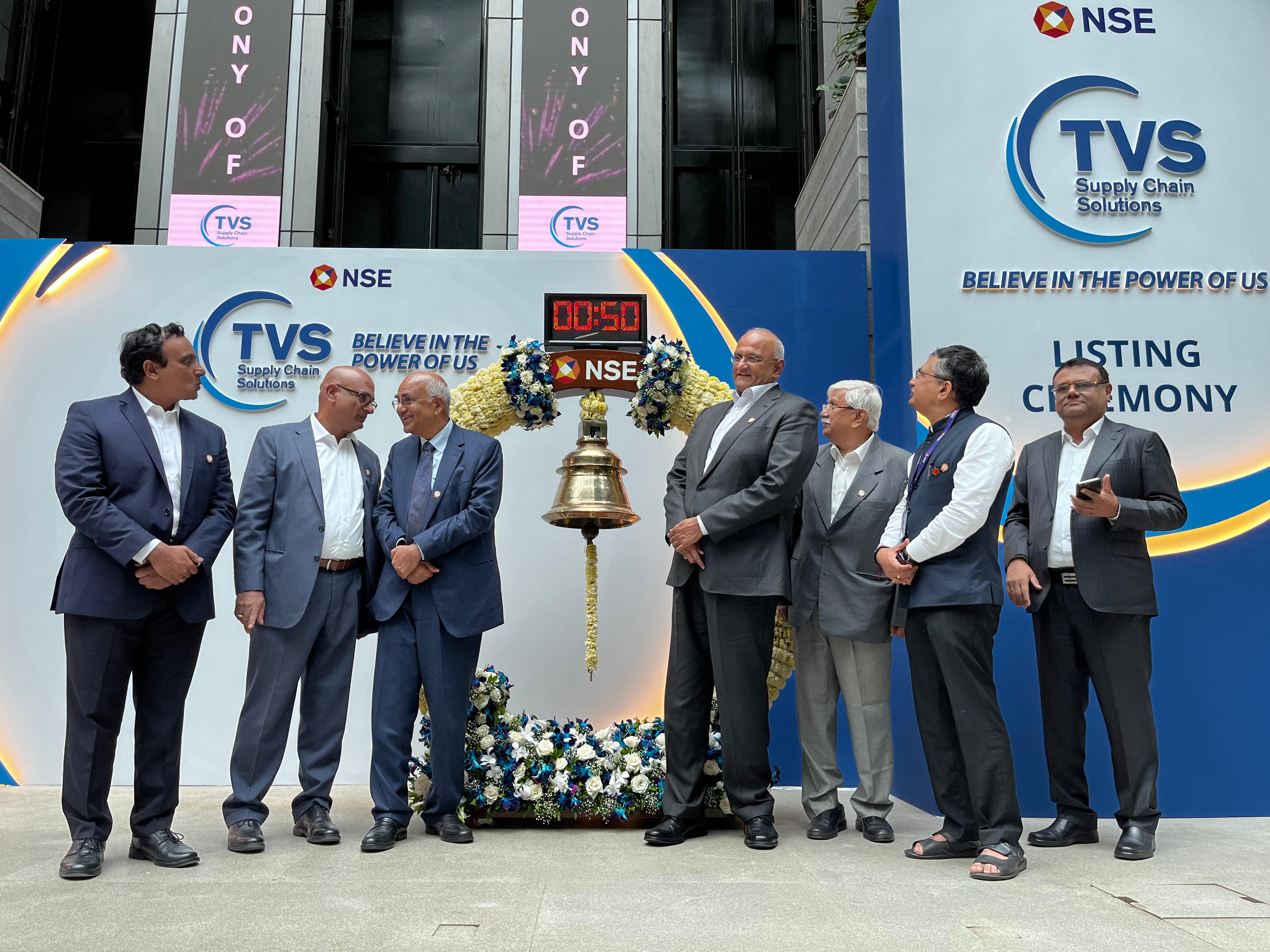
Shares of TVS Supply Chain Solutions Ltd. listed at Rs 207.05 apiece on the NSE, a premium of 5.10% to their IPO price of Rs 197 apiece.
On the BSE, the stock debuted at Rs 206.30, a 4.72% premium.
The shares ended at a premium of 2.01% over the IPO price, though it declined 2.59% from its listing price to end at Rs 200.95 apiece.
The initial public offering was subscribed 55% on the first day, 1.03 times on day 2 and 2.78 times on day 3.
TVS Supply Chain Solutions raised Rs 396 crore from anchor investors ahead of the IPO. Two-crore equity shares allotted at Rs 197 apiece. Key investors include Societe Generale, BNP Paribas, Franklin India, SBI Life Insurance, Sundaram MF and Tata Business Cycle Fund.
TVS Supply Chain Solutions is a multinational corporation that specialises in supply-chain management for international organisations, government departments, and large and medium-sized businesses.
The firm is a part of the TVS Mobility Group and provides services in two categories:
Integrated supply-chain solutions
Network solutions
Sourcing and procurement, integrated transportation, logistics operation centres, in-plant logistics operations, finished goods, aftermarket fulfillment and supply-chain consulting are all part of the ISCS category.
Use Of Proceeds
The funds raised will be employed for the following purposes:
Prepayment or repayment of all or a portion of outstanding borrowings owed by the company and its subsidiary, TVS Logistics Investment U.K.
General corporate purposes.

-
One Battle After Another: India's Corporate Dynasties Battle For Control

2026 could go down as Corporate India's year of succession wars, governance battles and family fault lines.
-
Rs 50-Lakh Gold In Bank Locker, Rs 3 Lakh Of Protection: The Gap Most Families Don't Know About
The RBI ties a bank's liability to the annual locker rent and families who want to insure their jewellery face a separate question about how to prove what was inside.
-
The More Food Turns Into Fuel, The Harder It Is To Read Agricultural Markets | The Reason Why
A policy designed to reduce dependence on imported fuel can create new pressures elsewhere in the food economy.
-
Your iPhone Costs 12 Grams Of Gold, A Car About 100. What Does Your Life Weigh?
Measured in rupees, almost everything looks more expensive than it did a generation ago. Measured in grams of gold, a lot of it has become cheaper.
-
Gold Is Rs 22,000 Cheaper Than A Month Ago. Should You Buy Amid The Wedding Season?
Gold's potential slide to $3,500 could save around Rs 4,700 per 10 grams, but a soft inflation print could just as easily push prices back up. One way to split the risk is to buy in parts, some now and the rest after the Fed's Dec. 9 decision.
-
AI Agents Are Gaining Power. Who Governs Them?
Artificial intelligence agents promise to transform productivity by moving machines from assisting decisions to executing them. But as organisations delegate greater authority to these AI-agents, they must first establish who controls that authority and who remains accountable when things go wrong.
-
Why Swapping Your Old Gold Can Trigger A Rs 5 Lakh Tax Bill, And How You Can Avoid It Legally
Swapping old gold for new is taxed as a sale and a fresh purchase. Getting your own gold remade can cut most of that bill, though it has its own costs.
-
The AI Trade is Done. The Real Opportunity for Investors Starts in 2027 | Unhedged Position
As pureplay AI stocks plunge and circular, capex-led financing unwinds, 2027 is set to be a year of reckoning for AI companies. Yet the bust clears the way for a better opportunity for investors in 2027 -- shifting the spotlight from AI builders to the companies using AI.
-
Leadership As Mission: Why The Age Of AI Demands More Human Leadership
Debjani Ghosh examines how AI is changing leadership, arguing that its success must be measured by its impact on people and the accountability of those guiding its use.
-
We May Need Another Tukaram Mundhe To Fight Air Pollution | The Reason Why
Developers may install basic measures such as sprinklers and green nets, resume work, and continue violating rules when this equipment stops working.









