Will Cyrus Mistry’s Legal Battle Against Tata Sons End Before It Begins?
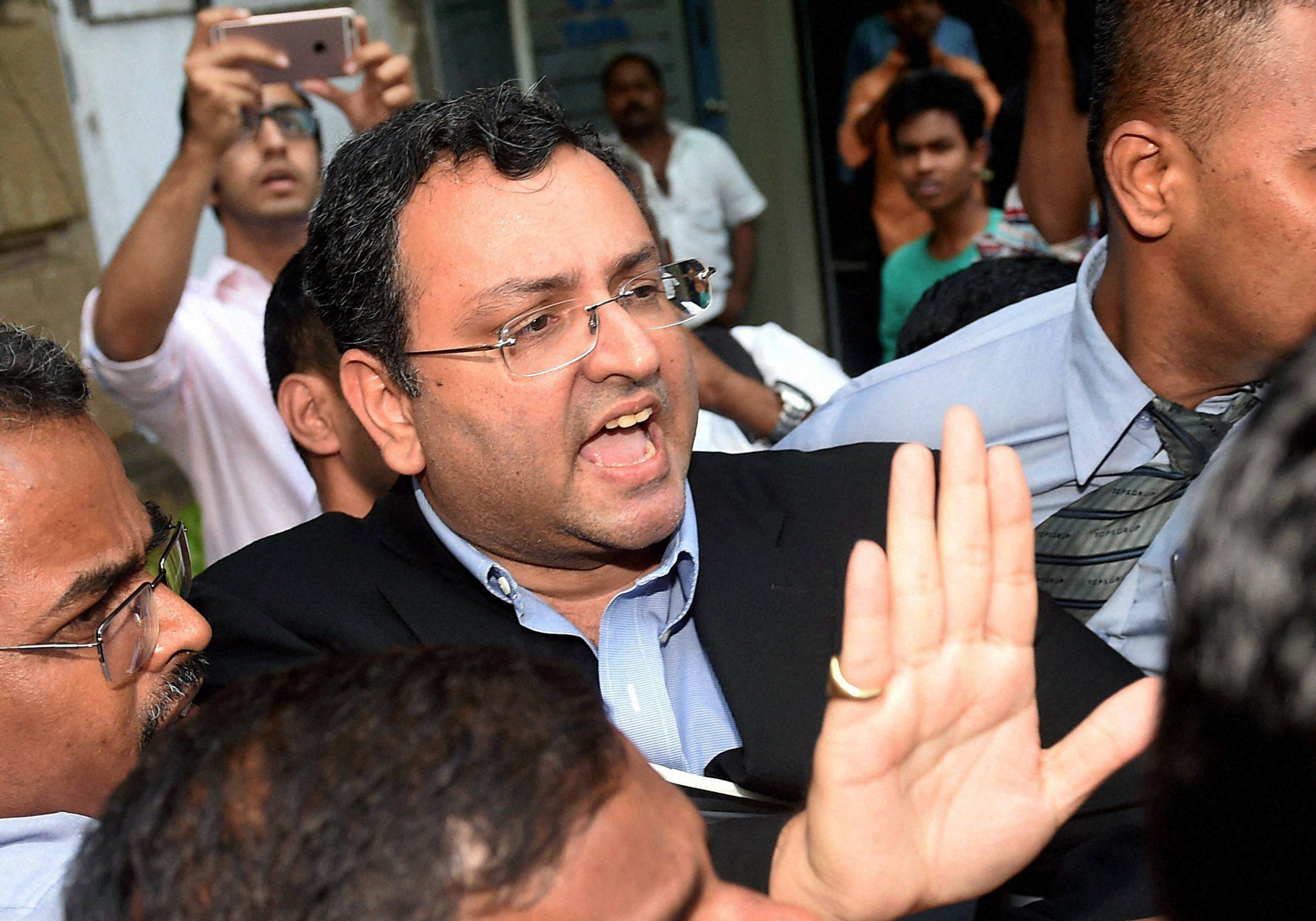
That may very well be the case unless the Cyrus Mistry camp convinces the National Company Law Tribunal (NCLT) that its shareholding in Tata Sons Ltd. should be viewed as 18.4 percent and not 2.17 percent. It'll be crucial for the Mistry camp to cross this hurdle on February 2 to then make its case of oppression and mismanagement against Tata Sons.
Cyrus Investments Private Ltd. and Sterling Investment Corporation Ltd., the entities through which the Shapoorji Pallonji group own 18.4 percent of Tata Sons equity shares, have filed a case of oppression and mismanagement against Tata Sons. A shareholder can bring an oppression and mismanagement case before the NCLT if it holds not less than one-tenth of the issued share capital of the company. Or 100 shareholders can together file such an action, but that is not relevant here.
Also Read: Tribunal Reserves Order On Cyrus Mistry's Contempt Petition Against Tata Sons
18.4 Percent Vs 2.17 Percent
Tata Sons has argued that ‘issued share capital' of a company comprises both the issued equity capital and the issued preference capital. Using this formulation, it contends that the Mistry family owns only 2.17 percent of the total issued share capital of Tata Sons, much less than the requisite 10 percent.
Ason the date of the filing of the Petition, the Petitioners held ordinary shareswith an aggregate face value of Rs 7.40 crore. Thus, out of a total issuedshare capital (i.e. both ordinary as well as preference) with an aggregate facevalue of Rs 335 crore, the Petitioners collectively held equity and preferenceshares with an aggregate face value of only Rs 7.40 crore.Tata Sons' Response Before NCLT On January 6, 2017
While the Companies Act, 2013 imposes a minimum threshold to bring an oppression and mismanagement case, it also allows the NCLT to waive this requirement. But it doesn't specify the grounds for such a waiver.
Issued Share Capital = Equity + Preference Capital?
Case law does suggest so. The Bombay High Court, in Northern Projects Ltd. vs Blue Coast Hotels and Resorts Ltd., held that the expression ‘issued share capital' has a wide connotation, and has deliberately been used by the legislature with a view to include both equity and preference share capital issued by the company.
More importantly, while ruling on an oppression and mismanagement case under the old Companies Act, the Supreme Court held that the object of prescribing a qualifying percentage of shares is to ensure that frivolous litigation is not indulged in by persons who have no real stake in the company. In this case, the apex court proceeded to decide the case on the understanding that 10 percent of total issued share capital would have to include preference share capital as well.
Three of four lawyers BloombergQuint spoke with believe that while Tata Sons' argument is technically right, it may not lead to a dismissal of Cyrus Mistry's petition.
MR Prasanna, an independent lawyer and consultant, believes that since the Tata-Mistry issue has been in the blinding limelight, the NCLT is unlikely to brush-off Mistry's petition on the grounds that it doesn't meet the threshold criteria.

Kartik Ganpathy, a partner at law firm IndusLaw says Tata Sons' argument may have merit and the logic to have such a threshold is to prevent frivolous lawsuits.

Rajat Sethi, a partner at S&R Associates says that under the old Companies Act, the Centre could waive the threshold requirements if in its opinion circumstances existed which made it just and equitable to do so. The NCLT may apply a similar criteria but it would be subject to judicial review, he adds.

Tata Sons' argument is right but considering that the issue at hand is so large, the Tribunal should waive this condition, says Prem Rajani, managing partner at Rajani Associates. He adds that both the old and new Companies Act have failed in this aspect. “While in the first 30-40 Sections, they have defined equity and preference share capital religiously, somewhere down the road, it all becomes capital,” he points out.

MR Prasanna points out that one of the arguments that the Mistry group is likely to make is that preference shareholders are not entitled to vote against certain resolutions; it's only the equity shareholders. To calculate the percentage for the purposes of ownership is one thing but calculating the percentage for exercising shareholder rights is a different ball game altogether, he adds.

The fate of Cyrus Mistry's legal battle will be clearer on February 2 when the NCLT is scheduled to hear the arguments of both sides on maintainability.

-
Extracting Value From Battery Scrap Could Be Challenging For India | The Reason Why

A discarded lithium-ion battery still contains valuable materials such as lithium, nickel and cobalt. These can be recovered and reused. When such batteries are crushed and shredded, they produce a dark powder called black mass.
-
One El Nino, India Can Handle. Two Could Break The Granary
India's grain stocks can absorb one bad year, but a second El Nino could drain the buffer in two to three years, economists say.
-
India's Troika Of Good Luck | Joining The Dots
As Jensen Huang's exit drags Nvidia down, a cooling AI trade and resilient earnings have revived investor interest in India. A likely RBI rate hike looms.
-
Talking Points This Week: Leadership Shock At Nvidia, Earnings Strength, And The Fog Over Hormuz
The Anthropic IPO pricing and first trading day, Nvidia's upcoming earnings, and any fresh signals from Iran will set the tone for the following week.
-
Signature Play: The Classic Cocktail Is Dead. Or Is It?
Classic cocktails are disappearing from India's cocktail menus. But they're still being ordered, taught to bartenders and borrowed from. So, who's really having the last drink?
-
A New Samvat Wishlist: Inclusive Prosperity And Human Development
India has strengthened its economic foundations through infrastructure, digital access and enterprise. Its next growth chapter must deepen productivity, create better livelihoods and widen participation in prosperity.
-
Love, Sex Aur Dhokha: The Audacious Plot To Spy On Jensen Huang
A Taipei dinner, a Singapore chip buyer and a suspected Chinese asset: inside the alleged spy operation that got close to NVIDIA's Jensen Huang.
-
Ten Things I Learnt This Samvat
Patience can be a trap. Cheap stocks can stay cheap. Leverage can wipe you out. What did Samvat 2082 teach us? Niraj Shah writes on 10 lessons from the year gone by.
-
Talking Points This Week: Tech Nerves, FII Buying, And A Faraway Banking Shock
The global markets are not shining this Diwali. The exception in the large markets is, India.
-
Midterm Rally Lasted A Day. The Hard Reality Of A Divided US May Last Two Years | Opinion
Between a contested AI boom, a debt ceiling that arrives in 2027 and a president with every incentive to act alone, the next two years may prove more volatile than the first day's rally suggests.









