Why Vice-President Naidu Rejected Impeachment Notice Against Chief Justice Of India
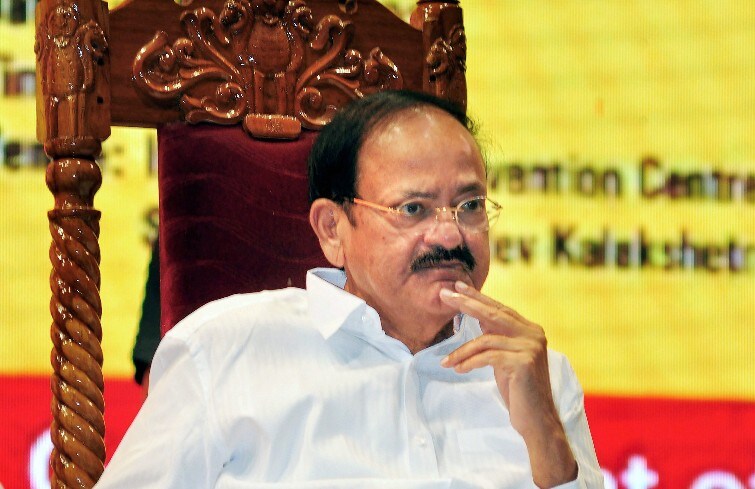
The motion by 64 Rajya Sabha MPs to impeach the Chief Justice of India Dipak Misra was dismissed by Vice-President Venkaiah Naidu, who is also the chairman of the upper house of parliament. Naidu pointed out that he relied on the material in the Notice of Motion and discussions with legal luminaries to come to the conclusion.
Here are the reasons, as mentioned in Naidu's letter, for dismissing the motion:
- Article 124(4) and Article 217 of the Constitution require a test to be applied for such a motion – if every statement stated in the notice is believed to be true, would it still amount to a case of “proved misbehaviour”.
- Article 124(4) uses two expressions for consideration of any such motion: “proved misbehaviour” and “incapacity”. The intent, gravity and onus are much higher for this versus proving misconduct. The prefis “proved” places an obligation for actually proving the misbehaviour before the parliamentary process for removal of a judge can be started. Naidu relied upon the 2010 Supreme Court's judgment in Mehar Singh Saini case to make this argument.
- And since the members who have moved the motion are unsure of their own case, the requirement to accept it is not fulfilled. This, because the motion uses language like – “the facts and circumstances relating to the Prasad Education Trust case show prima facie evidence suggesting that the Chief Justice of India may have been involved in a conspiracy of paying illegal gratification…”; “…the Chief Justice of India appears to have anti-dated an administrative order”. Such phrases, the dismissal letter states, indicate a mere suspicion, a conjecture or an assumption.
- Because it is so, there's no proof beyond reasonable doubt which is required to make a case of proved misbehaviour under Article 124(4).
- Either the allegations are within judicial domain and concern the internal judicial process, for instance, allocation of cases to the Supreme Court benches, or there are unsubstantiated surmises and conjectures which hardly merit or necessitate further investigation.
- Finally, various Supreme Court judgments have emphasised that the foundation of an independent judiciary is the trust and confidence of the people. For instance, in the 2002 Arundhati Roy judgment.
If such confidence is shaken or broken, the confidence of the common man in the institution of judiciary and democratic set-up is likely to be eroded which, if not checked, is sure to be disastrous for the society.Letter From Venkaiah Naidu, Vice President
In the end, the dismissal letter notes that “it is imperative that we should have extraordinary, important and substantial grounds for the removal of a judge” and the notice of motion fails to meet this test.
The maintainability of any plea against the Vice President's decision will be a “serious concern”, Sidharth Luthra, senior advocate of the Supreme Court told BloombergQuint.
In this case, the Speaker has given an order and in my view, the first issue will be, can this at all be subject to judicial review because in Sarojini Ramaswamy it's very clear. The line in Para 95 says the process will end there if the Speaker rejects the motion. That being the situation, I think if a challenge is sought to be laid, you really have to get over the previous constitutional bench decision and maintainability will, according to me, be a serious concern.Sidharth Luthra, Senior Advocate, Supreme Court
Watch the full interview with Sidharth Luthra here.

-
Indians Are Travelling, But Not Every Journey Is A Holiday | The Week In Whys

Pilgrims, patients and working women are the real travellers, and the system hasn't quite caught up with them.
-
Getting To Work Costs Women More | The Reason Why
It is not just about women paying more than men. It is about women paying much more in cities than in villages.
-
AI Bias In Investing Cannot Be Eliminated, But It Can Be Governed
Framing is a particularly important example as identical financial information presented in terms of gains rather than losses can lead an LLM to reach a different assessment.
-
Joining The Dots | Dark Skies, Steady Diya: Why Hope Holds This Diwali
With war, a weak rupee and foreign outflows weighing on sentiment, policymakers at the NDTV World Summit and market veterans at NDTV Profit Ignite: Diwali Edition offered the same advice: stay invested and filter out the noise.
-
The Curious Case of Equitas Small Finance Bank And A CEO Who Quit For Stock
PN Vasudevan believes persistent investor concerns over a perceived conflict of interest had become a governance overhang on Equitas Small Finance Bank's stock, even as the lender improved profitability and asset quality.
-
Talking Points This Week: AI Cash Burn, A Tiger Comeback And An India That Still Finds Its Own Path
India is not immune to higher oil or tighter global liquidity, yet its earnings base is broader, its domestic policy levers are still available.
-
Foreign Investors Own Half Of HDFC Bank and ICICI Bank. An LTCG Cut Could Matter Most Here
Foreign portfolio investors have US$115 billion parked in HDFC Bank, ICICI Bank. If the government cuts long-term capital gains tax, Jefferies says returning foreign money could land here first.
-
'Never Seen This Level Of Negativity': Sandeep Tandon Says The Next Rally May Be Closer Than You Think
Veteran investor Sandeep Tandon says foreign selling is easing, large-caps are due a comeback and mid-caps are crowded, while he turns positive on gold, power and pharma this Diwali.
-
Indians Stay With Family, Not In Hotels | The Reason Why
India still lacks enough clean, reliable and affordable hotels for budget-conscious travellers.
-
The Economic Imperative: Analysing The Material Driving Force Behind India-Canada Strategic Reset
This economic complementarity is further reinforced by deep institutional investment ties and talent mobility, which form the bedrock of the bilateral framework.










