Mallya Extradition Case: U.K. Court Accepts Evidence Submitted By CBI
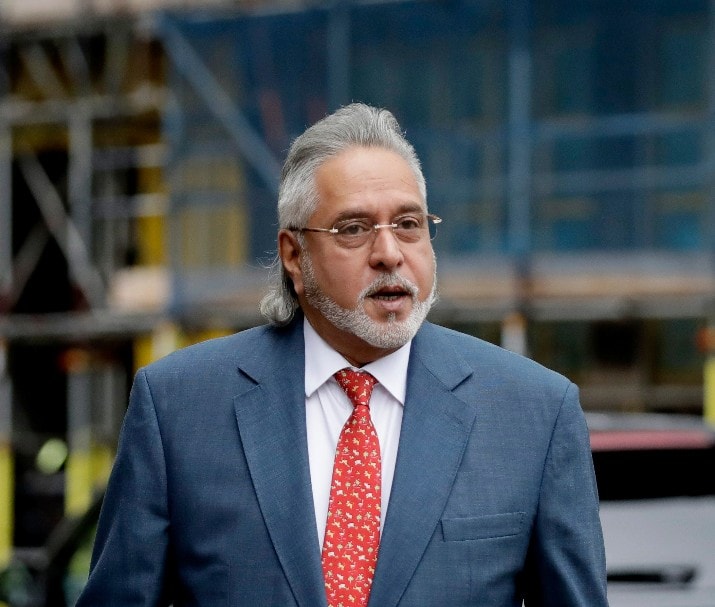
A U.K. court today admitted the bulk of the evidence submitted by the Central Bureau of Investigation against Vijay Mallya in connection with his ongoing extradition trial, giving a boost to India's efforts to bring back the embattled liquor baron to face charges of fraud and money laundering amounting to around Rs 9,000 crore.
The 62-year-old flamboyant businessman, who appeared in the Westminister Magistrate's Court here, had his 650,000 pounds bail extended until the next date of hearing on July 11.
When the court reconvenes, oral submissions will be made on closing arguments to be submitted in writing to Judge Emma Arbuthnot over the next two months. The judge is then expected to indicate plans for a verdict in the case at the next hearing.
“We have just asked for a final hearing to make our closing submissions orally. Nothing wrong with that, no delaying tactics. On the contrary, we requested an earlier date than what was being discussed,” Mallya told reporters on being asked about delays in the case on his way out of the court.
During today's hearing, the judge initially seemed reluctant to allow another hearing, being requested by Mallya's defence team.
"So, you want a hearing for the press," she said in response to Mallya's counsel Ben Watson, pointing out the significant public and media interest in the case.
"That is extremely unfair," responded Watson, adding that the defence team needed an opportunity to respond to some of the additional material presented by the Crown Prosecution Service, on behalf of the Indian government.
The CPS told the court that the Indian authorities had been engaged in the extradition process in a "spirit of real cooperation" and had provided the conspiracy note and schedule of notional charges as directed at the previous hearing in March.
The judge classified the additional material handed in by the Indian side as "very helpful indeed" and said that it is all admissible, except an email which the defence has claimed was privileged interaction between Mallya and his lawyer about "legal advice".
"I am still sitting on the fence on that," she said.
The CBI has submitted a detailed set of documents to the U.K. court, which includes its case of conspiracy against former IDBI Bank deputy managing director BK Batra, who was referred to in court as a new "villain" of sorts in the case.
As per the Indian authorities' case of conspiracy, Batra reportedly colluded with Mallya in sanctioning some of the loans to the now-defunct Kingfisher Airlines without following due diligence procedures.
Today's hearing comes days after the Indian government's High Court appeal against a previous Westminster Magistrates' Court extradition ruling that had been denied.
UK-based Sanjeev Kumar Chawla, wanted in India as a key accused in the cricket match-fixing scandal involving former South African captain Hanse Cronje in 2000, had been discharged in October last year on human rights grounds over severe conditions in Delhi's Tihar Jail, where the accused was to be held on being extradited.
District Judge Rebecca Crane had based her verdict to discharge Chawla largely upon the testimony of Dr Alan Mitchell, former head of healthcare at the Scottish Prison Service and an elected member of the European Council's Committee for the Prevention of Torture.
Mallya's defence team has previously deposed the same prisons expert in his extradition case, who told Judge Arbuthnot during the course of the trial that conditions in all Indian jails are "far from satisfactory".
Today also they submitted further written material from Dr Mitchell, challenging some of the photographs of Barrack 12 of Mumbai Central Prison on Arthur Road, where Mallya is to be kept if he is extradited from the U.K.
"The photographs are not a true, fair and accurate picture," claimed Mallya's counsel.
The CPS dismissed the additional material as an "attempt to criticise" the information provided by Indian authorities and reiterated that all concerns regarding natural light and medical provisions at Barrack 12 of the Arthur Road Jail had been addressed.
The extradition trial, which opened at the London court on Dec. 4 last year, is aimed at laying out a prima facie case of fraud against Mallya, who has been based in the U.K. since he left India in March 2016.
It also seeks to prove there are no “bars to extradition” and that the tycoon is assured a fair trial in India over his now-defunct Kingfisher Airlines' alleged default of over Rs 9,000 crore in loans from a consortium of Indian banks.
The CPS, representing the Indian government, has argued that the evidence they have presented establishes "dishonesty" on the part of the businessman and that there are no bars to him being extradited from the UK to face Indian courts.
Mallya's defence team has deposed a series of expert witnesses to claim he had no "fraudulent" intentions and that he is unlikely to get a fair trial in India.
If the judge rules in favour of the Indian government, the UK home secretary will have two months to sign Mallya's extradition order.
However, both sides will have the chance to appeal in higher courts in the UK against the Magistrates' Court verdict.

-
Indians Are Travelling, But Not Every Journey Is A Holiday | The Week In Whys

Pilgrims, patients and working women are the real travellers, and the system hasn't quite caught up with them.
-
Getting To Work Costs Women More | The Reason Why
It is not just about women paying more than men. It is about women paying much more in cities than in villages.
-
AI Bias In Investing Cannot Be Eliminated, But It Can Be Governed
Framing is a particularly important example as identical financial information presented in terms of gains rather than losses can lead an LLM to reach a different assessment.
-
Joining The Dots | Dark Skies, Steady Diya: Why Hope Holds This Diwali
With war, a weak rupee and foreign outflows weighing on sentiment, policymakers at the NDTV World Summit and market veterans at NDTV Profit Ignite: Diwali Edition offered the same advice: stay invested and filter out the noise.
-
The Curious Case of Equitas Small Finance Bank And A CEO Who Quit For Stock
PN Vasudevan believes persistent investor concerns over a perceived conflict of interest had become a governance overhang on Equitas Small Finance Bank's stock, even as the lender improved profitability and asset quality.
-
Talking Points This Week: AI Cash Burn, A Tiger Comeback And An India That Still Finds Its Own Path
India is not immune to higher oil or tighter global liquidity, yet its earnings base is broader, its domestic policy levers are still available.
-
Foreign Investors Own Half Of HDFC Bank and ICICI Bank. An LTCG Cut Could Matter Most Here
Foreign portfolio investors have US$115 billion parked in HDFC Bank, ICICI Bank. If the government cuts long-term capital gains tax, Jefferies says returning foreign money could land here first.
-
'Never Seen This Level Of Negativity': Sandeep Tandon Says The Next Rally May Be Closer Than You Think
Veteran investor Sandeep Tandon says foreign selling is easing, large-caps are due a comeback and mid-caps are crowded, while he turns positive on gold, power and pharma this Diwali.
-
Indians Stay With Family, Not In Hotels | The Reason Why
India still lacks enough clean, reliable and affordable hotels for budget-conscious travellers.
-
The Economic Imperative: Analysing The Material Driving Force Behind India-Canada Strategic Reset
This economic complementarity is further reinforced by deep institutional investment ties and talent mobility, which form the bedrock of the bilateral framework.










