Trump Spouse-Visa Shift May Hurt Workers, Push 100,000 From Jobs
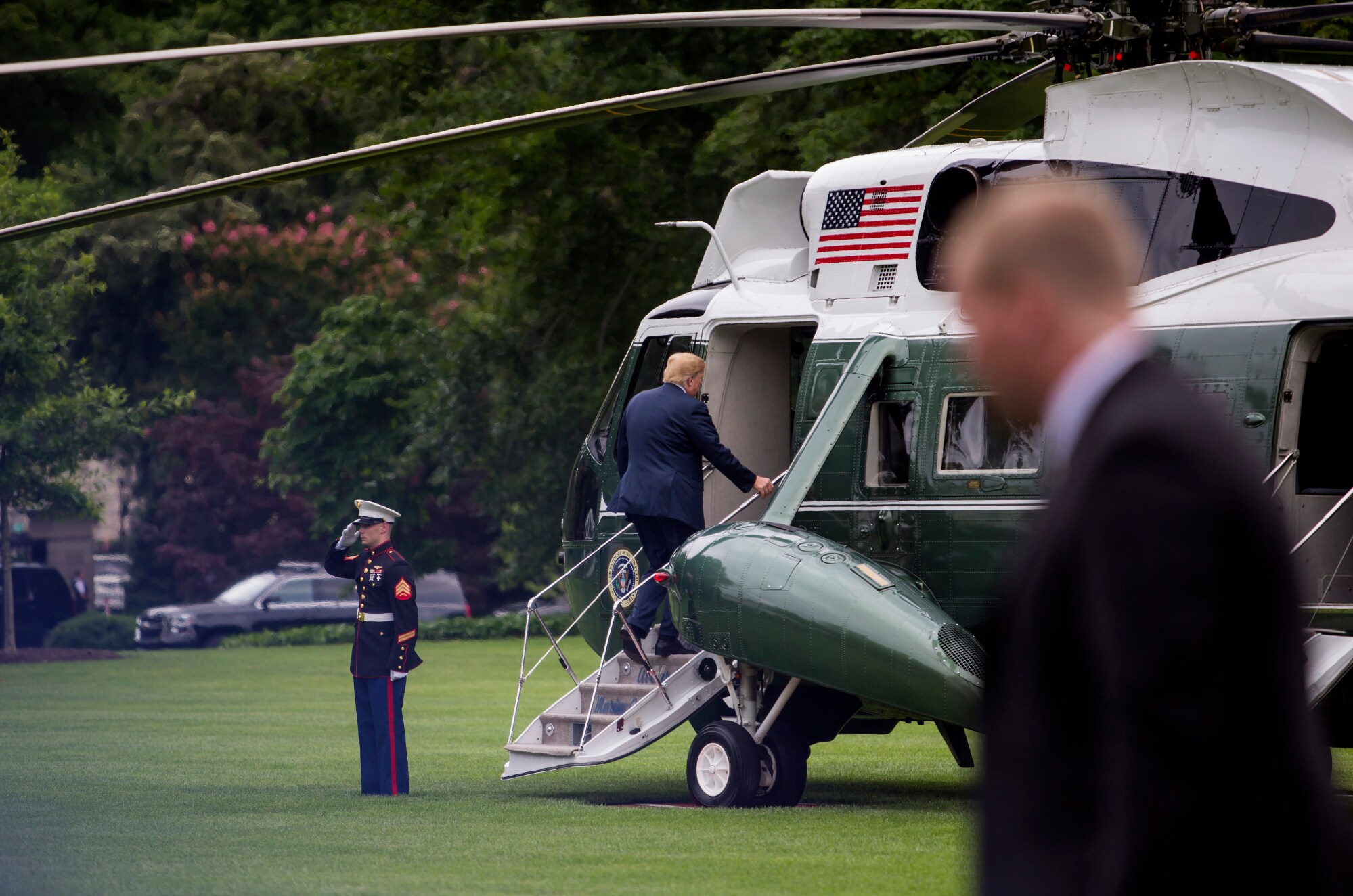
U.S. President Donald Trump's plan to ban spouses of high-skill visa holders from working will likely push 100,000 people out of jobs and negatively affect the visa holders and their employers, according to a new research study.
The Trump Administration has been tightening the rules for H-1B visas, which allow foreign workers to take jobs in the U.S. for several years, and plans to revoke the ability of spouses to work as part of the effort. In that context, Christopher J. L. Cunningham of the University of Tennessee at Chattanooga and Pooja B. Vijayakumar from the Kemmy Business School at the University of Limerick set out to study the implications of such a policy change.
They found that such a shift would likely isolate spouses socially, raise domestic tensions and strain the family's financial resources. It would also probably hurt the visa holder's satisfaction and increase the risks that they continue in a foreign posting. The cost of failed expatriate assignments ranges from $250,000 to $1 million, in addition to indirect costs, they wrote.
“Policy changes like the one being considered for America are often made in the absence of complete information that might help policy makers better understand the true breadth of likely consequences,” the study said.
The U.S. began allowing spouses of H-1B visa holders to work in 2015, under the preceding Obama Administration. For their research, the authors studied the experiences of H-1B families in 2014. They contacted 1,800 Indian expatriate to participate in the research and the final sample consisted of 416.
Behind the Push to Reform U.S. Work Visa Programs: QuickTake Q&A
The work visa programs, which date back to 1952, were originally designed to allow U.S. companies to hire workers from abroad temporarily when they couldn't find qualified Americans. But the programs evolved with many allegations that companies, particularly India's outsourcing giants, had been abusing the visas to get less expensive labor. Trump came into office vowing to overhaul the programs and protect American workers.
In that context, Trump's Department of Homeland Security began the process of reversing the eligibility of H-1B spouses to work. Technology industry groups -- which represent Google and Amazon.com Inc. among others -- have pushed back against the plan, arguing it will hurt spouses, typically women, as well as the visa holders.
H-1B visa holders explained myriad problems when spouses couldn't work. “Very unfair to her, so going back to India,” one told the researchers. “My wife is frustrated that she is unable to further her career,” said another.
The researchers said that a reinstated ban likely “will be more critical and difficult for expatriate families than what was experienced in 2014, as many of these individuals who were temporarily benefited by the previous presidential administration's immigration policies may have, in this time, bought a home or started their own businesses.”
Cunningham specializes in industrial, organizational and occupational health psychology at the University of Tennessee at Chattanooga. Vijayakumar is a researcher currently studying expatriation and cross-cultural management.

-
The Economic Imperative: Analysing The Material Driving Force Behind India-Canada Strategic Reset

This economic complementarity is further reinforced by deep institutional investment ties and talent mobility, which form the bedrock of the bilateral framework.
-
Medicine Pricing: Where Must Profit Stop?
India must confront excessive margins, hidden incentives and regulatory gaps that threaten the integrity of medicine.
-
Why Amazon And Flipkart Are Struggling To Beat Meesho In India's Smaller Cities
With 274 million users and lowest-cost logistics, Meesho is defending its value commerce crown against giants like Amazon and Flipkart.
-
High US Salaries, No Green Card Certainty: The Financial Calculation Facing Indian H-1B Families
The suspension of PERM processing at eight technology employers does not cancel existing H-1B visas. What it does is force a question many Indian families have been avoiding: is the US salary worth tying your career and family plans to one employer?
-
Swiggy vs Eternal: Food Delivery's Two Rivals Are No Longer In The Same Race
Eternal is building a private AI assistant, dark.ai. Swiggy is still working out how to make Instamart pay, with an operating loss of Rs 895 crore in the July-September quarter while Blinkit stayed profitable.
-
Where You Live Shapes How You Get To Work | The Reason Why
Two-wheelers are the most popular way to get to work in India, accounting for nearly 43% of workplace commutes.
-
Unhedged Position: Can India See An Indonesia-Style Time Correction?
The Nifty is trading below levels it first clocked in 2024. Is there, then, as I have suggested in the headline, potential that the current time correction drags on painfully for the next three-five, even ten years?
-
Navigating Friction And Energy Realities: An Analysis Of Marco Rubio's October Visit To India
Occurring at a critical juncture marked by stalled trade negotiations and escalating geopolitical pressures over global energy supplies, the visit offers a profound window into modern US-India relations.
-
India Exports Capital. Why Not Export Trusteeship?
The big question, then, is whether India can build an institution that global borrowers, investors, banks, and lawyers can trust, even without an Indian connection.
-
France's Economy & Politics Are In Crisis | The Reason Why
Let's look at how the French economy and politics evolved under Nicolas Sarkozy, Franois Hollande and Emmanuel Macron.










