To Fight India’s Deadly Smog, Farmers Told to Sell Crop Waste
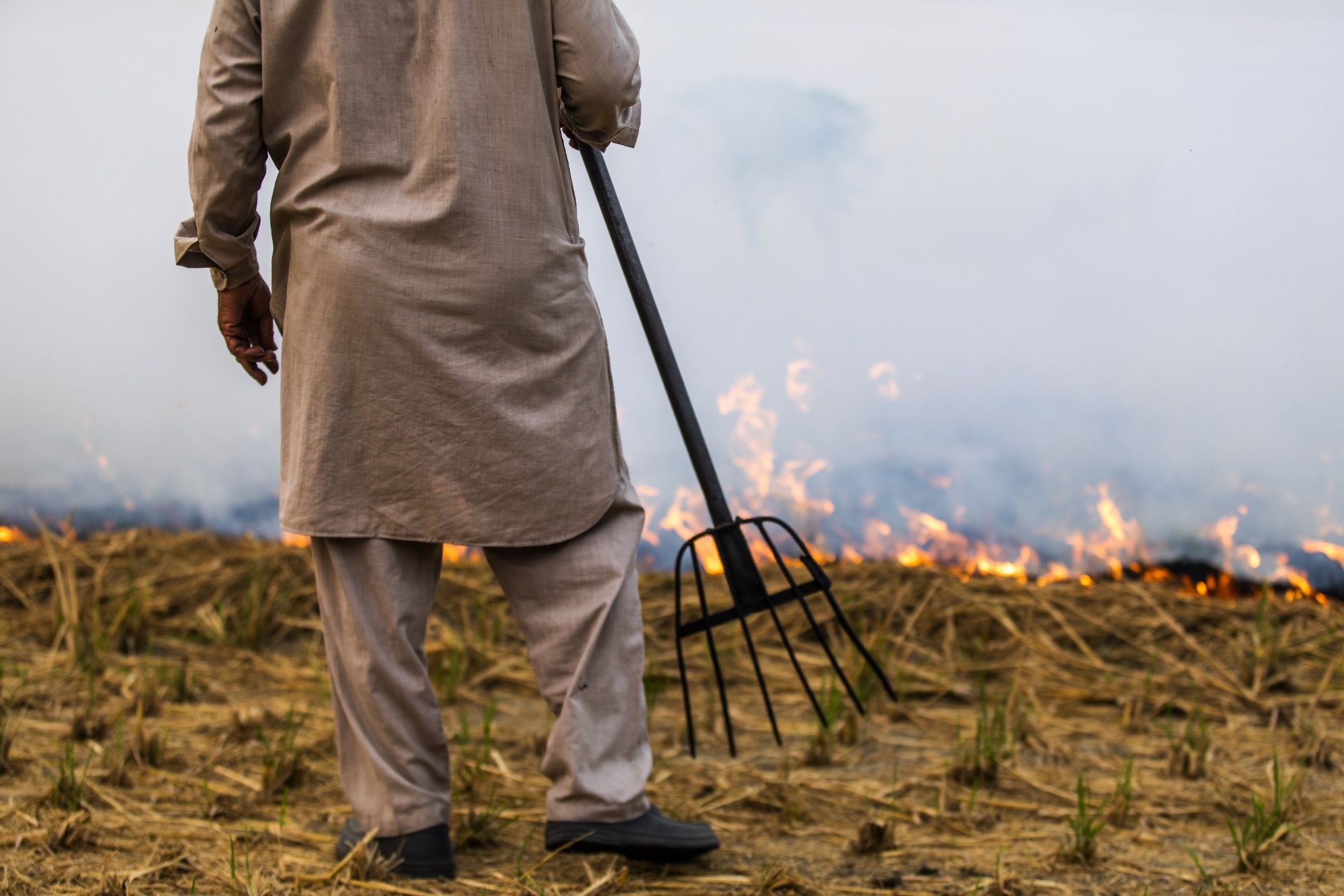
(Bloomberg) -- Farmers in India are being encouraged to sell their crop waste rather than burn it to help accelerate progress on curbing fires that spread a deadly, choking smog across key cities.
Smoke from the burning of crop stubble lingers over most of north India for weeks during the cold months of November and December, with air quality deteriorating to hazardous levels in several areas, including the capital New Delhi.
BiofuelCircle, a startup based in the western Indian city of Pune, is attempting to connect farmers to companies that can turn the waste into briquettes that can be burned in power stations, or ethanol for blending with liquid fuels.
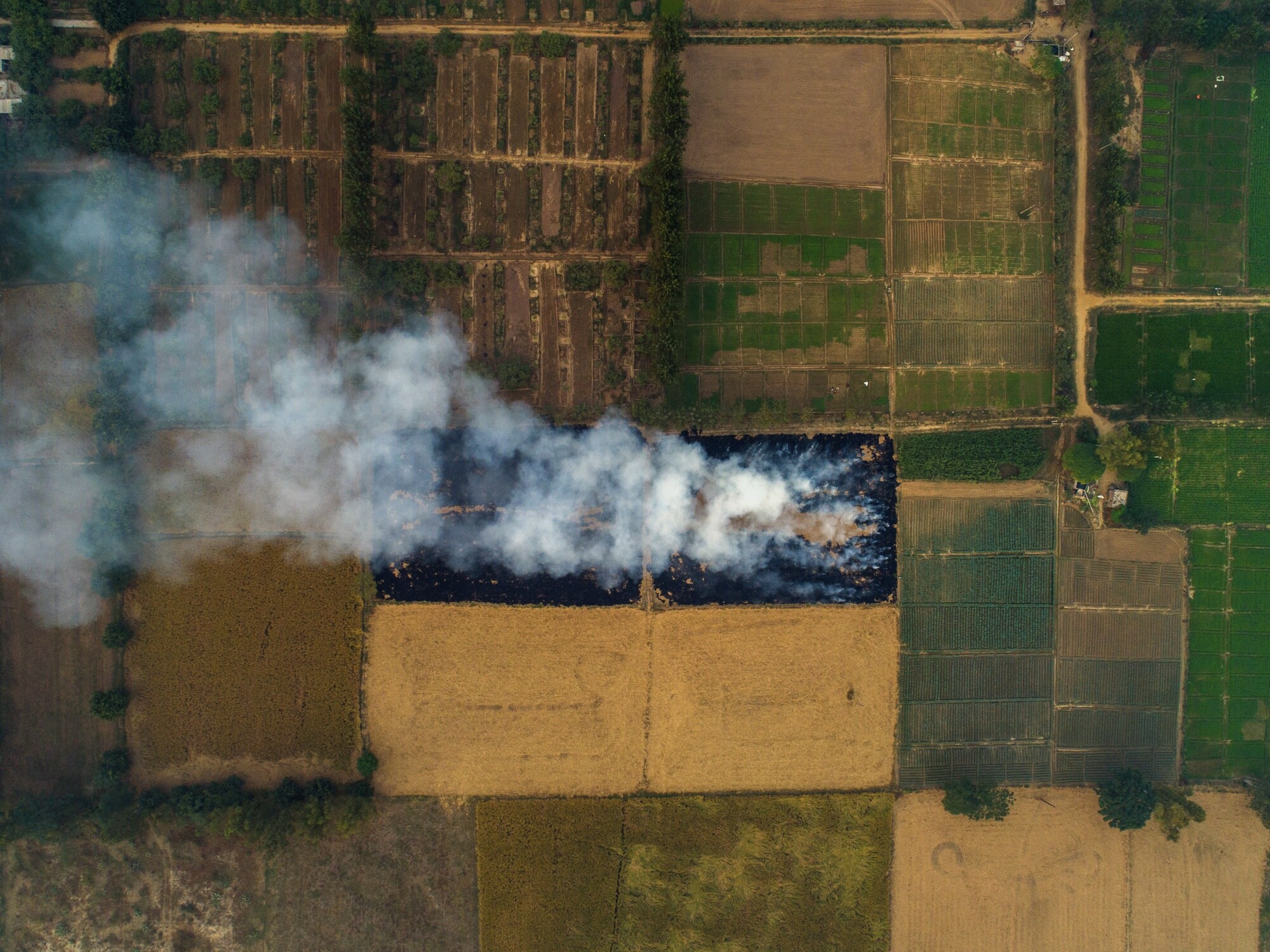
“The environmental issues due to crop residue burning are mainly because of the inefficiency of the supply chain,” BiofuelCircle founder Suhas Baxi said. “The business case for building a stable and reliable supply chain is very solid.”
India wants to convert its 230 million tons of annual farm waste and massive piles of kitchen refuse into energy to help reduce fuel imports and improve air quality. If there was sufficient demand and infrastructure, using the country's entire supply of crop waste for bio-energy could generate as much as $50 billion of annual revenue, Baxi said in an interview.
Read more: India Takes New Steps to Kick Old Habits of Burning Farm Waste
But progress has been slow. The lack of a reliable supply chain — from timely procurement, to storage, processing plants and finally a market for the products — has meant that farmers for now continue to burn most of their crop residue. Barely 20-30% of farm waste is harnessed, mostly for lower-value products such as briquettes for blending with coal for use in industrial boilers, Baxi said.
“We don't have the ability to absorb what the farmer is able to give,” he said. “There's need for mechanization, there's need for huge storage capacities. There's investment required in supply chain and that investment will not only solve the problems at hand, but create a bigger opportunity.”
A market for more products including biodiesel, sustainable aviation fuel and compressed biogas is still in its infancy, though there has been some progress. The ethanol percentage of retail gasoline has increased to about 10% from just 1.4% in 2014, when Prime Minister Narendra Modi started his first term in office.
Modi's government has also been supportive of tackling stubble burning, offering subsidies to buy machinery to gather crop residue to setting mandates for coal plants to use at least 5% biomass.
More stories like this are available on bloomberg.com
©2022 Bloomberg L.P.

-
Signature Play: The Classic Cocktail Is Dead. Or Is It?

Classic cocktails are disappearing from India's cocktail menus. But they're still being ordered, taught to bartenders and borrowed from. So, who's really having the last drink?
-
A New Samvat Wishlist: Inclusive Prosperity And Human Development
India has strengthened its economic foundations through infrastructure, digital access and enterprise. Its next growth chapter must deepen productivity, create better livelihoods and widen participation in prosperity.
-
Love, Sex Aur Dhokha: The Audacious Plot To Spy On Jensen Huang
A Taipei dinner, a Singapore chip buyer and a suspected Chinese asset: inside the alleged spy operation that got close to NVIDIA's Jensen Huang.
-
Ten Things I Learnt This Samvat
Patience can be a trap. Cheap stocks can stay cheap. Leverage can wipe you out. What did Samvat 2082 teach us? Niraj Shah writes on 10 lessons from the year gone by.
-
Talking Points This Week: Tech Nerves, FII Buying, And A Faraway Banking Shock
The global markets are not shining this Diwali. The exception in the large markets is, India.
-
Midterm Rally Lasted A Day. The Hard Reality Of A Divided US May Last Two Years | Opinion
Between a contested AI boom, a debt ceiling that arrives in 2027 and a president with every incentive to act alone, the next two years may prove more volatile than the first day's rally suggests.
-
Blue Wave Will Derail the AI Trade but Won't Dismantle the AI Era | Unhedged Position
The Democrats' sweep of the US Congress will see politics collide with economic forces both over the long and short term.
-
It's Time To Take The GST Council's Bet On Trust Global
Payment records can prove India's services exports, and clear, proportionate rules can bring foreign digital sellers into the tax net.
-
Opinion | India at 38: From Innovation Overperformer to Innovation Powerhouse
India now has 453 VC-backed deep science startups, 18 of them late-stage, after 117 percent growth since 2020. Laurus Labs, at USD 9.3 billion, is the most valuable deep science company in any middle-income economy outside China.









