Three Members Of IBC Panel Dissent Against Curtailing Homebuyers Right To Initiate Insolvency
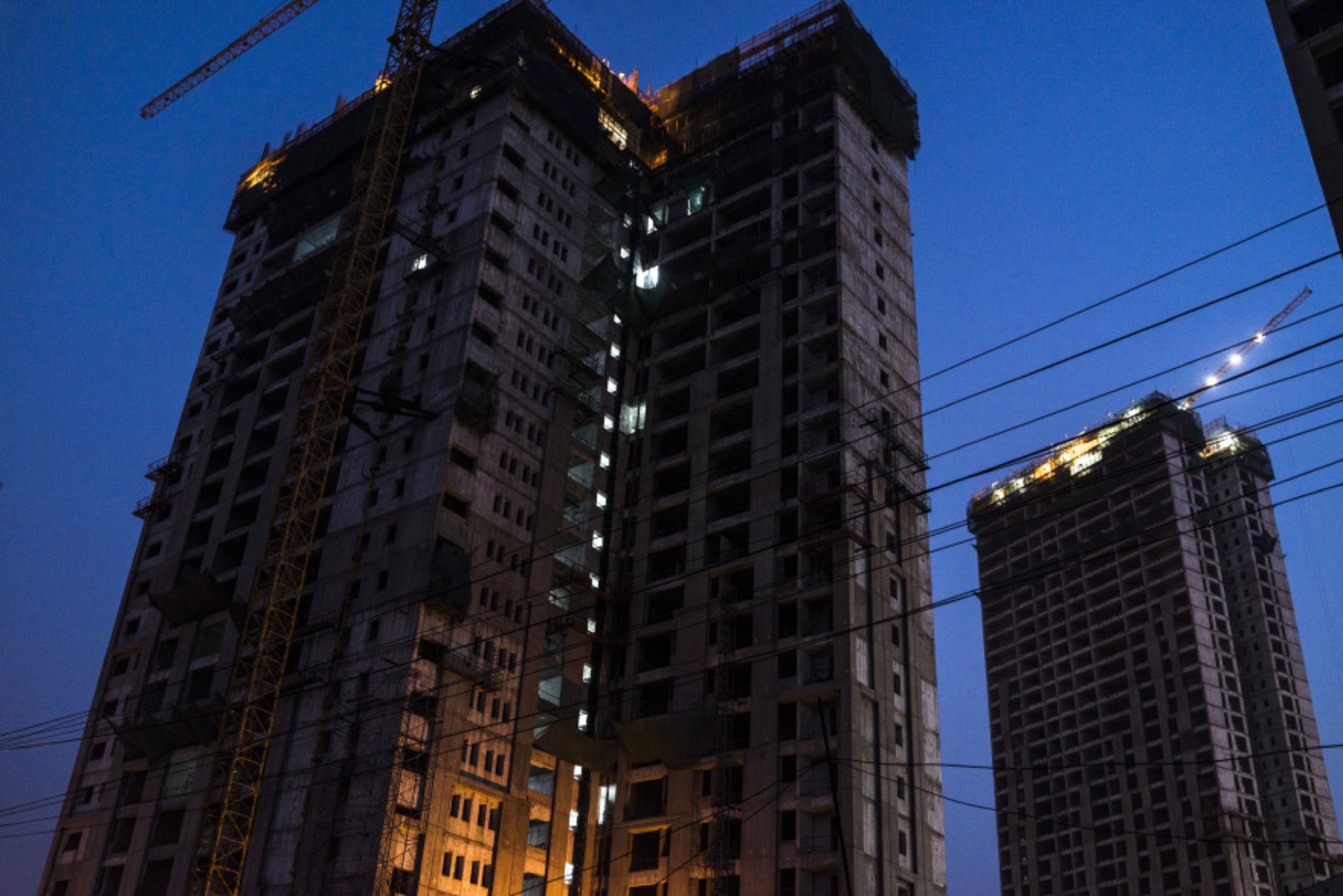
Three members of a parliamentary panel, including one from Prime Minister Narendra Modi's Bharatiya Janata Party, have objected to changes in the bankruptcy law that restrict homebuyers from moving insolvency court.
In a dissent note to the report of the Standing Committee on Finance on the Insolvency and Bankruptcy Code, TK Rangarajan, Rajya Sabha member representing the CPI(M), has written that the amendments curb the right of homebuyers as an operational creditor. His opinion was part of the report of the Jayant Sinha-led panel.
Thousands risked losing their lifetime savings as developers including Jaypee Infratech Ltd. went insolvent and couldn't complete projects. To protect their interests, the Supreme Court granted them the status of financial creditors. The government, however, amended the law, retrospectively, in 2019. That required a minimum of 100 homebuyers or 10 per cent of the total to file bankruptcy proceedings. The owners of homes in stalled projects and flat-owners lobby opposed the move and even wrote to the prime minister against it.
The changes brought in by the government are against the Supreme Court's order, Manish Tewari, a Congress parliamentarian, said in his dissent note to the standing committee's report. “The government under pressure of lobbying from powerful builders and real estate developer lobby has tinkered with the Supreme Court judgment by introducing discriminatory thresholds in the IBC process,” he said. Tewari wrote that the draft report of the panel had suggested dropping this clause but due to opposition from within the committee, the proposal was deleted from the final report.
Another dissent note by BJP MP Rajeev Chandrasekhar said that the clause restricting the rights of homebuyers should be dropped as it distorts the principle of “equal rights guaranteed under the Constitution”.
In its report, the panel suggested that the payments due to small businesses which are operational creditors and not included in the Committee of Creditors, should be ensured on priority in the course of the resolution process itself before the liquidation stage kicks in.

-
The Economic Imperative: Analysing The Material Driving Force Behind India-Canada Strategic Reset

This economic complementarity is further reinforced by deep institutional investment ties and talent mobility, which form the bedrock of the bilateral framework.
-
Medicine Pricing: Where Must Profit Stop?
India must confront excessive margins, hidden incentives and regulatory gaps that threaten the integrity of medicine.
-
Why Amazon And Flipkart Are Struggling To Beat Meesho In India's Smaller Cities
With 274 million users and lowest-cost logistics, Meesho is defending its value commerce crown against giants like Amazon and Flipkart.
-
High US Salaries, No Green Card Certainty: The Financial Calculation Facing Indian H-1B Families
The suspension of PERM processing at eight technology employers does not cancel existing H-1B visas. What it does is force a question many Indian families have been avoiding: is the US salary worth tying your career and family plans to one employer?
-
Swiggy vs Eternal: Food Delivery's Two Rivals Are No Longer In The Same Race
Eternal is building a private AI assistant, dark.ai. Swiggy is still working out how to make Instamart pay, with an operating loss of Rs 895 crore in the July-September quarter while Blinkit stayed profitable.
-
Where You Live Shapes How You Get To Work | The Reason Why
Two-wheelers are the most popular way to get to work in India, accounting for nearly 43% of workplace commutes.
-
Unhedged Position: Can India See An Indonesia-Style Time Correction?
The Nifty is trading below levels it first clocked in 2024. Is there, then, as I have suggested in the headline, potential that the current time correction drags on painfully for the next three-five, even ten years?
-
Navigating Friction And Energy Realities: An Analysis Of Marco Rubio's October Visit To India
Occurring at a critical juncture marked by stalled trade negotiations and escalating geopolitical pressures over global energy supplies, the visit offers a profound window into modern US-India relations.
-
India Exports Capital. Why Not Export Trusteeship?
The big question, then, is whether India can build an institution that global borrowers, investors, banks, and lawyers can trust, even without an Indian connection.
-
France's Economy & Politics Are In Crisis | The Reason Why
Let's look at how the French economy and politics evolved under Nicolas Sarkozy, Franois Hollande and Emmanuel Macron.










