6 Key Takeaways from the Dalit Protests Over Dilution of SC/ST Act
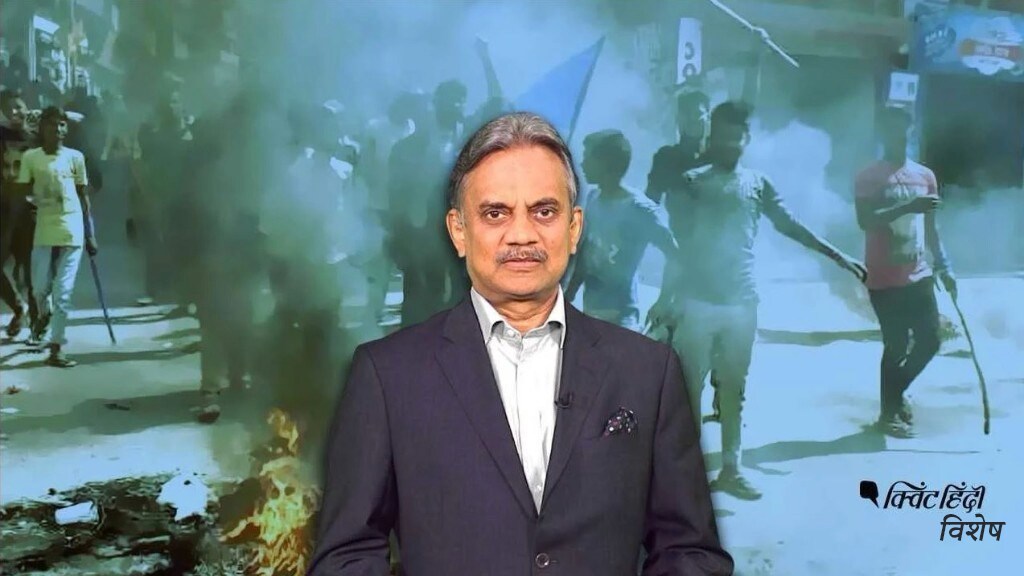
Do note this – The day, 2 April, will prove to be quite significant for Indian politics, with Dalit organisations observing a bandh across the country. Though the bandh was touted to be a routine political activity, it snowballed into a violent event.
Large-scale protests by Dalits took place in various cities across the country. Clashes with the police broke out and violence swept the protests. In the course of the violence, some even lost their lives, and it would be wrong to credit the mainstream parties (or their 'conspiracies') for these demonstrations.
These are the key political takeaways from these protests:
1. BJP's Dalit Outreach Efforts Are Not Working
It is clear that the BJP's comprehensive plan to woo the Dalits is not working. A Supreme Court bench had decided to dilute the SC/ST Act, which made the Dalits angry. They felt that such a move would make it difficult to lodge cases with the police if atrocities are committed against them.
Understanding this, the government declared that it would approach the court to change its decision. It went to the court to file a review petition on 2 April, but it was too late by then – the protests had already reached the road.
The Dalits do not trust the government's intentions. They feel that the government is not truly concerned about them. If it was, it would have questioned the SC while the case was going on and not retrospectively, they say.
2. SC/ST Act Just a Trigger
The 'dilution' of the SC/ST Act is just a trigger. There are a number of reasons for the anger among Dalits. Many of the incidents that have angered the community are actually considered routine or insignificant at the national level.
We cannot understand their emotions. They face discrimination and backlash for having a horse, keeping a moustache, wearing a pair of jeans, owning a motorcycle. Between the Una incident and Rohith Vemula's death which made national news, Dalits have to cope with these kinds of insults on a daily basis.
3. The New Dalit is Assertive and Irreverent
The 2 April Bharat bandh was an urban protest. The young participants in these protests are different from the previous generation of Dalits. Demanding equality and dignity, these protesters are assertive and want their demands to be fulfilled at the earliest. And they will have a significant impact on politics and elections.
So does the BJP have time to go back to the drawing board and come up with a confident plan? Do keep an eye out on the day of Ambedkar Jayanti on 18 April, when Prime Minister Narendra Modi will put his point of view forward on this topic.
4. Hijacking Bhimrao "Ramji" Ambedkar Won't Work
During elections in UP, there was an attempt to attach Bhimrao Ambedkar's name with that of his father 'Ramji'. Doing this to a leader who was staunchly opposed to a certain brand of Hindutva certainly invites the wrath of Dalits.
Such a move is not reflective of any political maneuvering, but shows ineptitude.
5. A Cadre Searching for a Party
The success of the Bharat bandh shows that there is a motivated cadre all ready for election year. The primary opposition parties of the country are lacking in terms of having a cadre and an alternative agenda. And there may be a number of people who are organising themselves into cadres and searching for that counter-narrative.
But it remains to be seen who will benefit and who will come away reeling from the swift emergence of this Dalit cadre.
6. Four Big Challenges Facing the Ruling Party
If one is to look at this uprising of Dalits in conjunction with the anger among farmers, the unemployed youth and the Muslims, then it will become clear that the ruling party is faced with four big challenges. Underestimating the potential of these challenges would be a big mistake.
The propaganda media in the country will try its best to hide the reality of the politics of resistance. It will label it ‘hooliganism' and ‘villainy'. If the strategists for the government believe the narrative of the propaganda media, they will only be deceiving themselves.
(This article was originally published on QuintHindi. It was translated by Kabir Upmanyu.)

-
Getting To Work Costs Women More | The Reason Why

It is not just about women paying more than men. It is about women paying much more in cities than in villages.
-
AI Bias In Investing Cannot Be Eliminated, But It Can Be Governed
Framing is a particularly important example as identical financial information presented in terms of gains rather than losses can lead an LLM to reach a different assessment.
-
Joining The Dots | Dark Skies, Steady Diya: Why Hope Holds This Diwali
With war, a weak rupee and foreign outflows weighing on sentiment, policymakers at the NDTV World Summit and market veterans at NDTV Profit Ignite: Diwali Edition offered the same advice: stay invested and filter out the noise.
-
The Curious Case of Equitas Small Finance Bank And A CEO Who Quit For Stock
PN Vasudevan believes persistent investor concerns over a perceived conflict of interest had become a governance overhang on Equitas Small Finance Bank's stock, even as the lender improved profitability and asset quality.
-
Talking Points This Week: AI Cash Burn, A Tiger Comeback And An India That Still Finds Its Own Path
India is not immune to higher oil or tighter global liquidity, yet its earnings base is broader, its domestic policy levers are still available.
-
Foreign Investors Own Half Of HDFC Bank and ICICI Bank. An LTCG Cut Could Matter Most Here
Foreign portfolio investors have US$115 billion parked in HDFC Bank, ICICI Bank. If the government cuts long-term capital gains tax, Jefferies says returning foreign money could land here first.
-
'Never Seen This Level Of Negativity': Sandeep Tandon Says The Next Rally May Be Closer Than You Think
Veteran investor Sandeep Tandon says foreign selling is easing, large-caps are due a comeback and mid-caps are crowded, while he turns positive on gold, power and pharma this Diwali.
-
Indians Stay With Family, Not In Hotels | The Reason Why
India still lacks enough clean, reliable and affordable hotels for budget-conscious travellers.
-
The Economic Imperative: Analysing The Material Driving Force Behind India-Canada Strategic Reset
This economic complementarity is further reinforced by deep institutional investment ties and talent mobility, which form the bedrock of the bilateral framework.
-
Medicine Pricing: Where Must Profit Stop?
India must confront excessive margins, hidden incentives and regulatory gaps that threaten the integrity of medicine.










