QBullet: Sushma Swaraj Names and Shames Pak at UNGA and More
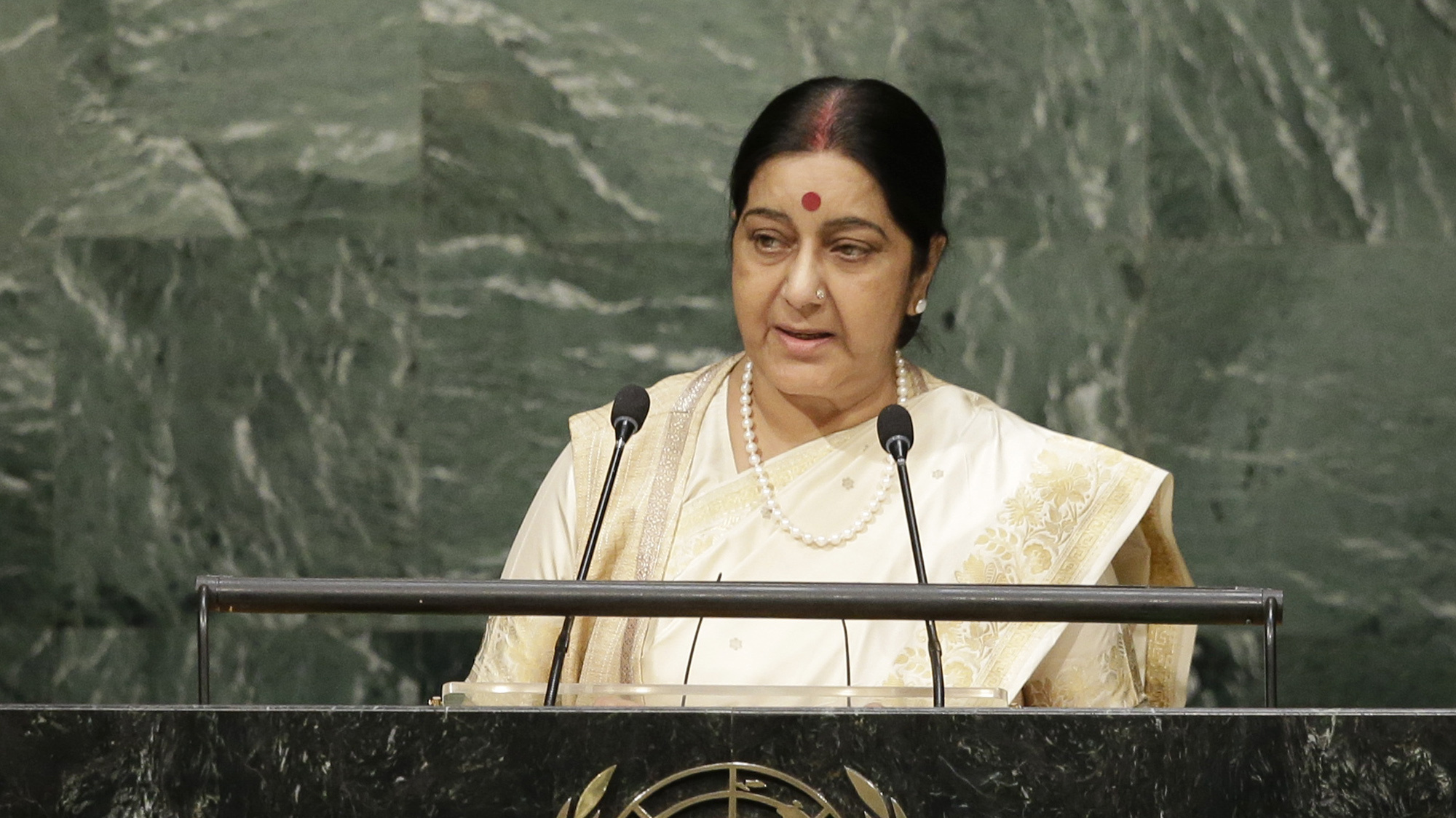
1. Sushma Swaraj Names and Shames Pakistan at UN
External Affairs Minister Sushma Swaraj on Monday gave a stinging response to Pakistani Prime Minister Nawaz Sharif‘s ‘tirade' on Kashmir at the UN General Assembly, and asked him to look at what is happening in Balochistan.
Calling for global isolation of Pakistan, Sushma Swaraj said that “countries that nurture, peddle and export terror should have no place in the comity of nations.”
“In our midst, there are nations that still speak the language of terrorism that nurture it, peddle it, and export it. To shelter terrorists has become their calling card. We must identify these nations and hold them to account,” Swaraj asserted in her nearly 20-minute speech.
Source: The Times of India
Also Read: Seven Key Highlights from Sushma Swaraj's Speech at UNGA
2. River Sutra: Stay Within Treaty But Use India's Rights Fully
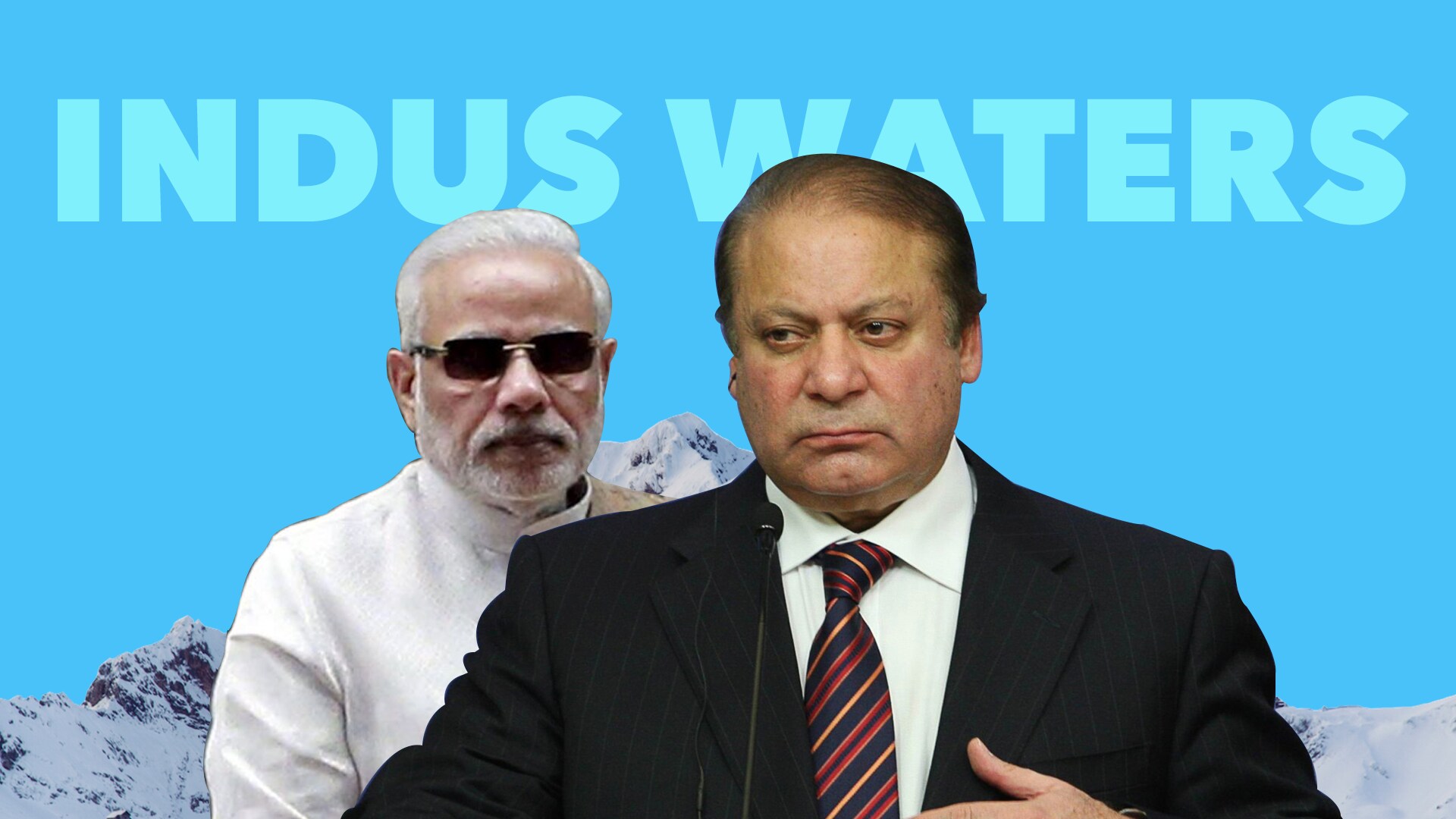
The Union government has decided to set up an inter-ministerial committee to study India's further options on the Indus Waters Treaty. The decision came during Prime Minister Narendra Modi's high-level meeting to review the treaty following the attack on Uri.
National Security Adviser Ajit Doval, Foreign Secretary S Jaishankar, Water Resources Secretary Shashi Shekhar, and senior PMO officials were present at the meeting.
Among the committee's tasks would be to look at storage possibilities that would help irrigate fields in Jammu and Kashmir, where the State Assembly has often complained about the treaty being “unfair”. At present, India has access to the use of three “eastern” rivers of the Indus – the Sutlej, Beas and Ravi, while it is allowed limited use of about 20 percent of the three ‘western' rivers – the Indus (Sindhu), Chenab and Jhelum.
Source: The Hindu
Also Read: Blood & Water Can't Flow Together: PM Modi on Indus Waters Treaty
3.RBI Approach to Bad Loans Likely to Change
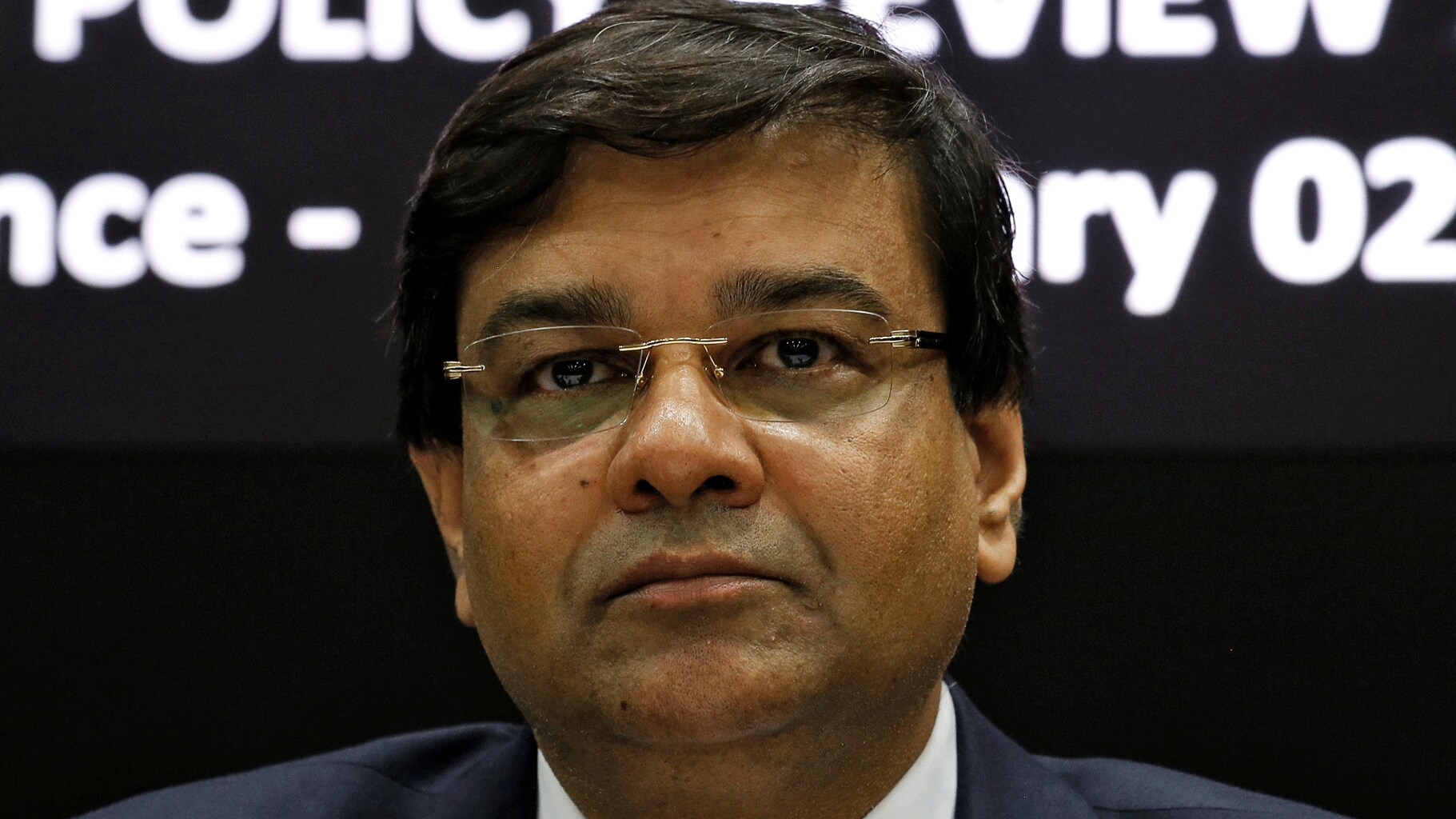
The change of guard in the Reserve Bank of India (RBI) may change the way the regulator tackles the bad loan problem at Indian banks – not in terms of going soft on recalcitrant borrowers, but giving more flexibility to banks.
After over two years of pushing bankers to aggressively tackle bad loans and chase uncooperative company founders, the central bank is adopting a “conciliatory” approach, said four people aware of the development.
In his discussions with top bankers, new RBI governor Urjit Patel has discussed new solutions to fix the current bad loan management systems rather than simply asking banks to set aside higher provisions to cover the risk of default, they said.
Source: Livemint
Also Read: Make No Mistake, Pakistan Is Losing This Battle
4. Delhi Dips Toe But Indus Treaty Afloat
India on 26 September decided to suspend all meetings of a bilateral commission that implements the 1960 Indus Waters Treaty with Pakistan till an “atmosphere free of terror” is created, and to aggressively maximise the irrigation and hydropower gains it is allowed under the pact.
The Narendra Modi government also decided to review its unilateral suspension in 1987 of the Tulbul irrigation project in Kashmir following Pakistani concerns and go ahead with three planned dams on the river Chenab.
But a meeting called by Prime Minister Modi with officials to mull action against Pakistan following the Uri terror attack decided against any deviation from the treaty, leave alone its abrogation, other officials said.
Source: The Telegraph
Also Read: If India Can Rethink Indus Treaty, China Too Has Water as a Weapon
5. Our Stance on Kashmir Unchanged, Says China
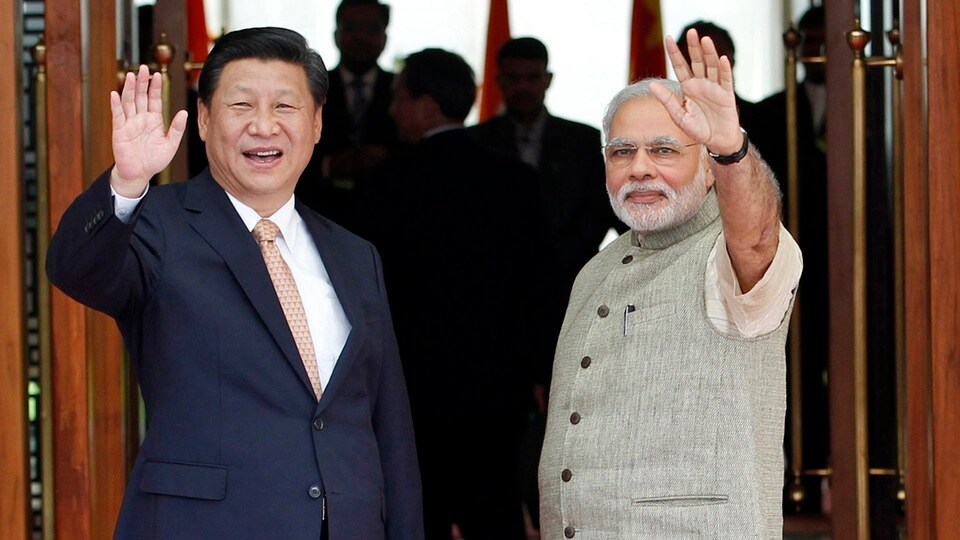
China on Monday said it was not aware of the remarks in the Pakistani media, attributed to its Consul General in Lahore, that Beijing will support Islamabad in case of “any foreign aggression.”
“I am not aware of the situation you mentioned,” said Chinese foreign ministry spokesperson, Geng Shuang, when asked to comment on the reported remarks.
In Pakistan, a statement from the Punjab Chief Minister's office quoted Yu Boren, China's top diplomat in Lahore as saying,“In case of any [foreign] aggression our country will extend its full support to Pakistan.”
The Pakistani daily Dawn reported that Beijing had conveyed the message during Mr Yu's meeting with Punjab Chief Minister Shahbaz Sharif on Friday.
Source: The Hindu
Also Read: China Denies Backing Pak on J&K, Urges Dialogue to Resolve Issue
6. March for Uri Martyrs Leads to Mob Fury
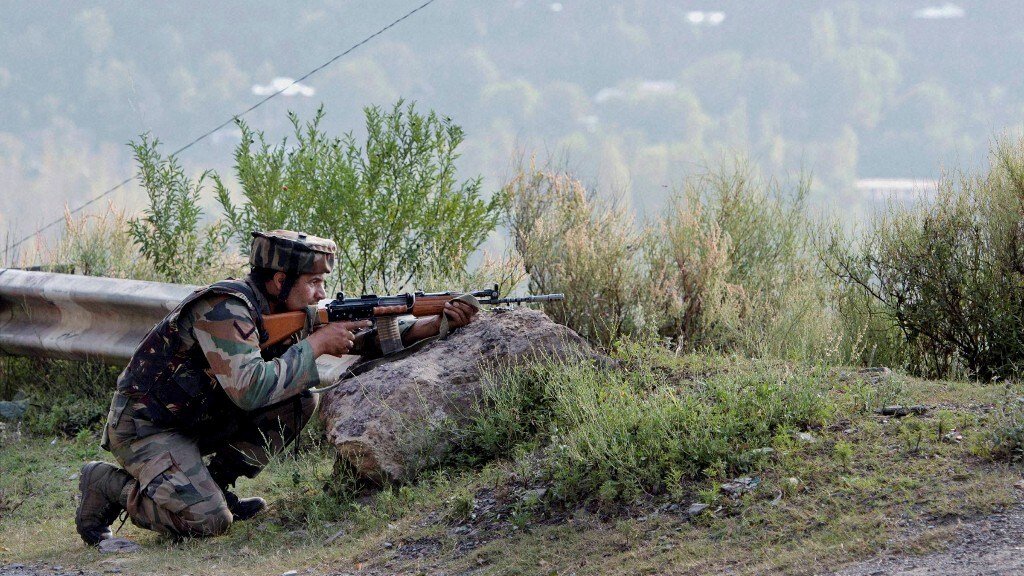
A school that divides C and G blocks of Jahangirpuri now stands like a wall between two communities, members of which clashed on Sunday night following a ruckus over a procession. The situation was largely peaceful on Monday though.
Both the communities now agree that it was instigated by rogue elements. Locals claim years of mistrust had contributed to Sunday night's tension.
Police have arrested four people for rioting and outraging the modesty of a woman. Seikh Ibrahim, a resident, said that Sunday's clash was no different from the frequent arguments that youths from C and G blocks got into during cricket matches.
Source: The Times of India
Also Read: 10 Things Modi Said in His First Speech Post Uri
7. Rahul Gandhi Shoe Attack: BJP Slams Incident, Accuses Congress VP of Playing ‘Cheap Politics'
BJP on Monday condemned the incident of a man hurling a shoe at Rahul Gandhi during his roadshow in Uttar Pradesh but suggested the Congress leader to seek the advice of a doctor and not do “cheap politics” of putting the blame for everything on BJP and RSS.
After a shoe was hurled at Gandhi during his roadshow in Sitapur, the Congress vice president had targeted the BJP-RSS over it, declaring that he would not be deterred by such actions.
“We strongly condemn the shoe-hurling incident and more strongly condemn your (Rahul's) statement of putting the blame for everything on RSS without any basis. This is the height of your mental bankruptcy. We suggest you seek advice from a good doctor,” BJP national secretary Shrikant Sharma said.
Source: DNA
Also Read: Throw as Many Shoes You Want, I Don't Fear BJP, RSS: Rahul Gandhi
8. Chinese Troops Entered 45 km Inside Arunachal Pradesh Earlier This Month
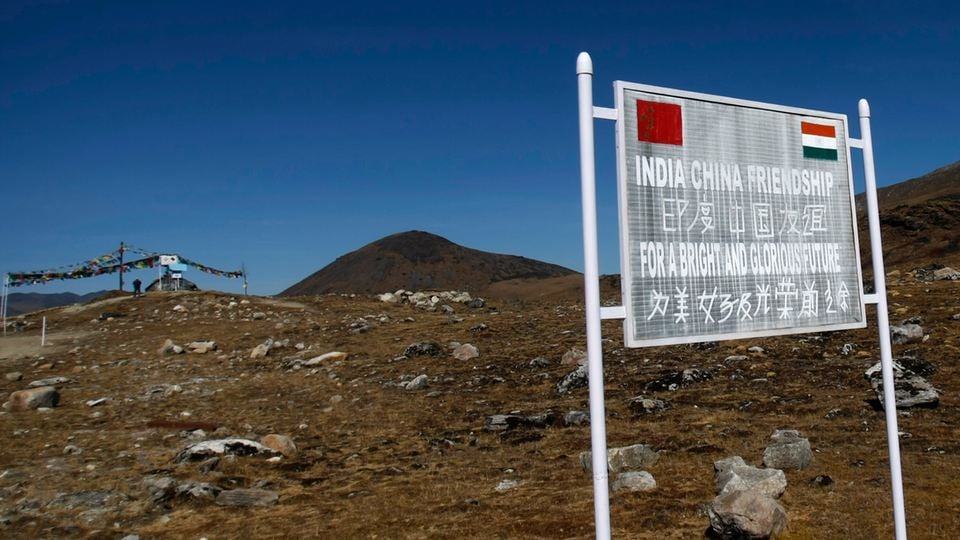
After Ladakh sector, Chinese troops came 45 km inside Indian territory in a remote area of Arunachal Pradesh earlier this month and built shelters to claim that the territory belonged to them, according to reports from the area.
Initial reports from Anjaw district said more than 40 Chinese troops set up a temporary shelter at ‘Plum post', an area 45 km inside the Line of Actual Control (LAC) in the district earlier this month.
Official sources said today that the incursion was, however, detected by a joint patrol of ITBP and army on 9 September after which a required banner drill was conducted.
Source: DNA
Also Read: Chinese Army Intrudes Into Arunachal, Sets up Temporary Camp
9. Behind the Voices at Maratha Rallies, An Anti-Dalit Tone
Nowhere is the barely veiled anti-Dalit stance of the ongoing Maratha protests across Maharashtra more apparent than in the Dalit colonies around the cities where the silent marches have been organised. At the Nanded rally (19 September), Dalits actually joined Marathas to express solidarity on the Kopardi killing and rape but subsequent rallies saw Dalits distancing themselves.
Reason: It became increasingly apparent that the Maratha marches were also exercises in muscle-flexing vis-a-vis the backward communities.
In rally after rally, the animosity towards the SC/ST communities has been palpable.
At the Solapur rally (21 September), for example, the Maratha Kranti Morcha took to social media to ask why Dalits needed to hold Ambedkar Jayanti celebrations every half a kilometre.
Source: The Indian Express
Also Read: Maratha Rallies: The Silent Marches That Are Creating an Uproar
More From The Quint:
Shashi Tharoor: Despite Modi Rhetoric, Isolating Pakistan Not Easy
Seven Key Highlights from Sushma Swaraj's Speech at UNGA
PM Modi's Speech Reflects Take-The-Bull-By-The-Horns Attitude
Think Before Your Kashiyatra? BHU and the Death of a University

-
Indians Are Travelling, But Not Every Journey Is A Holiday | The Week In Whys

Pilgrims, patients and working women are the real travellers, and the system hasn't quite caught up with them.
-
Getting To Work Costs Women More | The Reason Why
It is not just about women paying more than men. It is about women paying much more in cities than in villages.
-
AI Bias In Investing Cannot Be Eliminated, But It Can Be Governed
Framing is a particularly important example as identical financial information presented in terms of gains rather than losses can lead an LLM to reach a different assessment.
-
Joining The Dots | Dark Skies, Steady Diya: Why Hope Holds This Diwali
With war, a weak rupee and foreign outflows weighing on sentiment, policymakers at the NDTV World Summit and market veterans at NDTV Profit Ignite: Diwali Edition offered the same advice: stay invested and filter out the noise.
-
The Curious Case of Equitas Small Finance Bank And A CEO Who Quit For Stock
PN Vasudevan believes persistent investor concerns over a perceived conflict of interest had become a governance overhang on Equitas Small Finance Bank's stock, even as the lender improved profitability and asset quality.
-
Talking Points This Week: AI Cash Burn, A Tiger Comeback And An India That Still Finds Its Own Path
India is not immune to higher oil or tighter global liquidity, yet its earnings base is broader, its domestic policy levers are still available.
-
Foreign Investors Own Half Of HDFC Bank and ICICI Bank. An LTCG Cut Could Matter Most Here
Foreign portfolio investors have US$115 billion parked in HDFC Bank, ICICI Bank. If the government cuts long-term capital gains tax, Jefferies says returning foreign money could land here first.
-
'Never Seen This Level Of Negativity': Sandeep Tandon Says The Next Rally May Be Closer Than You Think
Veteran investor Sandeep Tandon says foreign selling is easing, large-caps are due a comeback and mid-caps are crowded, while he turns positive on gold, power and pharma this Diwali.
-
Indians Stay With Family, Not In Hotels | The Reason Why
India still lacks enough clean, reliable and affordable hotels for budget-conscious travellers.
-
The Economic Imperative: Analysing The Material Driving Force Behind India-Canada Strategic Reset
This economic complementarity is further reinforced by deep institutional investment ties and talent mobility, which form the bedrock of the bilateral framework.










