Supreme Court To Examine If Triple Talaq Is Enforceable Fundamental Right
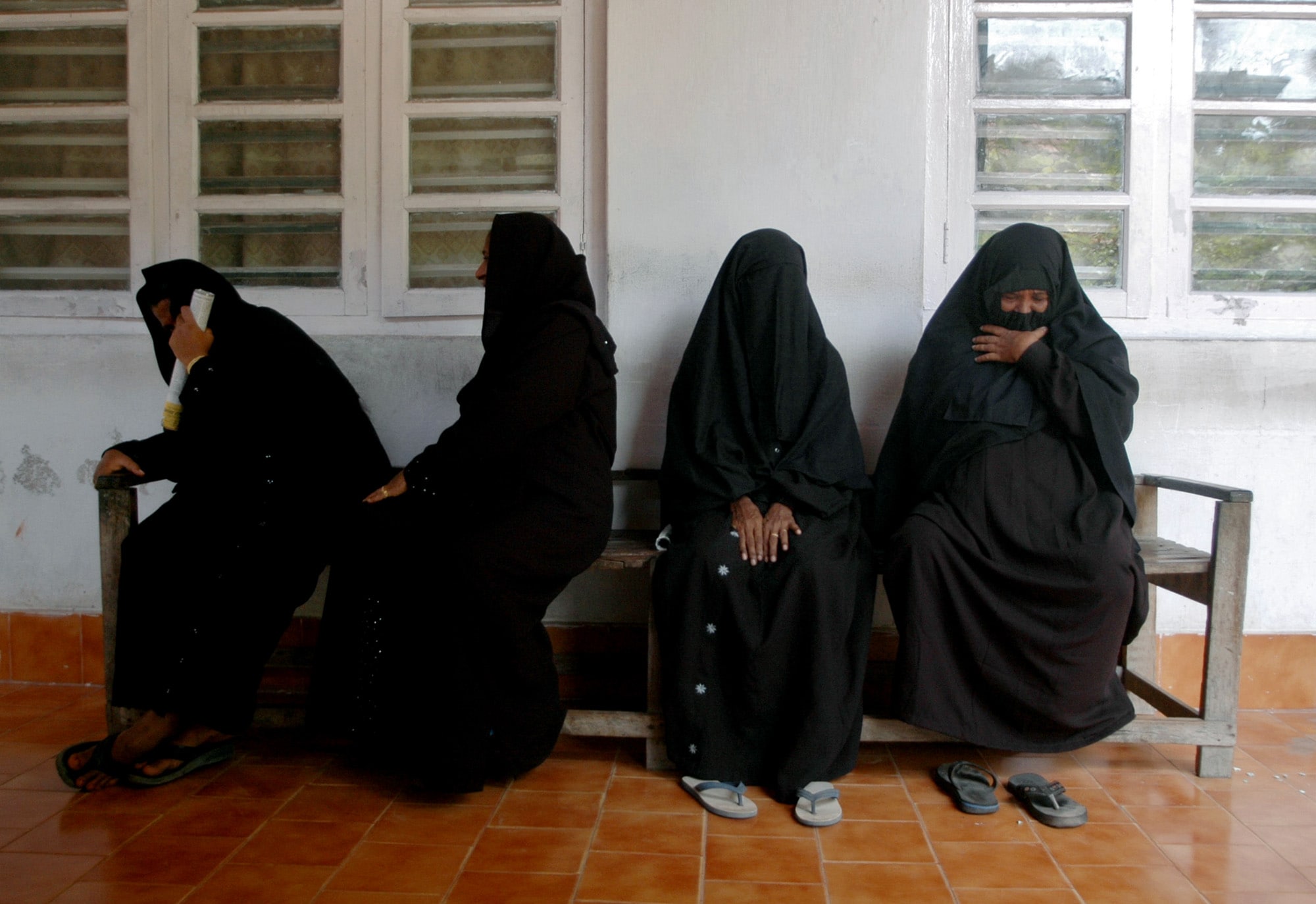
The Supreme Court on Thursday said it would examine whether the practice of triple talaq among Muslims is fundamental to their religion, but it may not deliberate upon the issue of polygamy as it began hearing petitions challenging the practice.
A five-judge bench headed by Chief Justice J S Khehar said it would look into the aspect whether triple talaq is part of an “enforceable” fundamental right to practice religion by Muslims.
The bench, also comprising of Justices Kurian Joseph, R F Nariman, U U Lalit and Abdul Nazeer, however, said the issue of polygamy among Muslims may not be deliberated upon by it as this aspect is unrelated to triple talaq.
The bench, made up of judges from different religious communities-Sikh, Christian, Parsi, Hindu and Muslim is hearing seven petitions, including five separate writ petitions filed by Muslim women challenging the practice of triple talaq prevalent in the community.
The petitions claim that triple talaq is unconstitutional. The apex court made it clear that each side will get two days each for canvassing their arguments on the two questions formulated by the bench and one day will be given for the rebuttal. It also made it clear that it would stop any counsel who repeats the arguments.
“Each side can argue whatever they want but there should not be any repetition. They will only focus on the validity of triple talaq,” the bench said.
The pleas have also challenged the constitutional validity of other practices like ‘nikah halala' and polygamy among Muslims. The bench is also taking up the main matter on its own as a petition titled “Muslim Women's quest for equality”.
The apex court had on its own taken cognizance of the question whether Muslim women faced gender discrimination in the event of divorce or due to other marriages of their husbands.
The hearing assumes significance as the apex court has decided to hear the case during the summer vacation and is likely to sit on Saturdays and Sundays to expeditiously decide the contentious and sensitive issues arising in the matter.
It holds importance as the Allahabad High Court in its verdict pronounced in the last week of April, had held the practice of triple talaq as unilateral and bad in law. The High Court verdict had come while dismissing a petition filed by one Aaqil Jamil, whose wife had filed a criminal complaint against him alleging that he had tortured her for dowry and when his demands were not met, he gave her triple talaq.
The apex court had on March 30 said that the Muslim practices of triple talaq, nikah halala and polygamy are issues that are “very important” and involve “sentiments”.
Influential Muslim organisations like the All India Muslim Personal Law Board (AIMPLB) have opposed court's adjudication of these matters, maintaining these practices stemmed from the Holy Quran and were not justiciable.
The Muslim women, who have filed the petitions, have challenged the practice of triple talaq in which the husband, quite often, pronounces talaq thrice in one go, sometimes even by phone or text message.
Nikah Halala is a practice intended to curb the incidence of divorce under which a man cannot remarry his former wife without her having to go through the process of marrying someone else, consummating it, getting divorced, observing the separation period called ‘Iddat' and then coming back to him again.
The apex court, while referring to the matter to a larger bench, had observed that
“sentiments” were involved in the matter and a five-judge constitution bench would adjudicate the issue, which required a detailed hearing.
The apex court had earlier said it would decide issues pertaining to the legal aspects of the practices of triple talaq, nikah halala and polygamy among Muslims, but would not deal with the question whether divorce under Muslim law needs to be supervised by courts as it fell under the legislative domain.
The central government had on October 7 last year opposed in the Supreme Court the practice of triple talaq, nikah halala and polygamy among Muslims and favoured a relook on grounds like gender equality and secularism.
AIMPLB had on March 27 told the apex court that pleas challenging such practices among Muslims were not maintainable as the issues fell outside the realm of judiciary. The Board had also said the validity of the Mohammedan Law, founded essentially in the Holy Quran and sources based on it, cannot be tested on the particular provisions of the Constitution.
It had said there was a need for “judicial restraint” before going into constitutional interpretation of these unless such an exercise becomes unavoidable.
The Ministry of Law and Justice, in its affidavit, had referred to constitutional principles like gender equality, secularism, international covenants, religious practices and marital law prevalent in various Islamic countries to drive home the point that the practice of triple talaq and polygamy needed to be adjudicated upon afresh by the apex court.

-
Getting To Work Costs Women More | The Reason Why

It is not just about women paying more than men. It is about women paying much more in cities than in villages.
-
AI Bias In Investing Cannot Be Eliminated, But It Can Be Governed
Framing is a particularly important example as identical financial information presented in terms of gains rather than losses can lead an LLM to reach a different assessment.
-
Joining The Dots | Dark Skies, Steady Diya: Why Hope Holds This Diwali
With war, a weak rupee and foreign outflows weighing on sentiment, policymakers at the NDTV World Summit and market veterans at NDTV Profit Ignite: Diwali Edition offered the same advice: stay invested and filter out the noise.
-
The Curious Case of Equitas Small Finance Bank And A CEO Who Quit For Stock
PN Vasudevan believes persistent investor concerns over a perceived conflict of interest had become a governance overhang on Equitas Small Finance Bank's stock, even as the lender improved profitability and asset quality.
-
Talking Points This Week: AI Cash Burn, A Tiger Comeback And An India That Still Finds Its Own Path
India is not immune to higher oil or tighter global liquidity, yet its earnings base is broader, its domestic policy levers are still available.
-
Foreign Investors Own Half Of HDFC Bank and ICICI Bank. An LTCG Cut Could Matter Most Here
Foreign portfolio investors have US$115 billion parked in HDFC Bank, ICICI Bank. If the government cuts long-term capital gains tax, Jefferies says returning foreign money could land here first.
-
'Never Seen This Level Of Negativity': Sandeep Tandon Says The Next Rally May Be Closer Than You Think
Veteran investor Sandeep Tandon says foreign selling is easing, large-caps are due a comeback and mid-caps are crowded, while he turns positive on gold, power and pharma this Diwali.
-
Indians Stay With Family, Not In Hotels | The Reason Why
India still lacks enough clean, reliable and affordable hotels for budget-conscious travellers.
-
The Economic Imperative: Analysing The Material Driving Force Behind India-Canada Strategic Reset
This economic complementarity is further reinforced by deep institutional investment ties and talent mobility, which form the bedrock of the bilateral framework.
-
Medicine Pricing: Where Must Profit Stop?
India must confront excessive margins, hidden incentives and regulatory gaps that threaten the integrity of medicine.










