Supreme Court Strikes Down Criminal Provision Of Benami Transaction Law
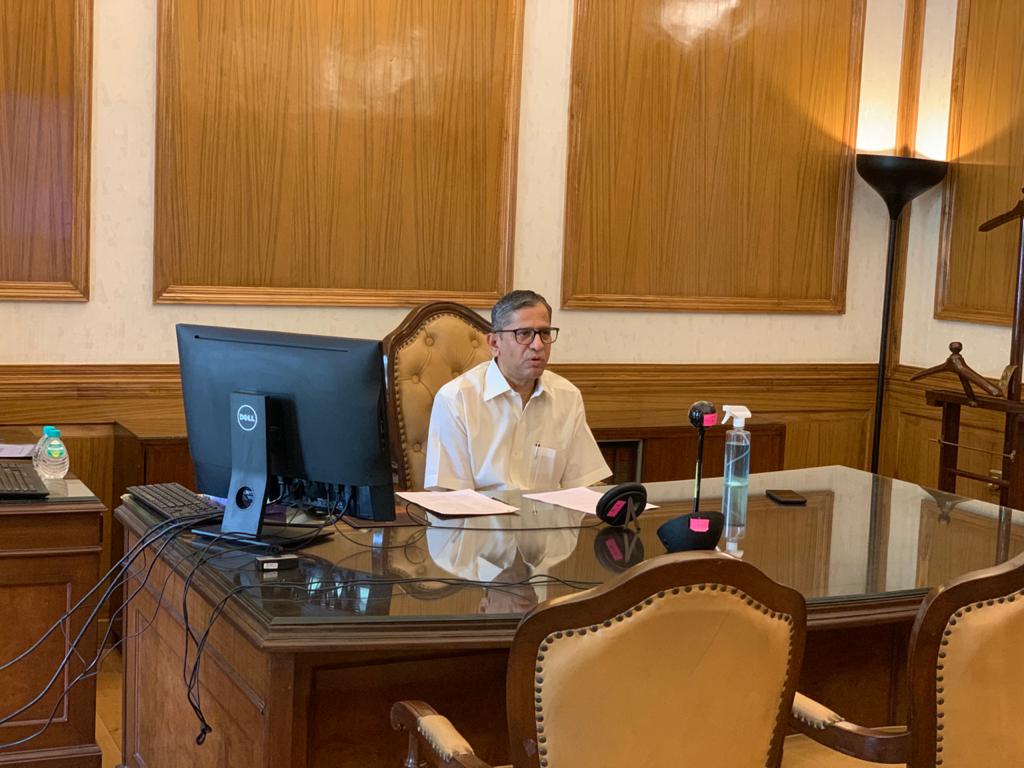
The Supreme Court of India today struck down the provision dealing with punishment for engaging in benami transactions under the Prohibition of Benami Property Transactions Act, 1988, as unconstitutional.
The apex court held Section 3(2) of the act as unconstitutional on grounds of it being arbitrary.
The bench in the judgment also clarified that the 2016 amendment to the confiscation provision under the law would not have a retrospective effect.
The judgment delivered by the bench presided by Chief Justice of India NV Ramana was in an appeal against an earlier ruling of the Calcutta High Court.
Both Provisions Had Flaws Since Enactment: Supreme Court
The apex court was examining the validity of 2016 amendments to both Section 3(2) and Section 5 (dealing with confiscation proceedings).
The central government argued that the amendments were only in the nature of clarifications and therefore, would have retrospective applications.
However, the bench noted that the validity of the original provisions of the unamended 1988 act were themselves never examined and set off to first deal with that issue.
On Section 3, the Supreme Court said that this provision was ‘'still born'' from its inception and never implemented.
Section 2(a) defined "benami transaction" as a tripartite transaction in which property is transferred to one person when the money is paid or provided by another person.
The judgment says that this definition did not capture the essence of benami transactions and included certain types of transactions, which could be legitimate and gave examples to emphasise this point:
‘A' purchases property in name of his son's wife ‘B', for the benefit of the son's family from person ‘Y', treats the consideration as a gift to the son, and pays gift tax on it.
A firm ‘X' purchases property in the name of the working partner ‘B' for the benefit of the firm ‘X', making the payment out of the firm's funds.
The bench further noted that the criminal provision in the law (Section 3) did not contain the requirement of mens rea (intention or knowledge to commit a crime).
The language of Section 2(a) coupled with Section 3, completely ignores the aspect of mens rea, as it intends to criminalize the very act of one person paying consideration for acquisition of property for another person.Supreme Court of India
The absence of mens rea creates a harsh provision having strict liability, the bench said.
Further, under the amended 2016 Act, the aspect of mens rea is brought back through Section 53. Such resurrection clearly indicates that doing away of the mens rea aspect was without any rhyme or reason, and ended up creating an unusually harsh enactment.Supreme Court of India
On Section 5, the bench noted that this provision under the unamended act was a half-baked provision and did not answer questions, such as:
Whether the proceedings under Section 5 were independent or dependant on successful prosecution.
The standard of proof required to establish benami transaction in terms of Section 5.
No ‘defence of innocent owner' was provided to save legitimate innocent buyers.
Mechanism for providing opportunity for a person to establish his defence.
No ‘defence of innocent owner' was provided to save legitimate innocent buyers.
The top court did not agree with the government's argument that the 2016 amendments to the provision were only clarificatory in nature.
The gaps left in the 1988 Act were not merely procedural, rather the same were essential and substantive. In the absence of such substantive provisions, the omissions create a law which is fanciful and oppressive at the same time. Such an overbroad provision was manifestly arbitrary as the open texture of the law did not have sufficient safeguards to be proportionate.Supreme Court of India
The bench also clarified that the ruling will not have an impact on the civil proceedings contemplated under the act and the striking down is only of the criminal provision of the law. The confiscation proceedings will continue to apply only with prospective effect.
Authorities cannot initiate or continue criminal prosecution or confiscation proceedings for transactions entered into prior to the coming into force of the 2016 Act, said the Supreme Court.

-
Indians Are Travelling, But Not Every Journey Is A Holiday | The Week In Whys

Pilgrims, patients and working women are the real travellers, and the system hasn't quite caught up with them.
-
Getting To Work Costs Women More | The Reason Why
It is not just about women paying more than men. It is about women paying much more in cities than in villages.
-
AI Bias In Investing Cannot Be Eliminated, But It Can Be Governed
Framing is a particularly important example as identical financial information presented in terms of gains rather than losses can lead an LLM to reach a different assessment.
-
Joining The Dots | Dark Skies, Steady Diya: Why Hope Holds This Diwali
With war, a weak rupee and foreign outflows weighing on sentiment, policymakers at the NDTV World Summit and market veterans at NDTV Profit Ignite: Diwali Edition offered the same advice: stay invested and filter out the noise.
-
The Curious Case of Equitas Small Finance Bank And A CEO Who Quit For Stock
PN Vasudevan believes persistent investor concerns over a perceived conflict of interest had become a governance overhang on Equitas Small Finance Bank's stock, even as the lender improved profitability and asset quality.
-
Talking Points This Week: AI Cash Burn, A Tiger Comeback And An India That Still Finds Its Own Path
India is not immune to higher oil or tighter global liquidity, yet its earnings base is broader, its domestic policy levers are still available.
-
Foreign Investors Own Half Of HDFC Bank and ICICI Bank. An LTCG Cut Could Matter Most Here
Foreign portfolio investors have US$115 billion parked in HDFC Bank, ICICI Bank. If the government cuts long-term capital gains tax, Jefferies says returning foreign money could land here first.
-
'Never Seen This Level Of Negativity': Sandeep Tandon Says The Next Rally May Be Closer Than You Think
Veteran investor Sandeep Tandon says foreign selling is easing, large-caps are due a comeback and mid-caps are crowded, while he turns positive on gold, power and pharma this Diwali.
-
Indians Stay With Family, Not In Hotels | The Reason Why
India still lacks enough clean, reliable and affordable hotels for budget-conscious travellers.
-
The Economic Imperative: Analysing The Material Driving Force Behind India-Canada Strategic Reset
This economic complementarity is further reinforced by deep institutional investment ties and talent mobility, which form the bedrock of the bilateral framework.










