Supreme Court Ruling On Loan Waivers Likely To Benefit Insolvent Companies
In the last few years, companies such as JSW Steel Ltd., Mahindra & Mahindra Ltd., Jindal Equipment Leasing And Consultancy Services Ltd. and several others ended up with different outcomes for the same problem. That's on account of differing high court rulings on whether loan waivers can be taxed by the revenue department. In all these cases, the department had sought to tax the principal amount of the loan in the hands of the borrower once it was waived by the lender.
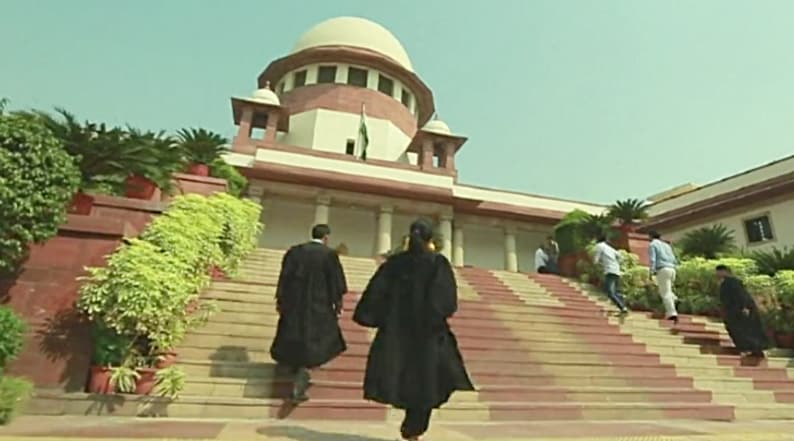
But the Supreme Court of India recently dismissed the revenue department's stance to tax loan waivers as business income. Experts say that the apex court ruling will have implications for companies facing insolvency proceedings.
Taxability Of Loan Waivers: High Court's View
The Bombay and the Delhi high courts, in cases related to Mahindra & Mahindra Ltd. and Jindal Equipment, had held that a loan which is originally taken for capital expenditure, if waived, will not give rise to taxable income either under Section 41(1) or Section 28(iv). These are the two sections under the income tax law which the tax department used to make its case.
Section 41(1) says that if a taxpayer has availed a deduction as a result of loss on a trading liability and in any subsequent year, the creditor waives this liability, then this benefit will be treated as income. For instance, if someone purchases raw material on credit and then fails to pay, it becomes a trading liability.
Section 28(iv) treats the value of any benefit arising from business as profit that would attract tax.
It's under this section that the Madras High Court had held the waiver of a portion of the loan tantamounts to a benefit. The high court had concluded so because the taxpayer had availed deduction on the interest component, Amit Singhania, tax head at Shardul Amarchand Mangaldas, pointed out.
In the cases before the Delhi and the Bombay high courts, the taxpayer had not taken any deduction on the interest. “The facts were different before the Madras High Court and hence the court had held that that we cannot give you double advantage – first as deduction, and second, by not treating the same amount as income,” Singhania explained.
Taxability Of Loan Waivers: The Supreme Court View
After divergent high court rulings, these cases – 22 in all – finally landed before the apex court.
The Supreme Court ruled in favour of the taxpayers. It explained that the taxpayer i.e. Mahindra and Mahindra had received the benefit in the form of cash receipt due to the waiver of loan. Section 28(iv) requires the benefit to be in any form other than money, the amount of loan waived cannot be taxed as business perquisite. Further, waiver of loan does not qualify as cessation of trading liability, and so it cannot be taxed under Section 41(1) either, the apex court said.
The Supreme Court has clearly laid down that if there is a waiver of the principal amount of a loan – irrespective of whether it was taken for capital expenditure or working capital – it can't be taxed under Section 28 (iv) since it is a monetary benefit, Ajay Vohra, senior advocate at the Delhi High Court, told BloombergQuint. The second limb of the tax department's argument under Section 41(1) didn't find favour with the Supreme Court either, he added.
Under Section 41(1), the cardinal requirement is that taxpayers should've availed deduction. A loan transaction is on capital account. You don't claim deduction when you borrow a loan. That is a balance-sheet item. You claim deduction on the interest payable to the loan. When the principal amount of loan is waived, since this requirement or condition precedent of the deduction is not satisfied, Section 41(1) does not apply and the court further added that loan is not a trading liability either.Ajay Vohra, Senior Advocate, Delhi High Court
Loan Waivers Not Taxable: The Implications
Experts say that this apex court ruling will be useful for insolvent companies and their potential investors since loan waivers are a standard feature of any resolution plan.
“If and when such a demand is raised by the tax department, to my mind, insolvent companies will be able to take advantage of this particular judgement,” Singhania said.
I will divide the insolvent companies into two parts. The first category is those that have not paid the principal and interest. Such companies can take benefit of this ruling without any ambiguity. The second category is companies that have not paid the principal amount but have paid some amount of interest to lenders. The tax department will try to make a distinction that this Supreme Court ruling is based on the fact that no interest deduction was taken.Amit Singhania, Partner, Shardul Amarchand Mangaldas
The ruling will help the resolution plans of companies under insolvency because the investor who steps in will not have to pay tax on the haircut extended by banks on the principal amount of the loan, Vohra added.
Watch the full discussion here.

-
The Economic Imperative: Analysing The Material Driving Force Behind India-Canada Strategic Reset

This economic complementarity is further reinforced by deep institutional investment ties and talent mobility, which form the bedrock of the bilateral framework.
-
Medicine Pricing: Where Must Profit Stop?
India must confront excessive margins, hidden incentives and regulatory gaps that threaten the integrity of medicine.
-
Why Amazon And Flipkart Are Struggling To Beat Meesho In India's Smaller Cities
With 274 million users and lowest-cost logistics, Meesho is defending its value commerce crown against giants like Amazon and Flipkart.
-
High US Salaries, No Green Card Certainty: The Financial Calculation Facing Indian H-1B Families
The suspension of PERM processing at eight technology employers does not cancel existing H-1B visas. What it does is force a question many Indian families have been avoiding: is the US salary worth tying your career and family plans to one employer?
-
Swiggy vs Eternal: Food Delivery's Two Rivals Are No Longer In The Same Race
Eternal is building a private AI assistant, dark.ai. Swiggy is still working out how to make Instamart pay, with an operating loss of Rs 895 crore in the July-September quarter while Blinkit stayed profitable.
-
Where You Live Shapes How You Get To Work | The Reason Why
Two-wheelers are the most popular way to get to work in India, accounting for nearly 43% of workplace commutes.
-
Unhedged Position: Can India See An Indonesia-Style Time Correction?
The Nifty is trading below levels it first clocked in 2024. Is there, then, as I have suggested in the headline, potential that the current time correction drags on painfully for the next three-five, even ten years?
-
Navigating Friction And Energy Realities: An Analysis Of Marco Rubio's October Visit To India
Occurring at a critical juncture marked by stalled trade negotiations and escalating geopolitical pressures over global energy supplies, the visit offers a profound window into modern US-India relations.
-
India Exports Capital. Why Not Export Trusteeship?
The big question, then, is whether India can build an institution that global borrowers, investors, banks, and lawyers can trust, even without an Indian connection.
-
France's Economy & Politics Are In Crisis | The Reason Why
Let's look at how the French economy and politics evolved under Nicolas Sarkozy, Franois Hollande and Emmanuel Macron.










