Supreme Court Rejects Plea Seeking Norms For Case Allocation To Judges
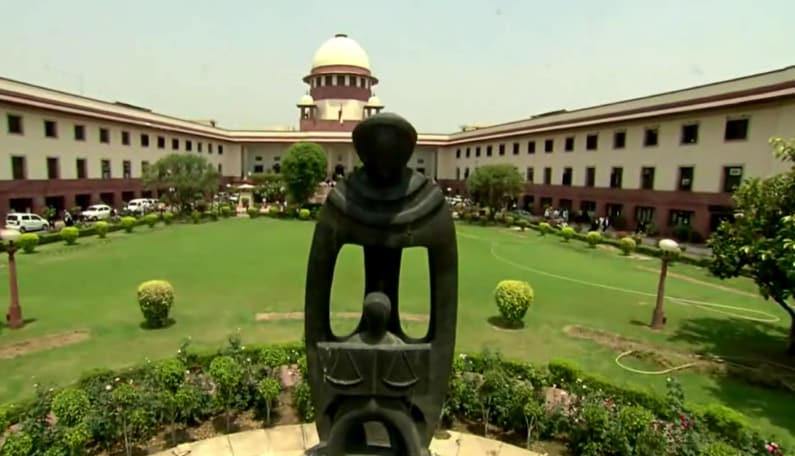
A three-judge bench of the Supreme Court ruled that the Chief Justice of India is the first among equals and has the exclusive power to decide the allocation of cases before the apex court.
The bench comprising of CJI Justice Dipak Misra, Justice AM Khanwilkar and Justice DY Chandrachud rejected a petition that sought a transparent procedure for the constitution of benches and allocation of cases in the apex court.
The top court said there cannot be a presumption of mistrust against the Chief Justice of India.
Advocate Ashok Pande had filed the petition seeking norms to be framed for allocation of cases to various benches. The petition had also sought that it should be the norm that the constitution benches in the apex court should comprise of five senior-most judges of the court.
Recently, Senior Advocate Shanti Bhushan had filed a petition seeking to challenge the master of roster powers of the Chief Justice of India. The petition will also be likely considered infructuous, as the top court has already made its views known in the matter.
The verdict comes three months after four Supreme Court judges -- Justice Chelamwswar, Justice Ranjan Gogoi, Justice Madan Lokur and Justice Kurian Joseph -- raised a litany of problems, including assigning of cases in the top court, and said there were certain issues afflicting the country's highest court.

-
We May Need Another Tukaram Mundhe To Fight Air Pollution | The Reason Why

Developers may install basic measures such as sprinklers and green nets, resume work, and continue violating rules when this equipment stops working.
-
Extracting Value From Battery Scrap Could Be Challenging For India | The Reason Why
A discarded lithium-ion battery still contains valuable materials such as lithium, nickel and cobalt. These can be recovered and reused. When such batteries are crushed and shredded, they produce a dark powder called black mass.
-
One El Nino, India Can Handle. Two Could Break The Granary
India's grain stocks can absorb one bad year, but a second El Nino could drain the buffer in two to three years, economists say.
-
India's Troika Of Good Luck | Joining The Dots
As Jensen Huang's exit drags Nvidia down, a cooling AI trade and resilient earnings have revived investor interest in India. A likely RBI rate hike looms.
-
Talking Points This Week: Leadership Shock At Nvidia, Earnings Strength, And The Fog Over Hormuz
The Anthropic IPO pricing and first trading day, Nvidia's upcoming earnings, and any fresh signals from Iran will set the tone for the following week.
-
Signature Play: The Classic Cocktail Is Dead. Or Is It?
Classic cocktails are disappearing from India's cocktail menus. But they're still being ordered, taught to bartenders and borrowed from. So, who's really having the last drink?
-
A New Samvat Wishlist: Inclusive Prosperity And Human Development
India has strengthened its economic foundations through infrastructure, digital access and enterprise. Its next growth chapter must deepen productivity, create better livelihoods and widen participation in prosperity.
-
Love, Sex Aur Dhokha: The Audacious Plot To Spy On Jensen Huang
A Taipei dinner, a Singapore chip buyer and a suspected Chinese asset: inside the alleged spy operation that got close to NVIDIA's Jensen Huang.
-
Ten Things I Learnt This Samvat
Patience can be a trap. Cheap stocks can stay cheap. Leverage can wipe you out. What did Samvat 2082 teach us? Niraj Shah writes on 10 lessons from the year gone by.
-
Talking Points This Week: Tech Nerves, FII Buying, And A Faraway Banking Shock
The global markets are not shining this Diwali. The exception in the large markets is, India.









