Supreme Court Orders Fresh Review Of India's Vaccine Policy
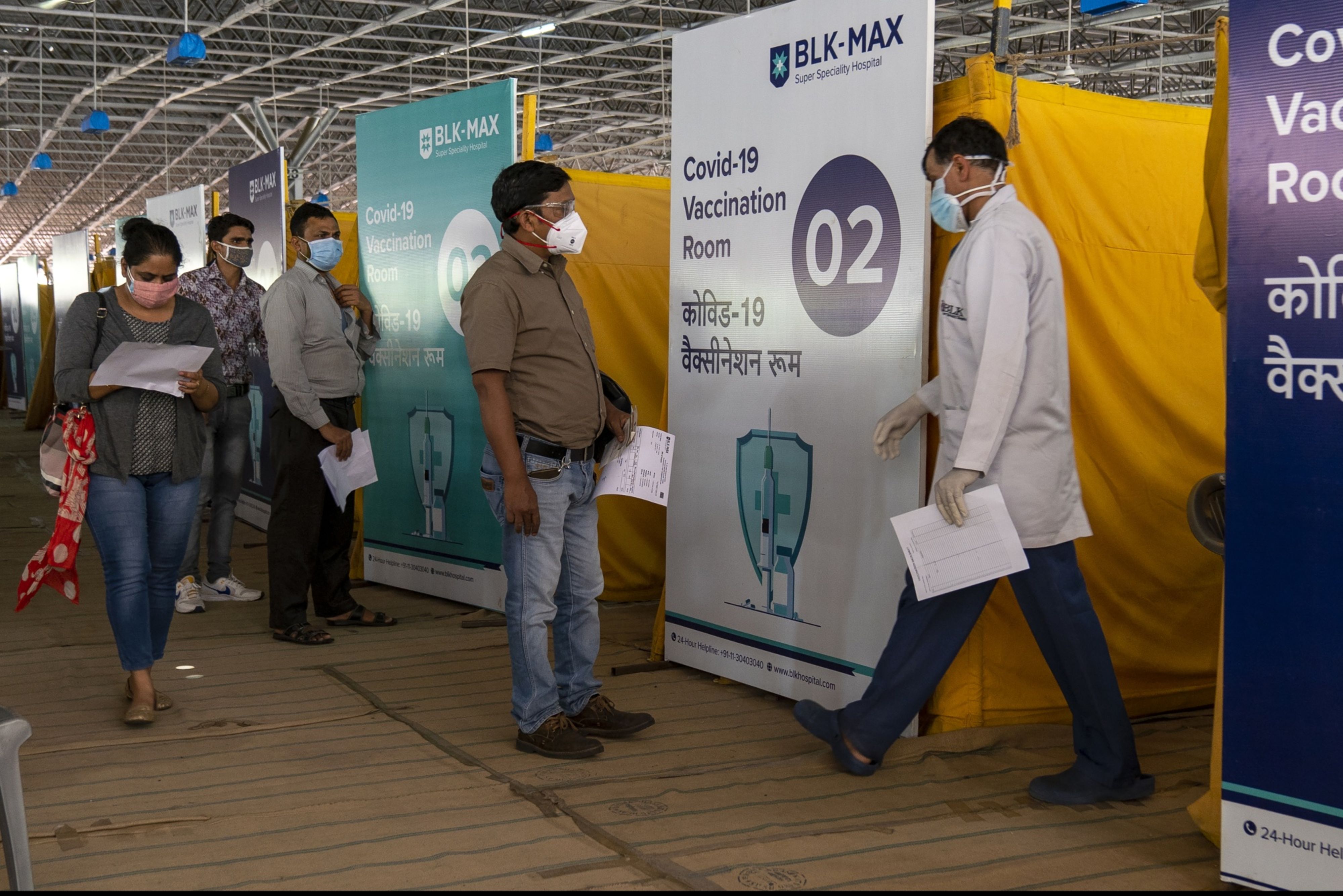
The Supreme Court asked the central government to review its vaccine policy while raising concerns over the procedure followed to procure and administer the doses.
The top court's said it does not intend to second-guess the wisdom of the executive in deciding the policy measures to combat the pandemic but it will determine whether such policies pass constitutional scrutiny, according to its order in the suo-motu proceedings initiated on the management of the Covid-19 pandemic.
In the last hearing on May 31, the court had limited the hearing to the issue of vaccine policy of the government.
Paid Vaccination For 18-14 Age Group Prima Facie Arbitrary: Court
The top court is satisfied with the government approach in the first two phases of vaccination when it was opened for healthcare and frontline workers, and then for people above 45.
When the vaccination was opened for those aged 18-44 years, the policy was changed. The central government now gets 50% of vaccines produced for free inoculation of 45 and above, while the rest is divided equally between the states and private hospitals for the younger cohort.
The court said the policy for this group does not prioritise those with co-morbidities and other diseases, persons with disabilities, or any other vulnerable groups. This is an issue since recent reports of the second wave have indicated that people in this age group are also at risk, the court said.
...due to the importance of vaccinating individuals in the 18-44 age group, the policy of the central government for conducting free vaccination themselves for groups under the first 2 phases, and replacing it with paid vaccination by the State/UT Governments and private hospitals for the persons between 18 and 44 years is, prima facie, arbitrary and irrational.Supreme Court of India
The court also said there are issues concerning procurement and distribution of the vaccines, and has asked the government to conduct a fresh review of its policy.
The top court also raised questions on the differential pricing of vaccines for the central government and the states. The court will examine the rationale of the policy as it can place a severe burden on the states, especially those suffering from financial distress, it said.
The court asked the government to provide details which include:
Projected availability of vaccines till Dec. 31, 2021.
Preparedness plan for the third wave with respect to needs of children.
How will states and the centre ensure equitable distribution of vaccines to different sections of society?
Comparison between the prices of vaccines being made available in India and internationally.
Digital Divide A Barrier For Universal Immunisation: Top Court
Online and on-site registration for getting the vaccine is available for those above the age of 45. For the 18-44 group, registration on the Cowin portal is largely mandatory. The central government has justified the move to prevent crowding at the vaccination centres and said those without digital access in villages can approach the common service centres to register.
In light of the digital divide, a vaccine policy relying solely on online registration will not be able to achieve the aim of universal immunisation, the top court said.
It is the marginalised sections of society who would bear the brunt of this accessibility barrier. This could have serious implications on the fundamental right to equality and the right to health of persons within the above age group.Supreme Court of India
The court has asked the government to clarify on concerns that:
It may not be feasible to require the majority of our population to rely on friends/NGOs for digital registrations when even the digitally literate are finding it hard to book slots.
The issue of overcrowding may also arise at common service centres in rural areas
Can on-site registration be opened at some centres to prioritise those with co-morbidities, disabilities and other vulnerabilities in the age group of 18-44
Conducting a disability audit of the Cowin portal to ensure it's accessible to people with disabilities.
The court also asked the government to submit the document of the vaccination policy and the thinking that went behind it. The government will have to tell the court in two weeks:
The data on the percentage of the population that has been vaccinated, and the percentage of rural and urban population that has been vaccinated.
The complete data on the central government's purchase history of all the Covid-19 vaccines to date; this should clarify the dates of all procurement orders placed by the central government; the quantity of vaccines ordered and the projected date of supply.
By when does the central government hope to vaccinate the remaining population which is eligible to get the vaccine.
The top court bench led by Justice DY Chandrachud also asked the state governments to clarify their positions on providing free vaccines to their population. The top court will now take up the case when all parties file replies.

-
One El Nino, India Can Handle. Two Could Break The Granary

India's grain stocks can absorb one bad year, but a second El Nino could drain the buffer in two to three years, economists say.
-
India's Troika Of Good Luck | Joining The Dots
As Jensen Huang's exit drags Nvidia down, a cooling AI trade and resilient earnings have revived investor interest in India. A likely RBI rate hike looms.
-
Talking Points This Week: Leadership Shock At Nvidia, Earnings Strength, And The Fog Over Hormuz
The Anthropic IPO pricing and first trading day, Nvidia's upcoming earnings, and any fresh signals from Iran will set the tone for the following week.
-
Signature Play: The Classic Cocktail Is Dead. Or Is It?
Classic cocktails are disappearing from India's cocktail menus. But they're still being ordered, taught to bartenders and borrowed from. So, who's really having the last drink?
-
A New Samvat Wishlist: Inclusive Prosperity And Human Development
India has strengthened its economic foundations through infrastructure, digital access and enterprise. Its next growth chapter must deepen productivity, create better livelihoods and widen participation in prosperity.
-
Love, Sex Aur Dhokha: The Audacious Plot To Spy On Jensen Huang
A Taipei dinner, a Singapore chip buyer and a suspected Chinese asset: inside the alleged spy operation that got close to NVIDIA's Jensen Huang.
-
Ten Things I Learnt This Samvat
Patience can be a trap. Cheap stocks can stay cheap. Leverage can wipe you out. What did Samvat 2082 teach us? Niraj Shah writes on 10 lessons from the year gone by.
-
Talking Points This Week: Tech Nerves, FII Buying, And A Faraway Banking Shock
The global markets are not shining this Diwali. The exception in the large markets is, India.
-
Midterm Rally Lasted A Day. The Hard Reality Of A Divided US May Last Two Years | Opinion
Between a contested AI boom, a debt ceiling that arrives in 2027 and a president with every incentive to act alone, the next two years may prove more volatile than the first day's rally suggests.
-
Blue Wave Will Derail the AI Trade but Won't Dismantle the AI Era | Unhedged Position
The Democrats' sweep of the US Congress will see politics collide with economic forces both over the long and short term.









