Sikkim Standoff: China Says Its Restraint Has ‘Bottom Line’
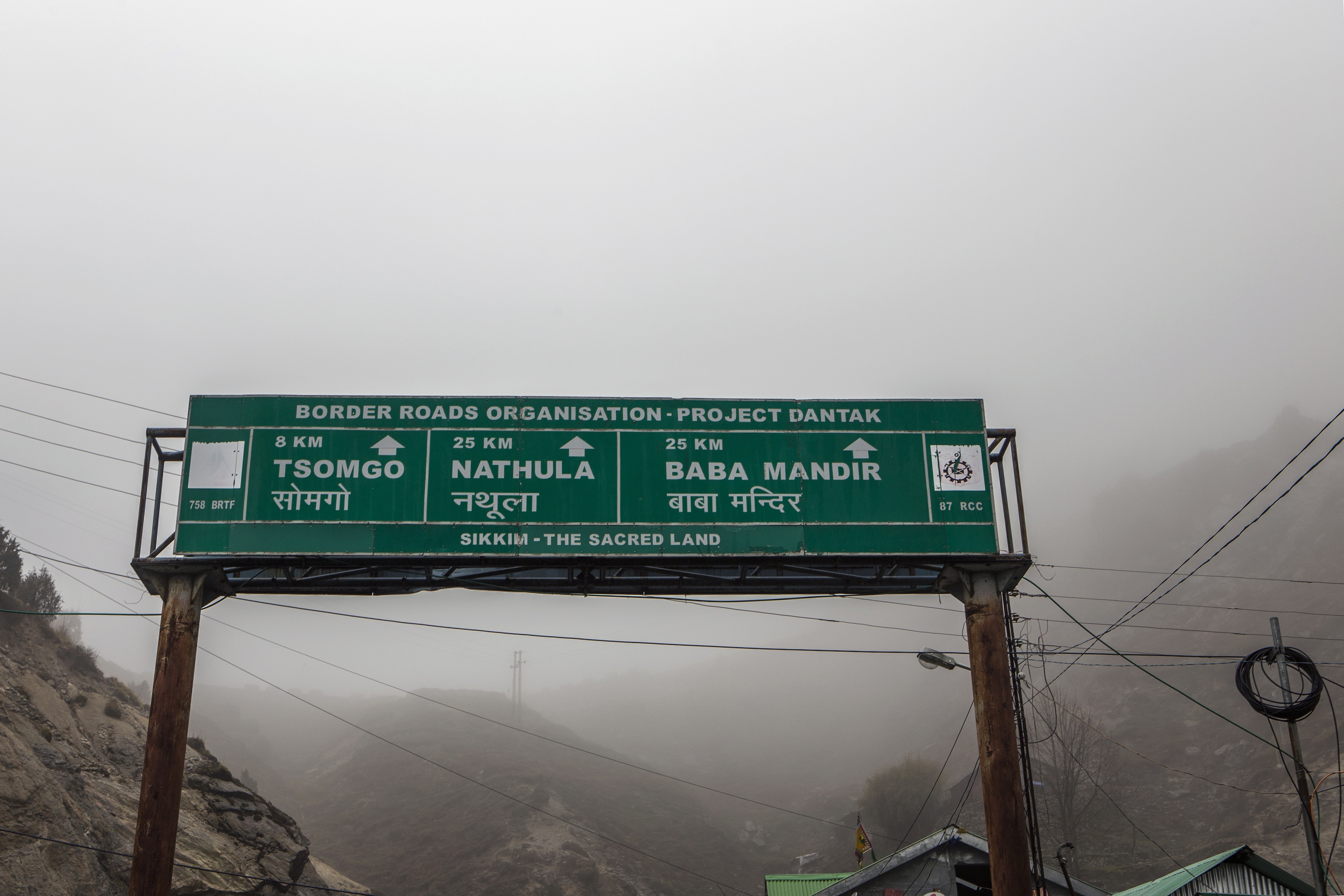
China said it has shown "utmost goodwill" over the prolonged military standoff with India in the Sikkim sector, even as it warned that its "restraint" has a "bottom line".
The reaction from the Chinese defence ministry came late on Thursday night, a day after the Indian External Affairs Ministry said that the peace and tranquillity of the India-China boundary is an important prerequisite for smooth bilateral relations.
External Affairs Minister Sushma Swaraj last month made clear India's position on the over-a-month-long standoff in the Doklam area, saying both sides should first pull back their troops for any talks to take place, favouring a peaceful resolution.
The standoff began on June 16 after Chinese troops began constructing a road near the trijunction with Bhutan, which India says was a unilateral action by Beijing to change the status quo in the area.
New Delhi fears the construction of the road would allow China to cut off India's access to its northeastern states.
Ren Guoqiang, a spokesperson of the Chinese defence ministry, in a statement called the Indian side to swiftly address the situation in a proper manner to restore peace and tranquillity in the border region.
Since the incident occurred, China has shown utmost goodwill and sought to communicate with India through diplomatic channels to resolve the incident. Chinese armed forces have also shown a high level of restraint with an eye to the general bilateral relations and the regional peace and stability.Ren Guoqiang, Chinese defence ministry spokesperson, in a report in state-run Xinhua news agency.
"However, goodwill has its principles and restraint has its bottom line," Ren added.
The spokesperson urged the Indian side to give up the "illusion of its delaying tactic, as no country should underestimate the Chinese forces' confidence and capability to safeguard peace and their resolve and willpower to defend national sovereignty, security and development interests".
Ren said the Chinese armed forces will resolutely protect the country's territorial sovereignty and security interests.
His comments also come after Indian National Security Adviser Ajit Doval met his Chinese peer on the sidelines of a BRICS summit of NSAs from the member countries.
Also Read: Pull Back Troops From Doklam With ‘No Strings Attached': China To India

-
The Economic Imperative: Analysing The Material Driving Force Behind India-Canada Strategic Reset

This economic complementarity is further reinforced by deep institutional investment ties and talent mobility, which form the bedrock of the bilateral framework.
-
Medicine Pricing: Where Must Profit Stop?
India must confront excessive margins, hidden incentives and regulatory gaps that threaten the integrity of medicine.
-
Why Amazon And Flipkart Are Struggling To Beat Meesho In India's Smaller Cities
With 274 million users and lowest-cost logistics, Meesho is defending its value commerce crown against giants like Amazon and Flipkart.
-
High US Salaries, No Green Card Certainty: The Financial Calculation Facing Indian H-1B Families
The suspension of PERM processing at eight technology employers does not cancel existing H-1B visas. What it does is force a question many Indian families have been avoiding: is the US salary worth tying your career and family plans to one employer?
-
Swiggy vs Eternal: Food Delivery's Two Rivals Are No Longer In The Same Race
Eternal is building a private AI assistant, dark.ai. Swiggy is still working out how to make Instamart pay, with an operating loss of Rs 895 crore in the July-September quarter while Blinkit stayed profitable.
-
Where You Live Shapes How You Get To Work | The Reason Why
Two-wheelers are the most popular way to get to work in India, accounting for nearly 43% of workplace commutes.
-
Unhedged Position: Can India See An Indonesia-Style Time Correction?
The Nifty is trading below levels it first clocked in 2024. Is there, then, as I have suggested in the headline, potential that the current time correction drags on painfully for the next three-five, even ten years?
-
Navigating Friction And Energy Realities: An Analysis Of Marco Rubio's October Visit To India
Occurring at a critical juncture marked by stalled trade negotiations and escalating geopolitical pressures over global energy supplies, the visit offers a profound window into modern US-India relations.
-
India Exports Capital. Why Not Export Trusteeship?
The big question, then, is whether India can build an institution that global borrowers, investors, banks, and lawyers can trust, even without an Indian connection.
-
France's Economy & Politics Are In Crisis | The Reason Why
Let's look at how the French economy and politics evolved under Nicolas Sarkozy, Franois Hollande and Emmanuel Macron.










