Selective Allocation Of Cases Like Jayalalithaa’s Casts Doubts On Supreme Court’s Integrity, Says Justice Chelameswar
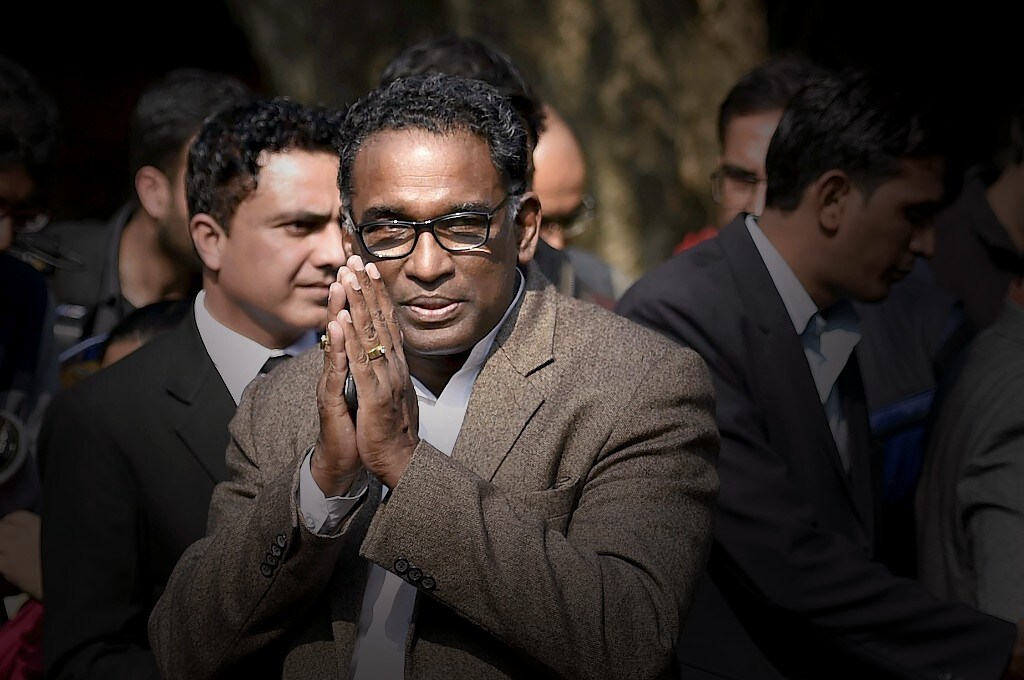
Justice Jasti Chelameswar, the second senior-most judge of the Supreme Court, said selective allocation of cases casts doubt on the integrity of the Supreme Court. He agreed that the appeal into the disproportionate assets case against the late J Jayalalithaa, former chief minister of Tamil Nadu, was one such case.
Justice Chelameswar, in an interaction on the ‘Role of Judiciary in a Democracy' at the Harvard Club of India in New Delhi today, spoke on a range of issues related to the judiciary from the collegium system of appointing judges to the allocation of matters by the Chief Justice of India Dipak Misra.
Watch the full interview here.
Here are the highlights of what he said:
On Petition Seeking Independent Probe Into Bribery Allegations
A public interest litigation had sought independent investigation into allegations of bribery against members of the judiciary. A Supreme Court bench headed by the CJI overturned an order by a bench headed by Justice Chelameswar that was hearing the matter, saying the CJI was the master of roster.
“I am still struggling with the question, what was it that required reversal of the order passed by me? We never disputed the fact that a judge cannot choose a case of his choice,” Justice Chelameswar said today. “We never listed the case for finally deciding the matter.”
I believe I was acting within my powers when I decided to list the Prasad Educational Trust case in front of the five-judge bench.Justice Chelameswar
Undoubtedly the Chief Justice of India will have authority to decide benches but every power comes with responsibility, Justice Chelameswar added. “Don't exercise the power merely because we have it”.
On allegations of preferential allotment of cases to select benches:
“I am not saying that benches are being assigned to get preferred judgements for the government,” he said. “The question is what is the basis on which some of the sensitive cases are being allocated?”
- I have been a judge for 20 years. I am not looking for glory by writing one more judgement. The question is are we as an institution able to sustain the faith of the people?
- I believe allocations in this manner is undermining the faith of the public.
Asked that if the Jayalaltihaa disproportionate assets appeal was one such example, Justice Chelameswar agreed.
I won't say cases are given to certain junior judges because they are pliable. I also do not believe in the concept of junior and senior judges. But selective allocation creates doubts about the integrity of the institution.Justice Chelameswar
On collegium, its recommendations, and the Memorandum of Procedure for appointment of judges:
- None of us are fighting for personal property. We have raised institutional questions. It does not mean we do not see eye to eye.
- I was not made aware of the letter written by the government on Memorandum of Procedure in which they suggested a screening committee.
- I agree that there is a need to audit the functioning of the collegium system.
- We are concerned over the fact that there has been no response from the government on the collegium recommendation to elevate Justice KM Joseph to the Supreme Court.
If speaking to the press was a breach of judicial discipline?
- I wonder where did this principle [of judicial discipline] come from? I have no qualms about going public by doing the press conference or by speaking tonight.
What if Justice Ranjan Gogoi is superseded by another judge as the Chief Justice of India:
- I am not an astrologer. I hope it won't happen. If it happens, and I say if, it will only prove that whatever we said in the press conference is true.
On retirement:
- I will not take any post-retirement posting from the government.

-
Signature Play: The Classic Cocktail Is Dead. Or Is It?

Classic cocktails are disappearing from India's cocktail menus. But they're still being ordered, taught to bartenders and borrowed from. So, who's really having the last drink?
-
A New Samvat Wishlist: Inclusive Prosperity And Human Development
India has strengthened its economic foundations through infrastructure, digital access and enterprise. Its next growth chapter must deepen productivity, create better livelihoods and widen participation in prosperity.
-
Love, Sex Aur Dhokha: The Audacious Plot To Spy On Jensen Huang
A Taipei dinner, a Singapore chip buyer and a suspected Chinese asset: inside the alleged spy operation that got close to NVIDIA's Jensen Huang.
-
Ten Things I Learnt This Samvat
Patience can be a trap. Cheap stocks can stay cheap. Leverage can wipe you out. What did Samvat 2082 teach us? Niraj Shah writes on 10 lessons from the year gone by.
-
Talking Points This Week: Tech Nerves, FII Buying, And A Faraway Banking Shock
The global markets are not shining this Diwali. The exception in the large markets is, India.
-
Midterm Rally Lasted A Day. The Hard Reality Of A Divided US May Last Two Years | Opinion
Between a contested AI boom, a debt ceiling that arrives in 2027 and a president with every incentive to act alone, the next two years may prove more volatile than the first day's rally suggests.
-
Blue Wave Will Derail the AI Trade but Won't Dismantle the AI Era | Unhedged Position
The Democrats' sweep of the US Congress will see politics collide with economic forces both over the long and short term.
-
It's Time To Take The GST Council's Bet On Trust Global
Payment records can prove India's services exports, and clear, proportionate rules can bring foreign digital sellers into the tax net.
-
Opinion | India at 38: From Innovation Overperformer to Innovation Powerhouse
India now has 453 VC-backed deep science startups, 18 of them late-stage, after 117 percent growth since 2020. Laurus Labs, at USD 9.3 billion, is the most valuable deep science company in any middle-income economy outside China.









