SEBI Restrains Future Group’s Kishore Biyani From Securities Market For A Year
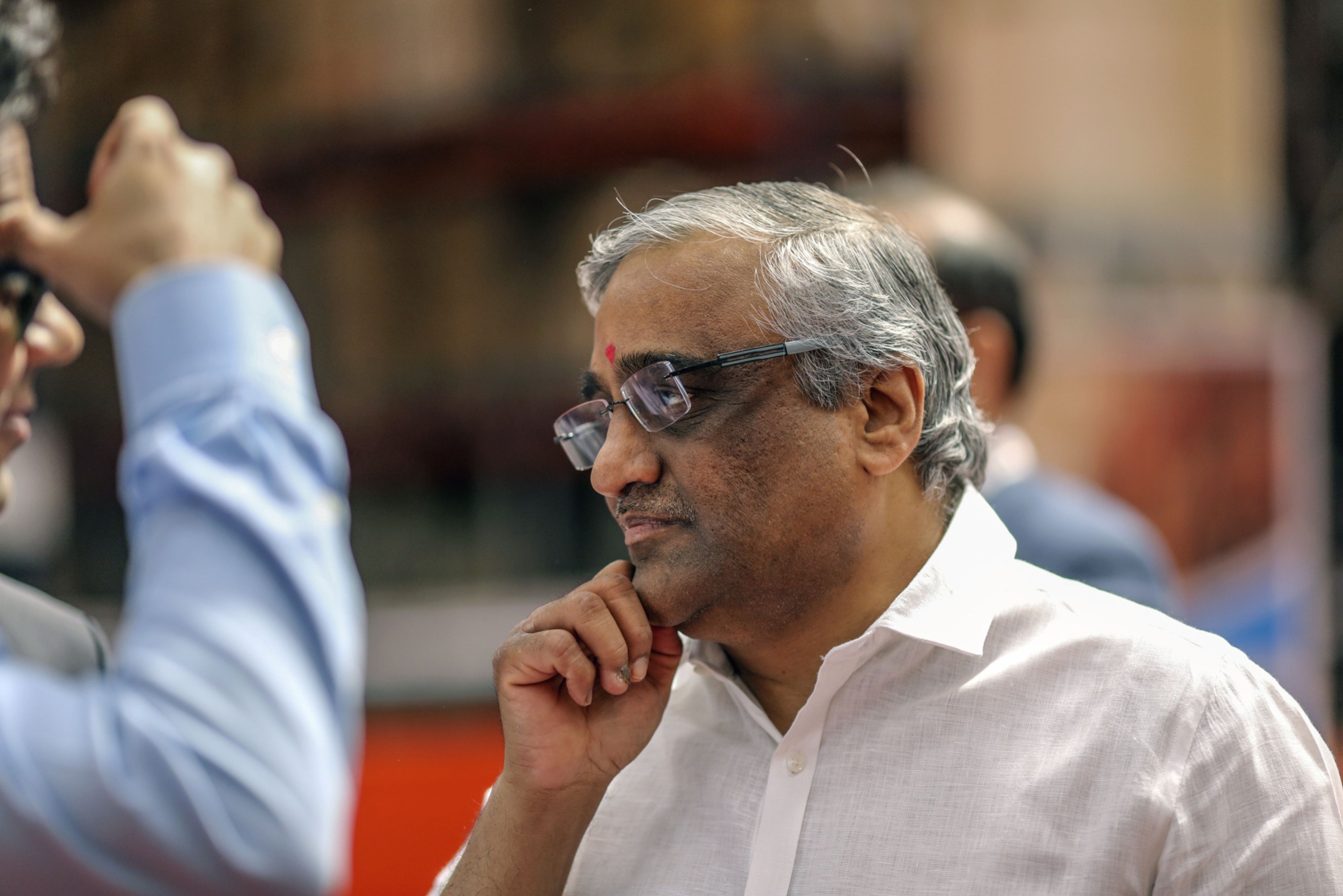
Future Group founder Kishore Biyani has been restricted from accessing the securities market by the Securities and Exchange Board of India for a year.
The market regulator has restrained Kishore Biyani, his brother Anil Biyani, Rajesh Pathak, Rajkumar Pande and Future Corporate Resources Pvt. Ltd., from accessing, dealing or being associated with the securities market for a period of one year. It has also restrained them from buying, selling or dealing in securities of Future Retail Ltd., for a period of two years, alleging violation of insider trading norms.
Both the Biyanis and Future Corporate have been directed to jointly disgorge an amount of Rs 17.78 crore, along with 12% interest from Apr. 20, 2020 onwards. The disgorgement pertains to money allegedly earned by them from trades conducted on the basis of unpublished price sensitive information. An additional disgorgement of Rs 2.75 crore is to be jointly paid by Future Corporate Resources and FCRL Employee Welfare Trust.
The regulator has also imposed other penalties, including a penalty of Rs 1 crore each on Future Corporate Resources, Kishore Biyani and Anil Biyani.
As per the order, the existing holding of securities and units of mutual funds of the entities involved will remain frozen during the restraint period.
But SEBI has provided that its order will not impede the proposed scheme of arrangement between several Future Group entities, led by Future Retail Ltd., with Reliance Retail Ventures Ltd.
Debarment/restraint/freeze imposed under this order shall not apply to those existing holding of securities of such debarred entities, in respect of which any scheme of arrangement under Section 230-232 of the Companies Act, 2013, is approved by NCLT, requiring extinguishment of such securities and/or receipt of other securities in lieu of such securities.SEBI Order
The Case
SEBI's order pertains to trading in Future Retail shares prior to a scheme of arrangement announcement on April 20, 2017. The scheme of arrangement was between Future Retail, Bluerock eServices, Praxis Home Retail and their respective shareholders. It resulted in demerger of certain business from Future Retail. It was expected to have a positive impact of Future Retail's share price, according to the order.
SEBI has noted that Future Corporate Resources and FCRL Employee Welfare Trust purchased Future Retail's shares prior to the public announcement of the scheme of arrangement. The trades were done by entities were aware of the scheme and hence found to have traded while in possession of unpublished price sensitive information, as per the order.
The trades were authorised by Kishore Biyani and Anil Biyani, according to the SEBI order.
Similar share purchases were authorised by Rajesh Pathak and Rajkumar Pande at FCRL Employee Welfare Trust. Pathak and Pande were found to be connected entities on account of their work relationship with Future Corporate Resources. They were reasonably expected to have access to the unpublished price sensitive information, said the order.
Trading while in possession on unpublished price sensitive information violates SEBI's Prevention of Insider Trading Regulations.
SEBI found that
-- Kishore Biyani was in possession of details of the scheme involving Future Retail and the others were connected persons.
-- Trading accounts were opened by Future Corporate Resources, FCRL Employee Welfare Trust on March 27, 2017 and share purchases of Future Retail made in subsequent days.
-- Public disclosure of the scheme of arrangement involving Future Retail was made on Apr. 20, 2017
-- The public announcement had “appreciable impact on the price of the shares of Future Retail”.
Hence, Future Corporate Resources, FCRL Employee Welfare Trust were found to have made wrongful gains of Rs 20.53 crore.
The full amount has been directed by SEBI to be disgorged or paid back, with 12% interest. The regulator has also penalised the entities and individuals involved.
I find that violations committed by the Noticees, as found above, are serious in nature and calls for regulatory directions for debarment of the Noticees from the securities market and for disgorgement of wrongful gainsSEBI Order
According to the order, Biyani and the Future Group firm have disputed the allegations of insider trading. BloombergQuint has sought comment from them on the matter. In a statement to stock exchanges, Future Retail said “We understand that the relevant parties propose to challenge this order in in exercise of their statutory right to appeal.”

-
The Economic Imperative: Analysing The Material Driving Force Behind India-Canada Strategic Reset

This economic complementarity is further reinforced by deep institutional investment ties and talent mobility, which form the bedrock of the bilateral framework.
-
Medicine Pricing: Where Must Profit Stop?
India must confront excessive margins, hidden incentives and regulatory gaps that threaten the integrity of medicine.
-
Why Amazon And Flipkart Are Struggling To Beat Meesho In India's Smaller Cities
With 274 million users and lowest-cost logistics, Meesho is defending its value commerce crown against giants like Amazon and Flipkart.
-
High US Salaries, No Green Card Certainty: The Financial Calculation Facing Indian H-1B Families
The suspension of PERM processing at eight technology employers does not cancel existing H-1B visas. What it does is force a question many Indian families have been avoiding: is the US salary worth tying your career and family plans to one employer?
-
Swiggy vs Eternal: Food Delivery's Two Rivals Are No Longer In The Same Race
Eternal is building a private AI assistant, dark.ai. Swiggy is still working out how to make Instamart pay, with an operating loss of Rs 895 crore in the July-September quarter while Blinkit stayed profitable.
-
Where You Live Shapes How You Get To Work | The Reason Why
Two-wheelers are the most popular way to get to work in India, accounting for nearly 43% of workplace commutes.
-
Unhedged Position: Can India See An Indonesia-Style Time Correction?
The Nifty is trading below levels it first clocked in 2024. Is there, then, as I have suggested in the headline, potential that the current time correction drags on painfully for the next three-five, even ten years?
-
Navigating Friction And Energy Realities: An Analysis Of Marco Rubio's October Visit To India
Occurring at a critical juncture marked by stalled trade negotiations and escalating geopolitical pressures over global energy supplies, the visit offers a profound window into modern US-India relations.
-
India Exports Capital. Why Not Export Trusteeship?
The big question, then, is whether India can build an institution that global borrowers, investors, banks, and lawyers can trust, even without an Indian connection.
-
France's Economy & Politics Are In Crisis | The Reason Why
Let's look at how the French economy and politics evolved under Nicolas Sarkozy, Franois Hollande and Emmanuel Macron.










