Russia Launches New Strikes On Ukraine As It Mourns 24 Dead
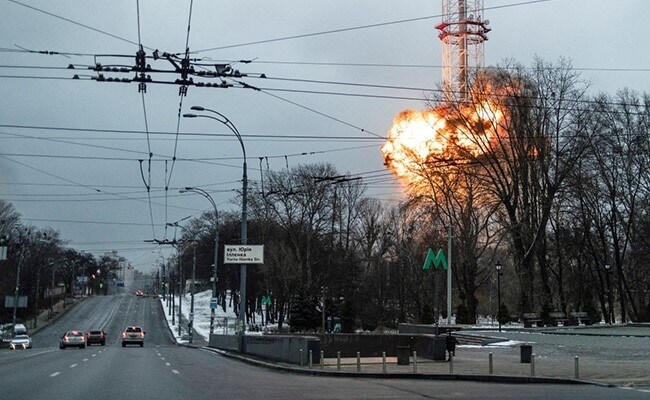
(Bloomberg) -- Russia followed through on a vow to retaliate for what it called a deadly Ukrainian attack on the border city of Belgorod, launching new missile strikes on Kharkiv.
At least 26 people were injured in ballistic missile and drone strikes on Ukraine's second largest city Saturday night and Sunday morning. Ukraine's government said it shot down 21 of 49 drones fired overnight.
Saturday's attack on Belgorod — the deadliest in Russia since Vladimir Putin's full-scale invasion of Ukraine - killed 24 people, including children, and injured over 100, according to Russia's health ministry. It followed an earlier drone swarm directed at several regions, including Moscow.
Ukraine hasn't claimed responsibility for or commented on the strike, a day after Russia's biggest aerial bombardment of Ukraine in the 22-month conflict to date. More bodies were discovered in Kyiv overnight.
Ukrainian security sources told local media that strikes on Saturday were aimed at Russian military targets.
Hostilities have escalated in the waning days of 2023, and as a war conceived by Russia as a “special military operation” that would topple Ukraine's government within days or weeks approaches on the two-year mark.
Among the wounded in the city of about 340,000 people, about 30 kilometers (19 miles) from Ukraine's border, are 25 - including six children - who sustained serious injuries. They've been transported to hospitals in Moscow.
Read more: Russia Vows Revenge for Strike on City Near Ukraine Border
“Various damage was seen in 37 multi-story buildings, 453 apartments, three private houses and seven social facilities,” Gladkov said. “The owners of 53 damaged cars have been identified. Damage assessment work continues.”
Russia on Friday carried out its biggest missile and drone bombardment of Ukraine, killing over 40 people across the country, including 23 in Kyiv. More bodies were discovered under rubble in the capital overnight, said Kyiv's military administration chief Serhiy Popko.
Per Russia's request, United Nations Security Council held an emergency meeting Saturday to discuss the strike on Belgorod.
Khaled Khiari, assistant secretary-general in the UN Department of Political and Peacebuilding Affairs, condemned all attacks on cities, town and villages, both in Ukraine and in Russia.
“The fighting and bloodshed must cease, the war must come to an end,” he said.
Russian Ambassador Vassily Nebenzia repeated a defense ministry claim, made without evidence, that Belgorod had been hit with prohibited cluster munitions. He called Western states “complicit” for their provision of weapons to Ukraine.
Read more: Russia Slams Ukraine With Record Missile Barrage, Killing 39
Russia's defense ministry vowed that the Belgorod “crime will not go unpunished,” hours before Kremlin troops launched another missile barrage on Ukraine.
The chief target was Kharkiv, which sits about 95 kilometers south of Belgorod.
A range of civilian infrastructure - including the Kharkiv Palace Hotel, popular with journalists and international visitors, as well as medical clinics, shops and apartment buildings - was damaged in the strikes, Ukraine's national police said.
In a statement, Russia's defense ministry referred to a “former” hotel which it said was housing intelligence forces “directly involved” in the strike on Belgorod, as well as foreign mercenaries planning raids into Russian territory.
Six or more Iskander ballistic missiles were fired at the city late Saturday, Oleh Synyehubov, head of Kharkiv regional administration, said on Telegram. Several more buildings were hit in a drone strike early Sunday.
Air raids sounded across much of Ukraine before the UN Security Council met, including the Sumy, Mykolaiv, Kherson, Cherkasy, Poltava and Dnipropetrovsk regions.
More Russian drones were reported in Ukraine early Sunday, with reports of explosions in Kyiv. Air raid alerts were active across most of the country and later lifted.
(Updates with new casualty numbers, Russian defense ministry comment.)
More stories like this are available on bloomberg.com
©2024 Bloomberg L.P.

-
Getting To Work Costs Women More | The Reason Why

It is not just about women paying more than men. It is about women paying much more in cities than in villages.
-
AI Bias In Investing Cannot Be Eliminated, But It Can Be Governed
Framing is a particularly important example as identical financial information presented in terms of gains rather than losses can lead an LLM to reach a different assessment.
-
Joining The Dots | Dark Skies, Steady Diya: Why Hope Holds This Diwali
With war, a weak rupee and foreign outflows weighing on sentiment, policymakers at the NDTV World Summit and market veterans at NDTV Profit Ignite: Diwali Edition offered the same advice: stay invested and filter out the noise.
-
The Curious Case of Equitas Small Finance Bank And A CEO Who Quit For Stock
PN Vasudevan believes persistent investor concerns over a perceived conflict of interest had become a governance overhang on Equitas Small Finance Bank's stock, even as the lender improved profitability and asset quality.
-
Talking Points This Week: AI Cash Burn, A Tiger Comeback And An India That Still Finds Its Own Path
India is not immune to higher oil or tighter global liquidity, yet its earnings base is broader, its domestic policy levers are still available.
-
Foreign Investors Own Half Of HDFC Bank and ICICI Bank. An LTCG Cut Could Matter Most Here
Foreign portfolio investors have US$115 billion parked in HDFC Bank, ICICI Bank. If the government cuts long-term capital gains tax, Jefferies says returning foreign money could land here first.
-
'Never Seen This Level Of Negativity': Sandeep Tandon Says The Next Rally May Be Closer Than You Think
Veteran investor Sandeep Tandon says foreign selling is easing, large-caps are due a comeback and mid-caps are crowded, while he turns positive on gold, power and pharma this Diwali.
-
Indians Stay With Family, Not In Hotels | The Reason Why
India still lacks enough clean, reliable and affordable hotels for budget-conscious travellers.
-
The Economic Imperative: Analysing The Material Driving Force Behind India-Canada Strategic Reset
This economic complementarity is further reinforced by deep institutional investment ties and talent mobility, which form the bedrock of the bilateral framework.
-
Medicine Pricing: Where Must Profit Stop?
India must confront excessive margins, hidden incentives and regulatory gaps that threaten the integrity of medicine.










