RSS' Mohan Bhagwat Takes Stock Of Hindutva Matters In Closed-Door Meetings
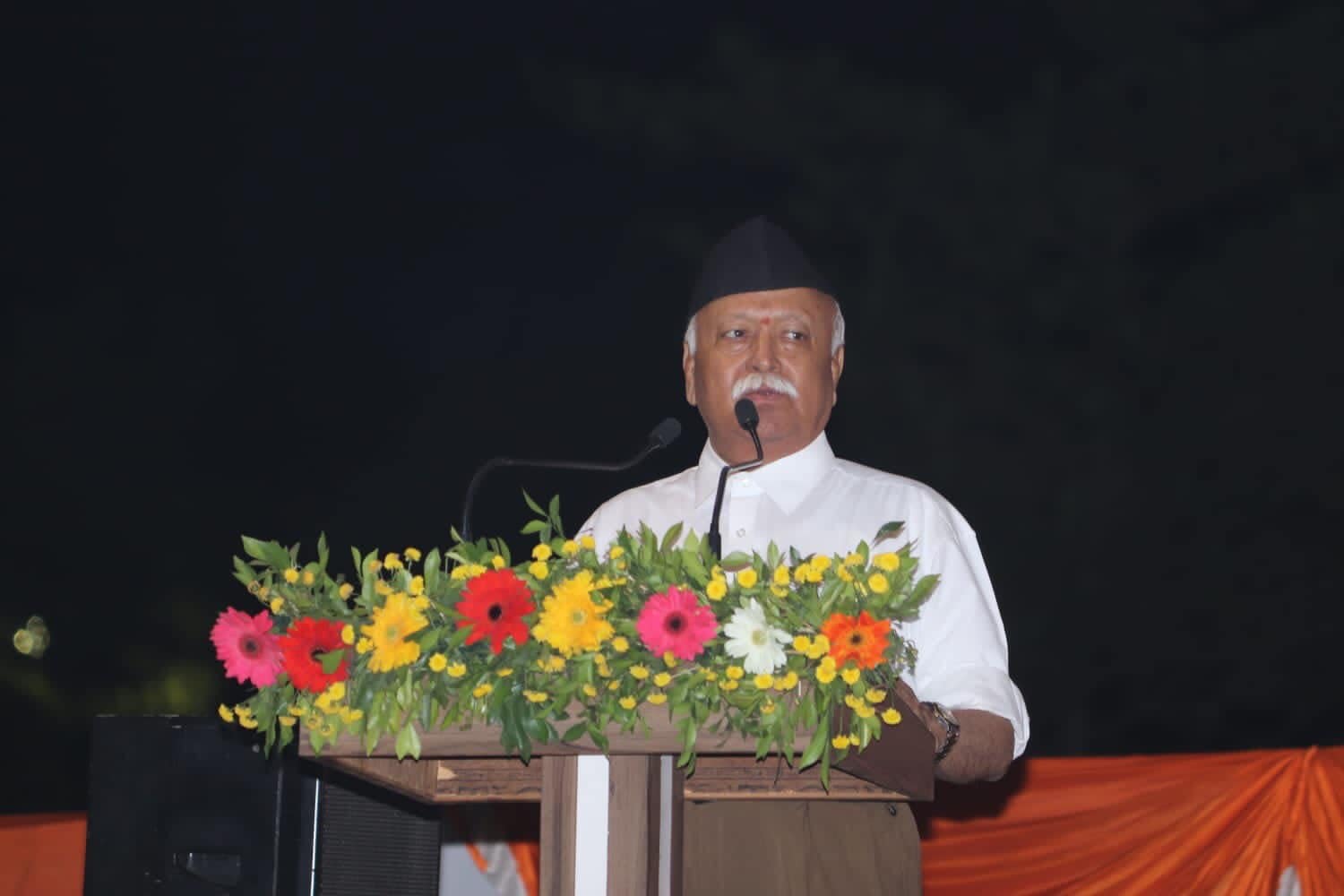
In a two day-long "Samvad satra" (dialogue sessions) with writers and academics—who have been associated with the Sangh Parivar or sympathetic to the issues it raises—RSS chief Mohan Bhagwat took stock of the way Hindutva, nationalism, cultural assertion of Hindu views, and related issues were playing out on the ground, in social media, and even outside the country.
The meetings, which took place last week, were divided into 10 sessions over two days, and around 45 people took part in them, according to three people who attended the meetings, and spoke on the condition of anonymity as they are not authorised to talk to media.
The broad themes ranged from the matters of the Sangh, its expansion, the situation in the country, and the prevalent issues that it should focus on. Ideas for marking the centenary celebrations of the RSS in 2025, the rising stature of India in the global context, apart from the ways in which India should look at globalisation and Hindutva were also discussed, the people quoted above said.
The discussions were fluid and informal, and several ideas were generated. Bhagwat listened to everyone's views and gave his comments towards the end, the first person quoted above said.
People asked Bhagwat about his statements on the DNA of Muslims and Hindus here being the same, for which he gave an answer centered around the country's civilisational ethos, rooted in scientific thinking, the person quoted above said. In these meetings, people raised these issues without any fear, but Bhagwat explained his position well, the first person said.
According to the second person quoted above, there was brainstorming on whether there was actually a resurgence of Hindutva and what its impact has been—whether it is assertive or aggressive—and how it is playing out.
The debate around the sindoor becoming a bindi and the opposition to it by some traditionalists also came up, but Bhagwat later explained that the Sanatana tradition is centered around constant evolution and Hindutva shouldn't be restrictive about such things, the second person said.
According to the second person, a larger part of the discussion was also around the meaning of Hindutva and how one should see it. Bhagwat was clear that this is humanity and is inclusive, keeping the nation and our civilisational ethos in focus. He was also clear that social justice, or samajik samrasta, is the most important part of Hindutva, the person said.
Some of the participants who took part in the brainstorming sessions included former MP Balbir Punj; RSS veterans Mahesh Sharma and Ravindra Mahajan; ICCR President Vinay Sahasrabuddhe; former Chairman of the National Book Trust, Baldev Sharma; author Seshadri Chari; former editor of Panchjanya, Tarun Vijay; film-maker Chandraprakash Dwivedi; writer Advaita Kala; advocate Monika Arora; academic Sushma Yadav and BJP's verseas outreach head Vijay Chouthaiwale, among others. Senior leaders of the RSS such as Krishna Gopal, Sunil Amebkar and J Nandakumar were also present.
According to the third person quoted above, it was a good mix of people from different backgrounds—all of them doing something for Hindutva, be it bringing out issues of Hindu identity or studying ancient history or languages. These meetings are not for outcomes as there is no declaration, the third person quoted above said.
The people quoted above said there was acknowledgement that while there is a resurgence of Hindutva, the attacks on it have also increased. Discussions were held on why this may be happening, how should one counter them intellectually, and what are the impediments that people face and what precautions should they take. The attempt was to get first-hand information and there was a discussion on how the youth sees the RSS; while many are sympathetic, they aren't the shakha-going kind, the people said.
Research being done in the field of academia, particularly in the humanities, was also brought up, the second person said. It included questions such as while there are humanities departments in IITs or private universities, what are they teaching; should foreign universities be allowed here; and what are the precautions that one must take.
The RSS chief also tried to get feedback on whether the Sangh should at all celebrate its centenary in a big way, given how it has always pushed values of simplicity and austerity, the people quoted above said.
It has been a routine affair for the Sangh chief to meet intellectuals and keep improving his connection with the ground through the feedback he gets, said the first person quoted above. Every year, there are four to five rounds in different cities and earlier, they would be called 'Chintan Shivir', the first person said.

-
Talking Points This Week: Leadership Shock At Nvidia, Earnings Strength, And The Fog Over Hormuz

The Anthropic IPO pricing and first trading day, Nvidia's upcoming earnings, and any fresh signals from Iran will set the tone for the following week.
-
Signature Play: The Classic Cocktail Is Dead. Or Is It?
Classic cocktails are disappearing from India's cocktail menus. But they're still being ordered, taught to bartenders and borrowed from. So, who's really having the last drink?
-
A New Samvat Wishlist: Inclusive Prosperity And Human Development
India has strengthened its economic foundations through infrastructure, digital access and enterprise. Its next growth chapter must deepen productivity, create better livelihoods and widen participation in prosperity.
-
Love, Sex Aur Dhokha: The Audacious Plot To Spy On Jensen Huang
A Taipei dinner, a Singapore chip buyer and a suspected Chinese asset: inside the alleged spy operation that got close to NVIDIA's Jensen Huang.
-
Ten Things I Learnt This Samvat
Patience can be a trap. Cheap stocks can stay cheap. Leverage can wipe you out. What did Samvat 2082 teach us? Niraj Shah writes on 10 lessons from the year gone by.
-
Talking Points This Week: Tech Nerves, FII Buying, And A Faraway Banking Shock
The global markets are not shining this Diwali. The exception in the large markets is, India.
-
Midterm Rally Lasted A Day. The Hard Reality Of A Divided US May Last Two Years | Opinion
Between a contested AI boom, a debt ceiling that arrives in 2027 and a president with every incentive to act alone, the next two years may prove more volatile than the first day's rally suggests.
-
Blue Wave Will Derail the AI Trade but Won't Dismantle the AI Era | Unhedged Position
The Democrats' sweep of the US Congress will see politics collide with economic forces both over the long and short term.
-
It's Time To Take The GST Council's Bet On Trust Global
Payment records can prove India's services exports, and clear, proportionate rules can bring foreign digital sellers into the tax net.
-
Opinion | India at 38: From Innovation Overperformer to Innovation Powerhouse
India now has 453 VC-backed deep science startups, 18 of them late-stage, after 117 percent growth since 2020. Laurus Labs, at USD 9.3 billion, is the most valuable deep science company in any middle-income economy outside China.









