Reliance Says Rafale Contract Received From Dassault, Not Defence Ministry
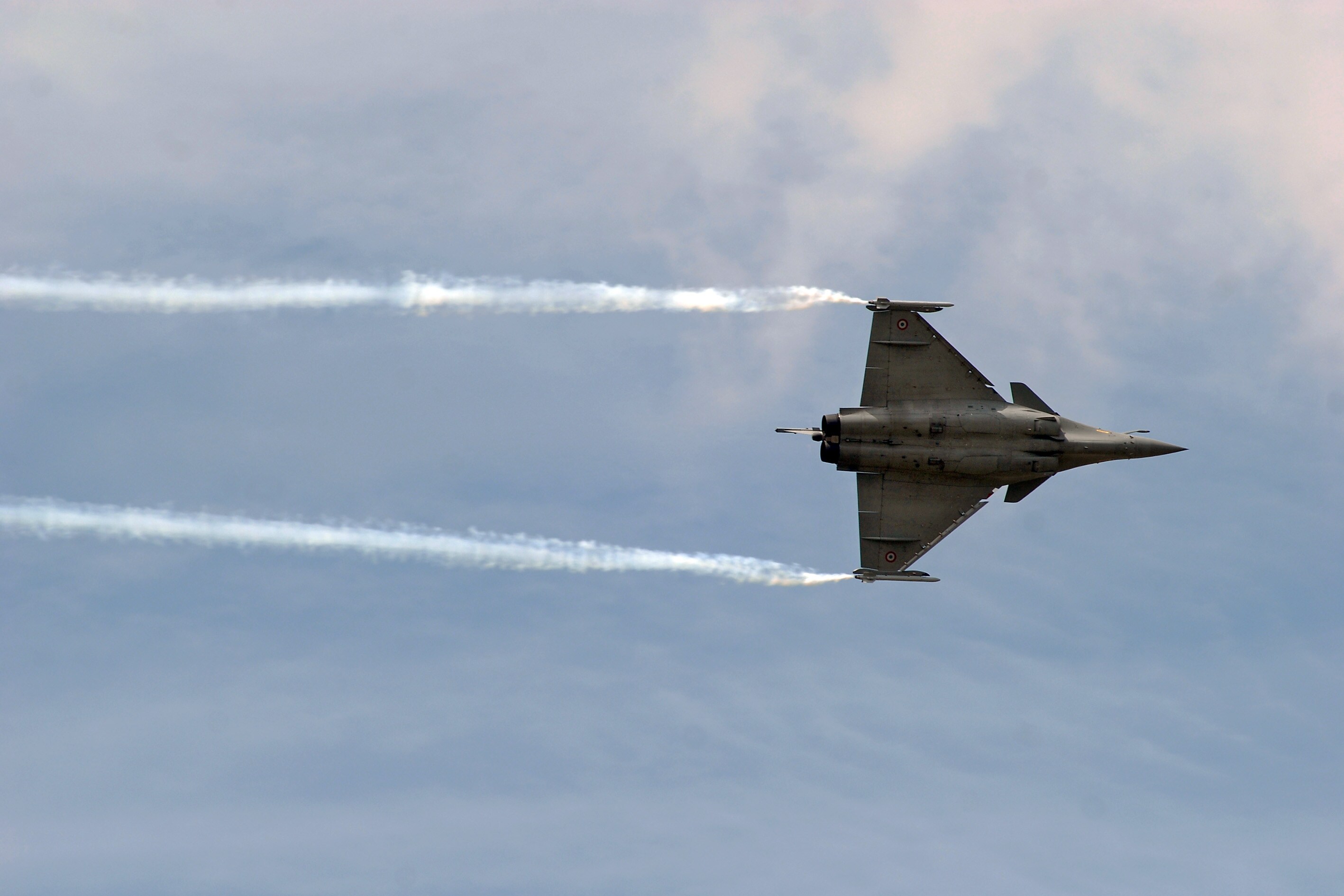
Caught in a political storm over the Rafale fighter aircraft deal, billionaire Anil Ambani's Reliance Group on Sunday denied receiving any contract from the Defence Ministry and said "unfounded and incorrect" allegations are being deliberately made to "mislead people and cloud the issue."
Answering questions ranging from lack experience to state-owned HAL being overlooked for the deal, the group said Dassault, the French firm that is to supply 36 Rafale fighter jets, choose Reliance Defence Ltd. to meet its 'offset' or export obligation in the contract and the Ministry of Defence has no role in the selection of Indian partners by the foreign vendors.
Rajesh Dhingra, the chief executive officer at Reliance Defence said the government-to-government deal requires all 36 aircraft to be delivered in a 'fly-away' condition which means "they are to be exported from France by Dassault" and "HAL or anyone else cannot be the production agency for the simple reason that no aircraft are to be produced in India." He said HAL was a nominated production agency for the 126 Medium Multi-Role Combat Aircraft (MMRCA) program, which never reached the contract stage.
Reliance Defence or any other Reliance group company has not received any contract from the MoD till date, related to 36 Rafale aircraft. This is absolutely unfounded and incorrect.Rajesh Dhingra, CEO, Reliance Defence to PTI
Opposition Congress party last week demanded a Joint Parliamentary Committee (JPC) in the deal and its president Rahul Gandhi has been attacking the government for inking the deal at a much higher price than the one the previous UPA regime had negotiated. He has accused the government of changing the deal to benefit "one businessman".
On allegations of the firm getting the contract due to Ambani's reported proximity with Prime Minister Narendra Modi, he said: "As per Defence Procurement Procedure (DPP), the Ministry of Defence has no role in the selection of Indian partners by the foreign vendors. This has been the position right from 2005 when offsets were first introduced in the country." In the more than 50 offset (export obligations) contracts signed in the country till date, the same process has been followed, he said. "Therefore, this is a deliberate attempt to mislead people and cloud the issue." On the issue lack of experience in making fighter aircraft, Dhingra said no company in India, except HAL, has the experience of making fighter planes.
"This would mean that we will never create any new capability beyond what exists and will continue to import more than 70 percent of our defence hardware," he said.
Dhingra added that Reliance will be participating in the offset program through Dassault Reliance Aerospace Ltd. (DRAL) in which Dassault holds a 49 percent stake bringing in its 90 years of aerospace manufacturing experience, making it the "most qualified vendor".
He termed as "absolutely wrong" allegation of Reliance benefiting with a Rs 30,000 crore contract, saying "Dassault's share of offsets is about 25 percent, with the remaining offset obligations being shared by Thales, Safran, MBDA and others." "Therefore, the basic premise of Dassault giving Rs 30,000 crore worth of offset contracts to Reliance is totally unfounded," he said, adding Dassault and its other Tier-I suppliers have already indicated more than 100 Indian companies which will participate in the offset contracts. This includes joint ventures with PSUs like HAL and BEL.
"We can also not lose sight of the fact that up to 30 percent of total offsets can be discharged through transfer of technology to DRDO, as per DPP," he said.
Asked about Reliance Defence being incorporated days before announcement of the Rafale deal, he said three companies were incorporated in December 2014 and Reliance Group's entry into defence sector was announced at Aero India in February 2015.
"Also there are reports in the media of as late as end-March 2015 where Dassault officials were on record to say that the MMRCA deal is 95 percent done. If this is correct, what is the linkage with the date of incorporation of Reliance Defence?" he asked.
The deal to buy 36 Rafale fighter jets was signed when Prime Minister Narendra Modi visited France in April 2015.

On the question of presence of Ambani at the time of announcement of the deal by the Prime Minister, Dhingra said Anil Ambani is part of the CEOs' Forum for France and many other countries.
"He was in Paris because there was a meeting of the CEOs' Forum on the sidelines of the Prime Minister's visit. More than 25 other CEOs from the Indian companies were also present, including the Chairman of HAL," he said.
Offset obligations are to be discharged during September 2019 to September 2023, as per the contract.
Asked about allegations that Reliance actually got contracts worth Rs 1.3 lakh crore and not Rs 30,000 crore, he said the amount may be coming from projections of Rs 30,000 crore for offsets and another Rs 100,000 crore towards the lifecycle cost over 50 years.
"There cannot be anything further from truth... To the best of my knowledge, the government has not signed any life cycle contract for 50 years with Dassault. Therefore, the very question of Reliance getting a contract does not arise," he said.
On the issue of Defence Minister Nirmala Sitharaman denying knowledge of the contract, he said as per DPP 2016, the foreign vendor has a choice to submit the details of its offset partners at the time of claiming offset credits.
"In this case, offset obligations are due only after September 2019. It is, therefore, possible that the Ministry of Defence has no formal communication from Dassault Aviation about the choice of its partners for the offsets," he said.
Asked if it was correct that under DPP a joint secretary-level official is required to countersign the contract, he said: "The offset contract is signed between the MoD and the foreign vendor. MoD does not sign any contract with the Indian offset partners."

-
Getting To Work Costs Women More | The Reason Why

It is not just about women paying more than men. It is about women paying much more in cities than in villages.
-
AI Bias In Investing Cannot Be Eliminated, But It Can Be Governed
Framing is a particularly important example as identical financial information presented in terms of gains rather than losses can lead an LLM to reach a different assessment.
-
Joining The Dots | Dark Skies, Steady Diya: Why Hope Holds This Diwali
With war, a weak rupee and foreign outflows weighing on sentiment, policymakers at the NDTV World Summit and market veterans at NDTV Profit Ignite: Diwali Edition offered the same advice: stay invested and filter out the noise.
-
The Curious Case of Equitas Small Finance Bank And A CEO Who Quit For Stock
PN Vasudevan believes persistent investor concerns over a perceived conflict of interest had become a governance overhang on Equitas Small Finance Bank's stock, even as the lender improved profitability and asset quality.
-
Talking Points This Week: AI Cash Burn, A Tiger Comeback And An India That Still Finds Its Own Path
India is not immune to higher oil or tighter global liquidity, yet its earnings base is broader, its domestic policy levers are still available.
-
Foreign Investors Own Half Of HDFC Bank and ICICI Bank. An LTCG Cut Could Matter Most Here
Foreign portfolio investors have US$115 billion parked in HDFC Bank, ICICI Bank. If the government cuts long-term capital gains tax, Jefferies says returning foreign money could land here first.
-
'Never Seen This Level Of Negativity': Sandeep Tandon Says The Next Rally May Be Closer Than You Think
Veteran investor Sandeep Tandon says foreign selling is easing, large-caps are due a comeback and mid-caps are crowded, while he turns positive on gold, power and pharma this Diwali.
-
Indians Stay With Family, Not In Hotels | The Reason Why
India still lacks enough clean, reliable and affordable hotels for budget-conscious travellers.
-
The Economic Imperative: Analysing The Material Driving Force Behind India-Canada Strategic Reset
This economic complementarity is further reinforced by deep institutional investment ties and talent mobility, which form the bedrock of the bilateral framework.
-
Medicine Pricing: Where Must Profit Stop?
India must confront excessive margins, hidden incentives and regulatory gaps that threaten the integrity of medicine.










